 Skip to content
Updated 2026 · Nozawa Onsen, Japan · Estimated read: 16 min
Some places are built for visitors. Nozawa Onsen was not. It is a working hot spring village in the mountains of northern Nagano, more than a thousand years old, where the baths are cleaned in rotation by the households of each neighbourhood and the steam rising off the streets is simply part of daily life. This Nozawa Onsen travel guide is written for travellers who want that authenticity rather than a resort built to imitate it.
What draws people here is a rare combination. Thirteen free public bathhouses scattered through the lanes, a serious ski mountain rising straight out of the village, and one of Japan’s great fire festivals held here each January. You walk between the baths at night in a yukata robe, dip into scalding mineral water, and eat well in tiny izakaya afterwards. It is skiing and hot springs and old Japan in one small place.
This guide covers all of it. How to reach the village from Tokyo and from Australia, the baths and the etiquette that goes with them, the ski season, the fire festival and the important way access to it has changed, where to stay, what it costs, and when to come. Nozawa rewards a little understanding, and this is where to start.
Explore More of Japan
OneLife Japan — Travel Guides and Regional Overview
Where Is Nozawa Onsen and How Do You Get There
Nozawa Onsen sits at the northern end of Nagano Prefecture, in the mountainous heart of Japan’s main island of Honshu. It is around 50 kilometres northeast of Nagano City and roughly 260 kilometres from Tokyo. Despite feeling remote and old-world, it is one of the more accessible ski villages in the country thanks to the bullet train line that now runs nearby.
Getting There from Tokyo
The simplest route is the Hokuriku Shinkansen from Tokyo or Ueno Station to Iiyama Station, which takes around ninety minutes to an hour and forty five. From Iiyama, the Nozawa Onsen Liner bus runs directly to the village in about twenty five minutes, ending at the central bus terminal. The whole trip takes close to two and a half hours, which is short by ski-holiday standards.
An alternative is to take the shinkansen to Nagano Station, about ninety minutes from Tokyo, then an Alpico bus for around an hour and fifteen minutes. Both work well. Buy a reserved seat on the train in winter, since the ski season fills them quickly.
Getting There from Australia
There are no direct flights to Nagano, so the route from Australia runs through Tokyo. Direct flights from Sydney, Melbourne, Brisbane, and the Gold Coast reach Tokyo’s Haneda or Narita airports in around nine to ten hours. From there, connect to central Tokyo and pick up the shinkansen north. Many travellers spend a night in Tokyo to break the journey before heading to the snow.
Practical Tip
Send your luggage ahead. Japan’s takkyubin courier services will forward your bags from the airport to your accommodation for a modest fee, so you can travel to the village with just a day pack rather than wrestling ski bags onto trains and buses. It is one of the quiet joys of travelling in Japan.
What to Do in Nozawa Onsen
Nozawa is small, and that is the point. The pleasures here are simple and repeatable: soak, ski, eat, walk the lanes, repeat. Here is what shapes a good few days in the village.
The Thirteen Public Baths
The soul of Nozawa is its thirteen public bathhouses, known as soto-yu. They have been owned and maintained by the village community since the Edo period, and they are free to use, with a wooden donation box by the door to help keep them running. There is no ticket office and no attendant. You open the door, undress, wash thoroughly, and get in.
The grandest is Oyu, a handsome wooden building in the centre of the village that has become the emblem of the place. The others are smaller and more local, tucked into the lanes. Be warned that the water is genuinely hot, often between 45 and 49 degrees, so ease in slowly and do not try to prove anything on your first visit. These are working baths used daily by residents, so treat them as you would a stranger’s bathroom, because that is close to what they are.
Ogama and the Village Lanes
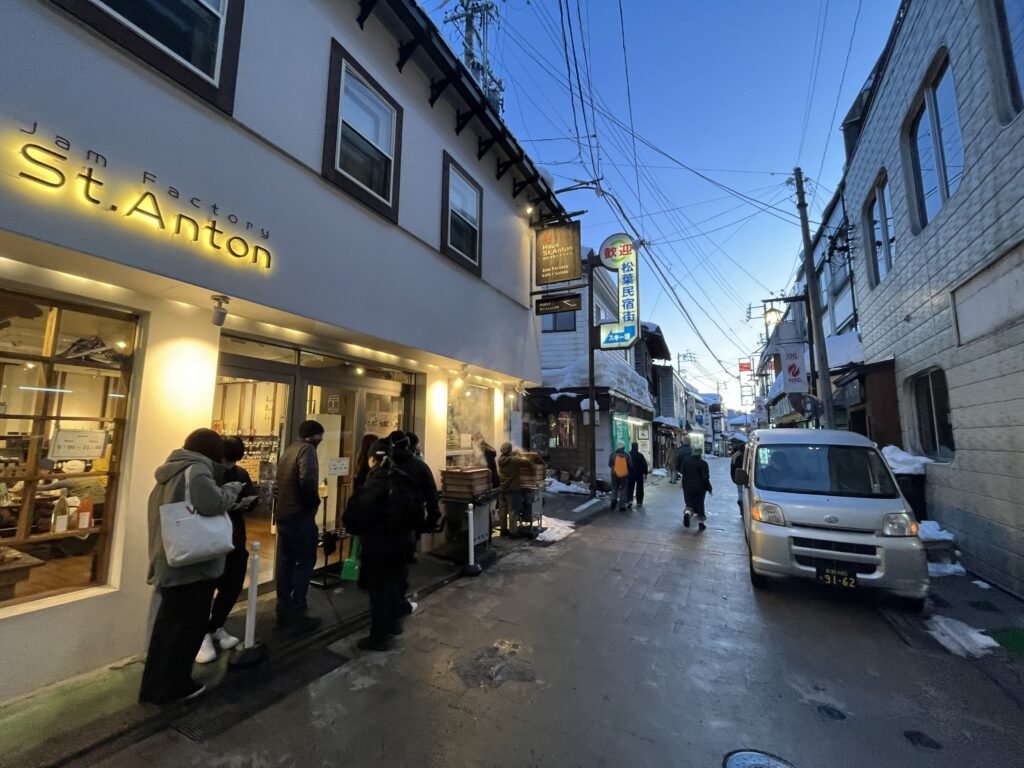
At the heart of the village is Ogama, a source spring where water surfaces at around ninety degrees. Locals have used it for generations to cook, and there are stations nearby where you can slow-boil your own onsen tamago, a soft hot spring egg. Walking the narrow lanes in the evening, in a yukata borrowed from your lodging, moving between baths and steam and lantern light, is the quintessential Nozawa experience and costs nothing at all.
Skiing and Snowboarding
Rising straight out of the village is Nozawa Onsen Snow Resort, one of the largest and most respected ski mountains in Japan. It offers over 1,000 metres of vertical, close to 50 trails, and the deep, dry powder that Japan is famous for. The Rinkan course forms part of a run of around ten kilometres, among the longest in the country. The Yu Road escalator carries you up from the village to the base, so you can be on snow within minutes of breakfast.
A one-day adult lift pass runs around 7,800 yen, with rental gear from about 5,000 yen a day. The season usually runs from early December to early May, and January and February bring the best of the powder. Buying passes through your accommodation is often the cheapest way to do it. You can check current lift and season details on the official Nozawa Onsen resort site.
The Dosojin Fire Festival
Held every year on 15 January, the Dosojin Fire Festival is one of Japan’s three great fire festivals, and one of the most dramatic events in the country. Men of the unlucky ages of 25 and 42 build a huge wooden shrine, then defend it with fire as the villagers try to burn it down, all in the deep snow of midwinter. It is loud, ancient, and unforgettable.
There is an important change to know about. Access is now restricted: only local residents and people staying in Nozawa Onsen can receive tickets to attend, and others will not be admitted. If seeing the festival matters to you, you must book accommodation in the village for the night, and you should do so many months in advance, because it sells out fast.
The Green Season
Nozawa is best known for winter, but the warmer months have their own quiet appeal. From late spring through autumn the village is peaceful, the surrounding hills open up for hiking and cycling, and a sightseeing gondola runs for the views. Autumn in particular brings colour to the mountains and hot spring soaks without a single crowd. Guided tours and day trips across the Nagano region, including the famous snow monkeys, can be booked through the OneLife Viator shop.
Onsen Etiquette
Wash and rinse your body thoroughly at the taps before entering any bath. No swimwear is worn. Keep your small towel out of the water. Tie up long hair. Move quietly and keep your phone away. The baths are shared and communal, and following the etiquette is how you show respect for a tradition that predates tourism entirely.

Where to Stay in Nozawa Onsen
Staying in the village itself is the whole experience, so aim for accommodation within the lanes rather than out by the highway. A traditional ryokan is the classic choice, and staying anywhere in Nozawa gives you easy access to the soto-yu on your doorstep. Book early for winter, and far earlier still for the fire festival.
Budget
Guesthouses, pensions, and hostels offer beds from around 3,500 to 6,000 yen a night, some with shared kitchens and their own small baths. This is a comfortable way to keep costs down while still sleeping in the heart of the village, close to the free bathhouses.
Mid-Range
The middle tier is where the traditional ryokan and lodges sit, generally from around 12,000 to 25,000 yen a night, often including breakfast and dinner. A ryokan dinner of local mountain dishes, followed by a soak in the house bath, is a large part of what makes a Nozawa stay memorable. You can compare rooms and current rates on Booking.com before you decide.
Splurge
At the top end are the historic ryokan, some centuries old, with private hot spring baths and full half-board of refined regional cuisine. Rates typically start around 30,000 yen a night and climb from there. For a first trip to Japan, or a honeymoon in the snow, a night or two in a fine old ryokan is worth the outlay.
How Much Does Nozawa Onsen Cost
Nozawa can be surprisingly affordable, since its signature experience, the thirteen public baths, is free. The costs stack up around accommodation, the ski pass, and eating out, but the village remains good value by the standards of international ski destinations.
On accommodation, budget travellers manage on 3,500 to 6,000 yen a night, mid-range visitors on 12,000 to 25,000 yen with meals, and the top end from 30,000 yen. For food, a casual meal runs around 1,000 to 1,800 yen and an izakaya dinner between 2,500 and 4,000 yen, though half-board ryokan stays fold dinner into the room rate. Skiing adds roughly 7,800 yen a day for the lift pass and 5,000 yen for rental gear.
A comfortable mid-range winter day, covering a ryokan bed with meals, a lift pass, and rental, lands somewhere around 20,000 to 30,000 yen per person, or roughly 200 to 300 Australian dollars. Outside ski season, without the mountain costs, a day here becomes far cheaper. Carry cash, since many small businesses and the bathhouse donation boxes do not take cards.
Best Time to Visit Nozawa Onsen
Nozawa is a village of two very different faces, and the right time depends entirely on which you want.
Winter, December to March. The main season. Deep powder, the ski mountain in full swing, the fire festival on 15 January, and the baths at their most magical in the snow. It is the busiest and priciest window, and it needs booking well ahead.
Spring, March to early May. Late-season skiing continues up high while the village thaws below. Quieter, cheaper, and often sunny, with cherry blossom appearing at lower elevations toward late April.
Summer, June to August. A cool green escape with hiking, cycling, and near-empty baths. Few international visitors come in these months, which is much of the charm.
Autumn, September to November. Perhaps the most underrated season, with the hills turning colour and long hot soaks in crisp mountain air. Peaceful and beautiful.
Things Worth Knowing Before You Go
Carry cash. Japan is more card-friendly than it used to be, but the village bathhouses, small eateries, and market stalls often run on coins and notes. There are ATMs at the post office and convenience stores that accept foreign cards.
On tattoos, Nozawa is considerably more relaxed than most of Japan. The community soto-yu carry no posted prohibition and tattooed visitors use them without issue, though the courteous approach is to be discreet and keep a towel handy. If you want certainty, a ryokan with a private bath removes the question entirely.
Travel insurance matters here more than on a typical trip. Skiing and snowboarding carry real risk of injury, and a policy that covers snow sports is worth having before you arrive. A plan through World Nomads covers the kind of winter activities Nozawa is built around. It is also worth packing good thermal layers rather than buying them there, and a set of merino base layers will serve you well both on the mountain and walking between baths in the cold.
How Long Should You Spend in Nozawa Onsen
For a ski trip, three to five nights is the sweet spot. That gives you several days on the mountain, unhurried evenings in the baths, and time to settle into the rhythm of the village rather than rushing it. Skiers on a longer Japan trip often base here for a week and never tire of it.
If you are not skiing, two nights is enough to experience the baths, the lanes, and the food properly. Nozawa also pairs well with the wider Nagano region, so many travellers combine it with the snow monkeys at Jigokudani or a night in Nagano City to see the great Zenkoji temple, before or after the village.
Planning Your Trip with This Nozawa Onsen Travel Guide
Use this Nozawa Onsen travel guide as your starting point, and explore the rest of the region through the OneLife Japan guides as they grow. More detailed companion posts, covering where to stay in the village, the Nagano snow monkeys, and Japanese onsen etiquette, are on the way.

Frequently Asked Questions
Is Nozawa Onsen worth visiting?
Yes, especially for travellers who want authentic old Japan alongside their skiing. Few places combine a genuine thousand-year-old hot spring village, thirteen free public baths, and a top ski mountain in one small, walkable place. It feels lived-in rather than staged, which is exactly its appeal.
Are the public baths really free?
Yes. The thirteen soto-yu are owned and maintained by the village community and are free to use, with a donation box at each to help with upkeep. They offer no amenities, so bring your own small towel, and remember the water is very hot.
Can you attend the fire festival as a visitor?
Only if you are staying in the village. Access to the Dosojin Fire Festival on 15 January is now restricted to local residents and people with accommodation in Nozawa Onsen, who receive tickets. Book your stay many months ahead if the festival is your reason for coming.
When is the best time to visit?
For skiing, January and February bring the deepest, driest powder. For quiet and value, autumn and late spring are lovely, with hot soaks and no crowds. The village is a genuine year-round destination with two very different personalities.
How do you get to Nozawa Onsen from Tokyo?
Take the Hokuriku Shinkansen from Tokyo or Ueno to Iiyama Station, around ninety minutes to an hour and forty five, then the Nozawa Onsen Liner bus for about twenty five minutes into the village. The whole journey takes close to two and a half hours.
Final Thoughts on Nozawa Onsen
There is a particular feeling to Nozawa that is hard to find elsewhere. It is the walk back through the snow at night, skin still warm from the bath, steam rising off the streets, the sound of your own footsteps and little else. The village does not try to impress you. It simply carries on as it has for centuries, and lets you step into that for a few days.
Ski if you ski, but do not make the mistake of treating this as only a ski resort. The baths, the lanes, the old wooden buildings, and the quiet ritual of moving between them are the real reason to come. The mountain is the bonus, not the point.
This Nozawa Onsen travel guide covers the practical ground, but the village is best understood slowly, one soak and one snowy evening at a time. Come with respect for how the place works, and it will give you something most destinations cannot. A sense of having visited somewhere real.