 Skip to content

Where to Stay · Nagano, Japan · Updated 2026 · 13 min read
Nozawa Onsen is not a ski resort with a village attached. It is a village that happens to have a mountain rising out of the back of it. That difference shapes everything, including where you sleep. Working out where to stay in Nozawa Onsen is less about finding a base near a lift and more about choosing which part of a living town you want to wake up in.
There is no purpose-built resort strip here. Accommodation is scattered through the old streets, and you walk to the lifts or take a short shuttle, the same way the locals have for generations. Thirteen free public bathhouses sit among the houses, fed by water so hot the village still cooks with it. Come winter, the same narrow lanes lead up to one of the best snow mountains in Japan.
This guide breaks the village into the areas that actually matter, covers each one honestly, and sorts the stays by budget. It also flags the quirks worth knowing before you book, from the walkway that closes at night to the one date the whole town sells out months ahead.
Understanding Nozawa Onsen: A Village, Not a Resort
The town sits at the western foot of Mount Kenashi in northern Nagano, home to around four thousand people. It has been a hot-spring village for centuries and a ski town for less than one, and the older identity still runs the place. That is the first thing to understand before choosing where to stay.
The mountain has two main access points, and the village nestles between them. The Nagasaka Gondola is the newer of the two and the quickest route to the top of the runs, which makes its side of town popular with keener skiers. The Hikage Gondola sits to the north, closer to the ski school and the gentle beginner slopes, and its area suits families and first-timers.
Between them lies the central village, a maze of lanes lined with ryokan, izakaya and the free public baths. A covered escalator called the Yu Road links the village up to the Hikage side, which saves the climb in ski gear. One catch worth filing away now. The Yu Road closes in the evenings, so a bed up near Hikage can mean a dark walk down to dinner.
Because the town is compact, nowhere is truly far. Most stays sit within a ten to fifteen minute walk of both a lift and the village centre. The choice is really about which you want closer. The snow or the streets, and how much walking in ski boots you are willing to do.
Best Areas for Where to Stay in Nozawa Onsen
Four areas cover almost every sensible option. None is more than a short walk or shuttle from the others. The decision is about atmosphere and ski access rather than distance.
The Central Village: Best for First-Timers
For a first visit this is the area to choose. The heart of the village holds the most accommodation. The best of the restaurants and bars, and the greatest concentration of the free public baths. Staying here puts you in the middle of the town’s life rather than on its edge.
This is where Nozawa feels most like itself. The landmark O-yu bathhouse, a two-storey wooden building in the Edo style, sits in the centre. The early evening you will pass locals walking to the baths with a towel and soap in hand. The Yu Road escalator up to the Hikage lifts is a short walk from most of it.
Accommodation here spans everything from grand old ryokan to modern apartments. Ryokan Sakaya and Kiriya sit at the traditional end, Kawamotoya offers renovated apart-hotel rooms with an in-house bath, and stylish apartments like Tanuki suit families and groups. Prices reflect the position, but so does the convenience.
This area suits first-timers, couples, onsen lovers and anyone who wants dinner and a bathhouse within a short stroll. It is the liveliest part of town at night. Which is the appeal for most and the reason a few will look elsewhere.
Browse central village stays on Booking.com
The Hikage Area: Best for Families and Ski-In Access
North of the centre, around the Hikage Gondola, is the family end of the village. The main ski school and the gentle learner slopes sit here, along with the kids’ park, which makes it the natural base for anyone travelling with children or strapping on skis for the first time.
The draw is proximity to the snow. A handful of lodge-style hotels sit close enough for genuine ski-in, ski-out mornings, so you can be on the gondola without the walk across town in boots. Kadowakikan offers ski-to-door access a few minutes from the runs. Several guesthouses dot the streets descending back toward the village.
Evenings are quieter up here. There are some restaurants and bars, but far fewer than the centre. The Yu Road escalator that links this side to the village shuts down at night. That leaves a walk down and back for dinner. Which is fine on a clear evening and less fun over ice.
This area suits families, beginners and anyone who values first tracks over nightlife. Weigh the ski-in convenience against the quieter evenings before you book.
Browse Hikage area stays on Booking.com

The Nagasaka Area: Best for Keen Skiers
If the skiing is the whole point, the Nagasaka side is the base to choose. The Nagasaka Gondola is the newer lift and the fastest way to the top of the mountain. Staying near it means the quickest route to the upper runs before the crowds arrive.
This side sits close to the main car parks and the resort base. Which suits intermediate and advanced skiers who want to be first up. Some properties here run a private shuttle to the gondola in winter, taking the effort out of the morning entirely. It is practical rather than picturesque.
Accommodation is a mix of lodges, guesthouses and a few modern hotels near the base. Budget-friendly options like Tamayura Guesthouse sit within easy reach of the gondola. The Mont hotel near the bus stop pairs a good location with strong reviews. You give up a little village atmosphere for a lot of mountain access.
This area suits committed skiers, early risers and anyone who measures a good base by minutes to the first chair. For onsen-hopping and long dinners, the central village serves you better.
Browse Nagasaka area stays on Booking.com
Nakao and Karasawa: Best of Both Worlds
Slightly apart from the main split, the Nakao area, sometimes called Karasawa, is the quiet all-rounder. It sits within a few minutes of a chairlift while still having restaurants, cafes and rental shops close at hand. Which is a rare combination in a village where lift access and village life usually pull in opposite directions.
That balance is the selling point. You get easier access to the snow without the long uphill walk in ski gear, and you keep amenities within reach for the evening. It is calmer than the centre, with a mountain-home feel that groups and families tend to like.
This is also chalet and apartment territory. Operators such as Nozawa Peaks, Villa Nozawa and Altitude Nozawa run self-contained stays here, several of them set up with the space and kitchens that longer group trips need. Many are managed by Australian-run operators, which some visitors find reassuring for booking and communication.
This area suits families, groups and returning visitors who already know they want space and calm over the buzz of the centre. It is the quiet compromise that keeps most of the upsides.
Browse Nakao area stays on Booking.com
Where to Stay in Nozawa Onsen by Budget
Winter prices climb steeply and the best-value places go first. Here is how the tiers break down, with the kinds of stay that make sense in each.
Budget
Nozawa has a real spread of guesthouses and small lodges, which keeps the lower end alive even in a ski town. Tamayura Guesthouse near the Nagasaka Gondola and Lodge Yokochi near the bus stop are the kind of friendly, simple bases that cost a fraction of the ryokan rate. Resort House Kogen sits handily by the Yu Road escalator.
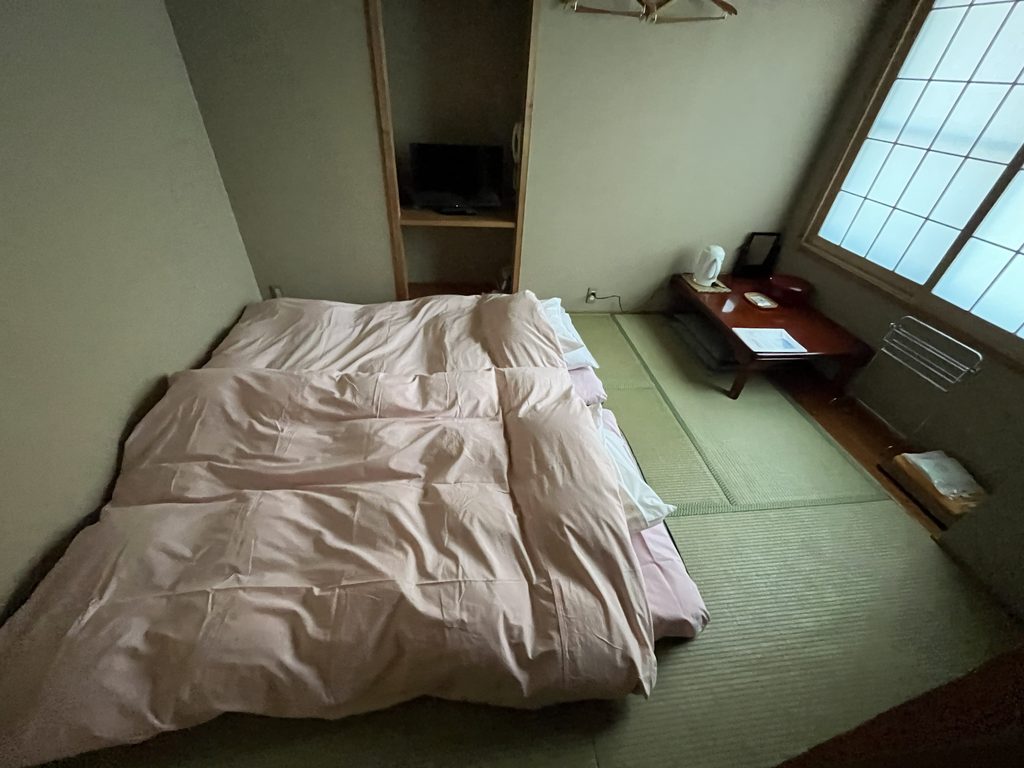
Rooms at this end are basic and often Japanese-style, with shared facilities in some, and that is part of the charm rather than a compromise. Book early for January and February, because the affordable beds are the first to disappear.
Mid-Range
The widest choice sits here. Apart-hotels and self-contained apartments like Kawamotoya, Tanuki, Shiro and Iroha give you a kitchen and room to spread out, which pays off over a week or with a group. Modern hotels such as mont and the well-regarded Kawazen round out the middle with comfort and good locations.
Apartments with a kitchen are the smart play for families and longer stays, since eating in a few nights softens the cost of a ski trip. To compare rates across sites, it is worth checking Trip.com alongside Booking.com before you settle.
Splurge
The top end here is traditional rather than flashy, and it is worth the money for the experience. Ryokan Sakaya is the standout, with beautiful private onsen baths and a multi-course kaiseki dinner served in your room. Kiriya and Kawaichiya offer their own in-house hot springs, the latter in a modern, design-led building close to the Hikage lifts.
A stay like this is as much the point of the trip as the skiing. Expect dinner and breakfast included at the ryokan, and expect them to book out early in peak season. Compare Nozawa Onsen stays on Booking.com.
What to Watch Before You Book
A few honest notes, since a scattered village hides a couple of traps for the unwary.
Check the exact location, not just the area name. Because accommodation is spread through the town rather than clustered at a base, two places in the same neighbourhood can mean very different daily walks. A hundred metres uphill in ski boots over ice is longer than it sounds, so read the map pin against where you will actually be walking each morning and night.
Mind the Yu Road hours if you stay high. The covered escalator that links the Hikage side to the village is a gift during the day and closed in the evening. Staying up near the top lifts can leave you with a dark, cold walk to and from dinner, which is worth knowing before you fall for a ski-in room.
The public baths are not a hotel amenity. The thirteen free soto-yu are the village’s own, maintained by residents, so staying nearby is a joy but comes with the responsibility of being a good guest. If your accommodation has no private bath and you plan to rely on the public ones, check that first, and read up on the etiquette before you go.

Tips for Booking Accommodation in Nozawa Onsen
Peak season runs from January into February, when the powder is at its best and the village fills. Rates climb and the good rooms go months ahead, so this is not a trip to book on a whim. If your dates are fixed for midwinter, reserve as early as you can.
One date stands apart. The Dosojin Fire Festival on the fifteenth of January is one of the three great fire festivals in Japan, and accommodation for that night sells out months, sometimes a year, in advance. If you want to be in the village for it, book that first and plan the rest of the trip around it.
The shoulder months bring value. Late in the season and into spring the snow can still be good and the prices soften, and summer opens the village up for hiking and waterfalls at a fraction of the winter rate. Getting here is easier than the remote feel suggests, with a bullet train from Tokyo to Iiyama Station and a short bus into the village.
Many visitors pair the trip with the nearby snow monkeys at Jigokudani, which you can reach on a day tour from the region. You can compare Nagano tours and transfers on Viator. For live lift status, village maps and webcams, the Nozawa Onsen village guide is a useful reference.
Local Tip
You do not need an onsen in your hotel to soak in Nozawa. Thirteen free public baths are dotted through the village, open from early morning to late at night, funded by a coin in the donation box on the way out. That changes the accommodation maths: a simple room near the centre puts you steps from baths that grander hotels cannot match. Bring your own small towel and soap, wash thoroughly before you get in, and treat each one as what it is, a neighbour’s bathroom you have been invited to share.
Frequently Asked Questions
What is the best area to stay in Nozawa Onsen?
The central village for a first visit, since it puts the restaurants, the atmosphere and the free baths within a walk. Families and beginners do well near the Hikage lifts, keen skiers near Nagasaka, and groups wanting space and calm in the Nakao area.
Is Nozawa Onsen ski-in, ski-out?
Only in parts. A handful of lodges near the Hikage Gondola offer genuine ski-to-door access, but most of the village involves a short walk or shuttle to the lifts. That is the trade for staying in a real town rather than a purpose-built resort.
Do you need a hotel with its own onsen?
Not at all. Nozawa has thirteen free public bathhouses open to everyone, so even a simple room near the centre puts excellent onsen within reach. A private in-house bath is a lovely extra at the ryokan end, but it is far from essential here.
When should I book accommodation in Nozawa Onsen?
As early as possible for January and February, and especially for the Fire Festival on the fifteenth of January, which sells out months ahead. Shoulder and summer dates are far easier and cheaper, with more choice available closer to the time.
How do you get to Nozawa Onsen?
Take the bullet train from Tokyo to Iiyama Station, then a short bus or shuttle into the village, roughly a few hours in total. It feels remote once you arrive, but the journey is straightforward and does not require a car.
Final Thoughts
What sets Nozawa apart is that you are not booking a room at a resort. You are choosing a corner of a working village, one where the water still steams up between the houses and the baths belong to the people who live there. That is a rarer thing than a good ski run, and it is the reason the place stays with people long after the snow melts.
So pick the centre for the life of the town, Hikage for the family slopes, Nagasaka for the early chairs, or Nakao for quiet and space. Deciding where to stay in Nozawa Onsen comes down to which version of a mountain village you want as your everyday, and every one of them is worth waking up in.
Some links in this guide are affiliate links. If you book through them, OneLife may earn a small commission at no extra cost to you. We only point to places and services we would genuinely use ourselves. For travel and snow-sports cover, it is worth comparing options with World Nomads before you go.