 Skip to content

Culture Guides · Japan · Updated 2026 · 9 min read
Tokyo moves fast, but its oldest corners ask you to slow down. Between the towers and the trains sit hundreds of temples and shrines, quiet places that have held their ground for centuries. The best temples and shrines in Tokyo are the calm at the centre of the noise. Some draw millions, others almost no one, and all of them are free to enter.
First, a quick note. A temple is Buddhist, and its name usually ends in -ji or -dera. A shrine is Shinto, marked by a torii gate at its entrance. You will visit both here, often within a few streets of each other.
This is a calm, reflective side of the city, easy to miss if you only chase the neon. Approached with a little respect, these places give a lot back. Here is where to go.
The Best Temples and Shrines in Tokyo
The best temples and shrines in Tokyo are scattered across the city, but many cluster in a few neighbourhoods. Asakusa, Harajuku and the older wards hold the highest concentration. Most are free, and nearly every one sits within a short walk of a station. Here is where to begin.
Senso-ji, Asakusa
Senso-ji is the obvious place to start. Founded in the year 645, it is the oldest temple in the city and the most visited spiritual site on earth. You enter through the Kaminarimon, the great Thunder Gate, with its huge red lantern.
Beyond it runs Nakamise-dori, a 250-metre street of snack and souvenir stalls leading to the main hall and a five-storey pagoda. The atmosphere is the draw, red and loud and rich with incense. It is the Tokyo of centuries past, still very much alive.
Come early. The grounds are open around the clock, but the crowds build by late morning. Before seven, or after dark when the buildings are lit, it is a different place entirely.
Where: Asakusa Station · Hours: grounds 24h, main hall 6:00 to 17:00 · Entry: free · Best for: Tokyo’s oldest and most atmospheric temple.
Meiji Jingu, Harajuku
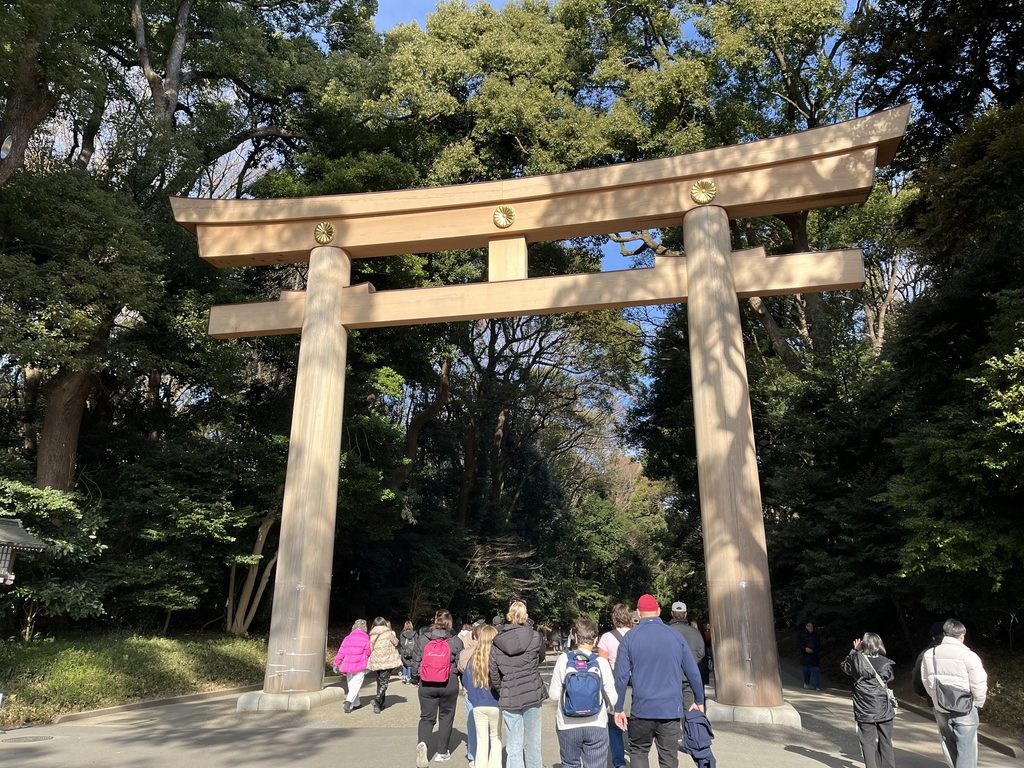
A two-minute walk from the madness of Harajuku, Meiji Jingu is the grandest Shinto shrine in the city. It is dedicated to Emperor Meiji and Empress Shoken, and it was completed in 1920. The shrine sits inside a 170-acre forest of 100,000 trees, all planted by hand a century ago.
The walk in is the point. A wide gravel path leads under towering trees and one of the tallest torii gates in Japan, and the city noise falls away. It feels impossible for central Tokyo, and that is exactly why it works.
Look for ema, the wooden prayer plaques, and you may see a traditional wedding procession on a weekend. Go early, then step back out into Harajuku for the full contrast.
Where: Harajuku Station · Hours: dawn to dusk · Entry: free · Best for: a meditative forest shrine in the heart of the city.
The Imperial Palace East Gardens
Not a temple or a shrine, but too serene to leave out. The East Gardens are the former grounds of Edo Castle, once the largest fortress in the world. Today they are a calm public park at the very centre of Tokyo, free to wander.
You can walk the old stone ramparts, cross moats, and stand where the castle keep once rose. It is a quiet history lesson between the temples, and a green pause in a dense city. The main palace itself is closed, but the gardens are open most days.
Where: Otemachi or Tokyo Station · Entry: free · Note: closed Mondays and Fridays · Best for: a serene, historic walk.
Zojo-ji, Shiba
Zojo-ji offers one of Tokyo’s great visual contrasts. It is an old Buddhist temple, once the family temple of the Tokugawa shoguns, and it sits directly beneath the orange steel of Tokyo Tower. Old and new frame each other perfectly here.
The Sangedatsumon main gate is among the oldest wooden structures in the city. Six of the fifteen Tokugawa shoguns are buried in the mausoleum behind. A row of small stone statues in red caps, honouring lost children, is quietly moving.
Where: Onarimon or Shibakoen Station · Hours: main hall roughly 6:00 to 17:30 · Entry: free grounds · Best for: history and the Tokyo Tower backdrop.

Nezu Shrine, Bunkyo
For a quieter, more contemplative visit, Nezu Shrine rewards the extra travel time. It is one of the oldest religious sites in the city, with roots said to stretch back nearly two thousand years. Its lacquered buildings survived the war, which is rare in Tokyo.
A short tunnel of small red torii gates winds through the grounds, beautiful and far less crowded than the famous ones in Kyoto. In April and May, the azalea garden bursts into colour for its annual festival. The rest of the year, it is calm and largely local.
Where: Nezu or Sendagi Station · Entry: free grounds, azalea garden around 500 yen in season · Best for: a peaceful shrine and a torii tunnel.
Gotokuji, Setagaya
Gotokuji is the lucky cat temple, and one of the most charming spots in the city. It is widely held to be the birthplace of the maneki-neko, the beckoning cat said to bring good fortune. Hundreds of small white cat figurines fill a corner of the grounds, all raising one paw.
It sits in a quiet residential suburb, well off the tourist trail, which is part of its appeal. You can buy your own figurine to take home from the temple office. It is a gentle, joyful half-day out of the centre.
Where: Gotokuji Station · Hours: 6:00 to 17:00, office 8:00 to 15:00 · Entry: free · Best for: the lucky cats and a quiet local corner.
Hie Shrine, Akasaka
Tucked into the business district of Akasaka, Hie Shrine hides a lovely surprise. A tunnel of red torii gates climbs the hillside to the main hall, glowing on a bright day. It is easy to reach and often overlooked.
The shrine is known for blessings around safety and good fortune, and it draws local office workers on their lunch breaks. Look for the pairs of monkey statues, its sacred messengers, rather than the usual guardian dogs. It makes a serene stop between the towers.
Where: Tameike-Sanno Station · Hours: roughly 6:00 to 17:00 · Entry: free · Best for: a red torii climb in the business district.
Kanda Myojin, Akihabara
Near the electronics and anime district of Akihabara, Kanda Myojin blends the ancient and the modern like nowhere else. The shrine is more than a thousand years old, with a bright vermilion and gold main hall. Its neighbourhood, though, is the capital of Japanese pop culture.
That mix has made it famous for a modern kind of blessing. People come to have their phones, laptops and gadgets blessed for digital safety. You will find ema plaques painted with anime characters hanging alongside traditional prayers.
Where: Ochanomizu or Akihabara Station · Entry: free · Best for: where old Shinto meets modern Tokyo.
Temple and Shrine Etiquette in Tokyo
A little care goes a long way at these sites. None of it is complicated, and locals appreciate the effort. Here is what to know before you go in.
Purify first. Near the entrance you will find a water pavilion with ladles. Rinse your left hand, then your right, then pour a little into your left hand to rinse your mouth. It is a simple act of cleansing before you approach.
Know the difference in prayer. At a Shinto shrine, bow twice, clap twice, make your wish, then bow once more. At a Buddhist temple, do not clap. Place your palms together quietly and bow instead.
Give a small offering. Toss a coin into the wooden box before you pray, and a five-yen coin is the traditional choice. It is the gesture that matters, not the amount.
Mind the path and the camera. At shrines, walk to the side of the main path, as the centre is left for the gods. Photos are usually fine in the grounds, but not always inside the halls, so watch for signs. Keep your voice low, and remember these are living places of worship.
How to Visit Tokyo’s Temples and Shrines
Tokyo’s temples and shrines are easy to reach. Nearly every one sits within a ten-minute walk of a Metro or subway station. A prepaid Suica or Pasmo card makes hopping between them simple.
Group them by area to save time. Senso-ji pairs with a walk along the old streets of Asakusa, and Meiji Jingu with Harajuku and Yoyogi Park. Two or three sites in one neighbourhood make a comfortable half-day. For the wider trip, see our complete Japan travel guide for regions beyond the capital.
Early morning is the best time, before nine, when the grounds are calm and the light is soft. Stay central to reach the sites quickly at dawn. You can compare places to stay in Tokyo here and base yourself near the sites you most want to see.
If you would rather have the history brought to life, a guided walk is worth it. Local guides explain the customs and stories you would otherwise miss. You can book a Tokyo temples and culture tour here, and the Japan National Tourism Organization has current details on each site.
Frequently Asked Questions
What are the best temples and shrines in Tokyo?
Senso-ji in Asakusa is the oldest and most famous temple, while Meiji Jingu in Harajuku is the grandest Shinto shrine. For quieter visits, Nezu Shrine and the lucky-cat temple of Gotokuji are the picks. Zojo-ji, beneath Tokyo Tower, offers the best mix of history and modern skyline.
What is the difference between a temple and a shrine?
A temple is Buddhist, and its name usually ends in -ji or -dera. A shrine is Shinto, and you enter it through a torii gate. The two faiths have coexisted in Japan for centuries, so you will often find them close together.
Are Tokyo’s temples and shrines free to visit?
Yes, the main grounds of nearly all of them are free. A few inner gardens, museums or side halls charge a small fee, usually a few hundred yen. Senso-ji, Meiji Jingu and most of the shrines cost nothing to enter.
What is the etiquette for visiting a shrine?
Purify your hands and mouth at the water pavilion near the entrance first. At a shrine, bow twice, clap twice, pray, then bow once more, and do not clap at a Buddhist temple. Toss a small coin into the offering box and keep your voice low.
When is the best time to visit Tokyo’s temples and shrines?
Early morning, before nine, is best for calm and soft light. Senso-ji in particular is far quieter before seven, and after dark when the buildings are lit. Weekdays are gentler than weekends across all the sites.
Final Thoughts
Tokyo is easy to experience as pure motion, all lights and crowds and speed. The best temples and shrines in Tokyo are the counterweight to that, small pockets of stillness that have outlasted everything around them. They ask nothing of you but a little quiet and care.
Go early, move slowly, and let the noise fall away at the gate. Purify your hands, offer a coin, and take a moment before you move on.
The city will still be there when you step back out. It just feels different afterward.
Some of the links in this guide are affiliate links. If you book or buy through them, OneLife may earn a small commission at no extra cost to you. We only recommend places we would genuinely visit ourselves, and we aim to treat these sacred sites with the respect they deserve.