 Skip to content

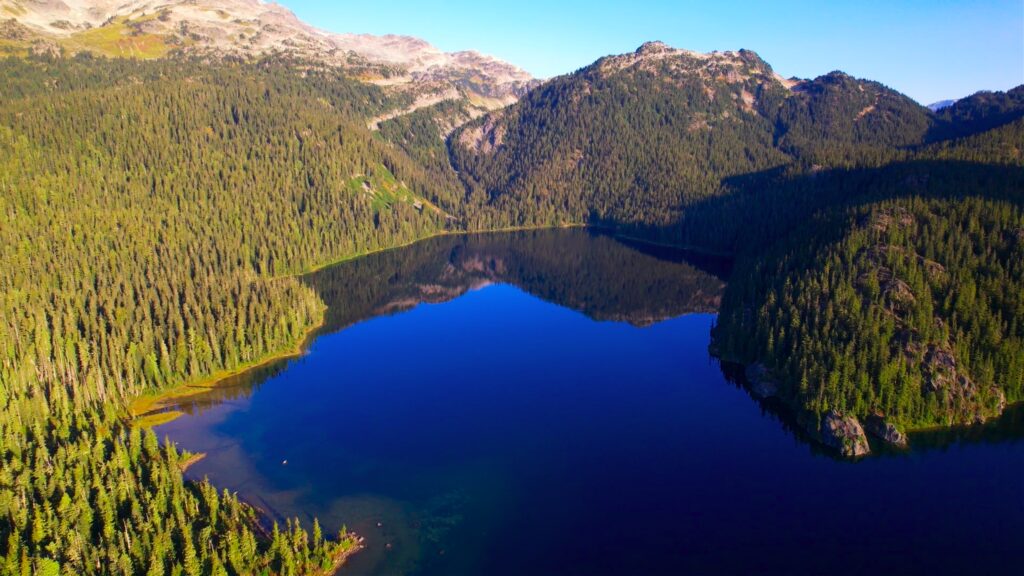
Callaghan Lake in Whistler is one of those destinations that quietly rewards anyone who makes the effort to reach it. Unlike many of Whistler’s more famous hikes and viewpoints, Callaghan Lake doesn’t rely on dramatic elevation gains or sweeping panoramas to impress. Instead, it offers something far rarer — space, stillness, and a sense of genuine escape just outside one of Canada’s busiest mountain towns.
Located deep within the Callaghan Valley, this alpine lake feels removed from the noise and pace of Whistler Village. The drive alone begins to shift the mood, taking you through dense forest and along quiet mountain roads before opening up to a wide, calm body of crystal-clear water framed by evergreen trees and surrounding peaks. It’s a place where time slows down almost immediately.
This guide covers everything YOU need to know about Callaghan Lake — from access and logistics to what to bring, what to expect once you arrive, and how to enjoy the area safely and responsibly. Whether you’re planning a relaxed day trip, an overnight camping stay, or using Callaghan Lake as a base to explore the surrounding valley, this post is designed to help you arrive prepared and confident.
YouTube Video of Callaghan Lake – Whistler
Callaghan Lake – Navigate our page below
Callaghan Lake Quick Facts
What to Bring
Map of Callaghan Lake
How to get to Callaghan Lake
The Trail / The Hike
Things to Do at Callaghan Lake
Facilities at Callaghan Lake
Bear Safety
Historical Information & Development
FAQ


Quick Facts
Difficulty Rating – Easy
Distance – Minimal walking required (lake accessible by vehicle)
Net Elevation Change – Negligible
Time Needed – Half day to full day (overnight recommended)
Season – June to October (road and snow dependent)
Dog Friendly – YES (leash recommended due to wildlife)
Est. Driving Time from Vancouver – Approximately 2 hours
Camping – YES (free, first-come, first-served)
Wheelchair Accessible – NO
What to Bring
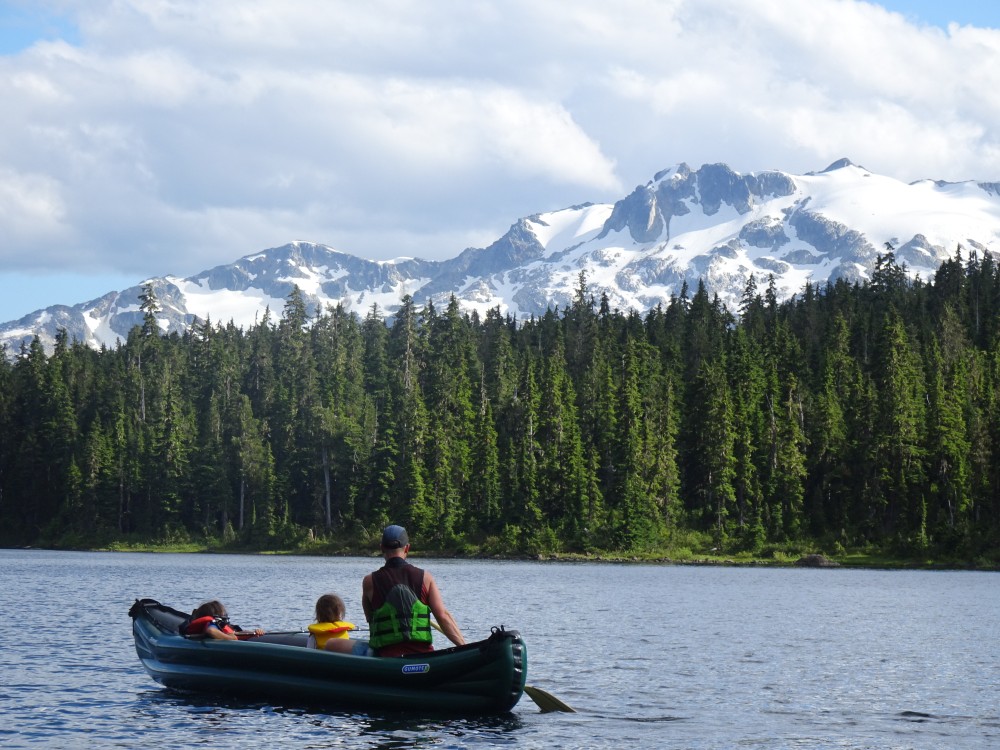
Bear spray – plenty of water – food – warm layers – rain jacket – sunscreen – headlamp or flashlight – whistle – dry bag (if paddling) – camera
Even though Callaghan Lake is accessible by vehicle, it is still a remote backcountry environment. Weather can change quickly in the Callaghan Valley, and temperatures often drop significantly in the evening, even during summer. Bringing warm layers and rain protection is essential, especially if you plan to stay overnight or spend extended time on the water. If you’re paddling, a dry bag is highly recommended to keep essentials protected.
Map of Callaghan Lake
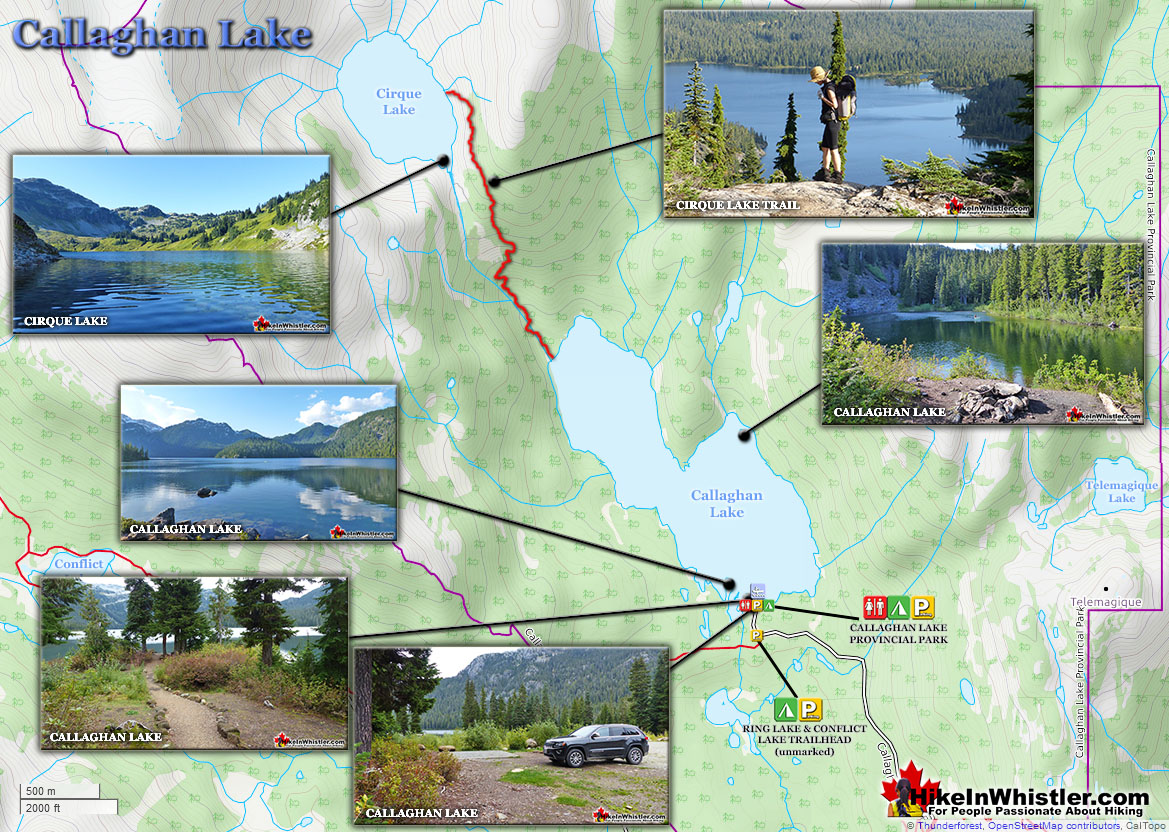
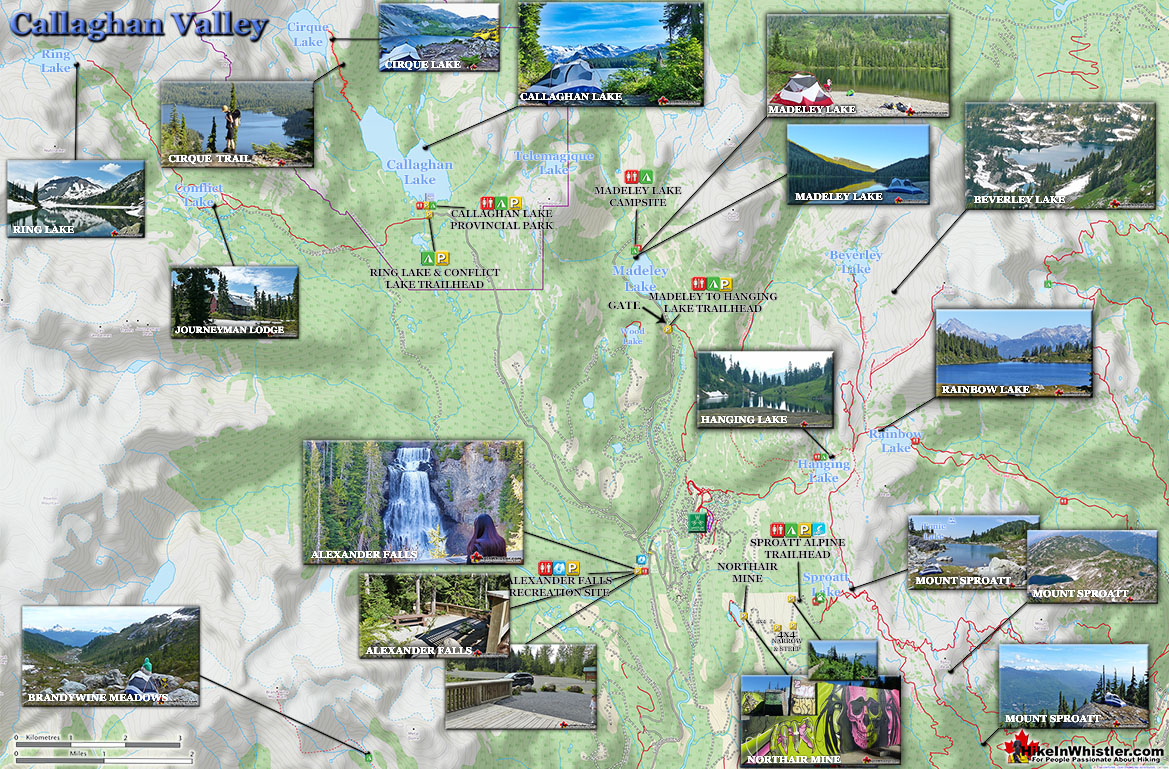
The map above highlights the Callaghan Valley, access roads, parking area, campsite location, and shoreline access points. It’s useful for understanding where the lake sits in relation to Whistler and how the surrounding forest service roads connect throughout the valley.
How to get to Callaghan Lake

To reach Callaghan Lake, you will need access to a vehicle. From Vancouver, drive north along Highway 99 (Sea to Sky Highway) toward Whistler. Approximately 20 kilometres south of Whistler, turn onto Callaghan Valley Road, a paved road that leads deep into the valley.
Follow Callaghan Valley Road for roughly 8 kilometres before turning left onto the Callaghan Lake Forest Service Road. From here, the road becomes gravel and continues for approximately another 8 kilometres until you reach the parking and camping area at Callaghan Lake.

Road conditions vary depending on season and weather. While a high-clearance vehicle is recommended due to potholes, washboard sections, and occasional rough patches, many standard vehicles are able to make the drive in dry summer conditions with careful driving. During or after heavy rain, the road can become muddy and rutted.
In winter, this road is not plowed and becomes part of the groomed cross-country ski trail network associated with the Callaghan Valley Nordic area. Vehicle access typically resumes in late spring or early summer, depending on snowpack and maintenance. The nearest town for fuel, food, and supplies is Whistler, so ensure you are prepared before heading into the valley.
The Trail / The Hike


One of the defining features of Callaghan Lake is that no formal hike is required to access the lake itself. The shoreline is located directly beside the parking and camping area, making it one of the more approachable alpine lakes in the Whistler region.
That said, there is still plenty to explore on foot. Informal trails branch off around parts of the lake and lead into the surrounding forest. These paths are not officially maintained and can change year to year depending on weather, fallen trees, and seasonal use. They offer short, peaceful walks rather than structured hikes, making them ideal for stretching your legs or finding quiet spots along the shoreline.
The terrain around the lake is generally gentle, though uneven ground, roots, and rocks are common near the forest edge. Good footwear is recommended if you plan to explore beyond the immediate campsite area. Because there are no marked routes, navigation is intuitive rather than directional — wander slowly, stay aware of your surroundings, and avoid trampling sensitive vegetation.
Many visitors choose to spend most of their time on the water rather than hiking. Canoes, kayaks, and paddleboards are ideal here, as the lake is typically calm and sheltered from strong winds. Early mornings and evenings often offer glassy conditions, perfect for paddling and photography. Swimming is possible, though the water remains cold year-round.
Things to Do at Callaghan Lake

Callaghan Lake is best enjoyed at a slow pace. Paddling is one of the most popular activities, with the calm water and clear reflections creating a peaceful experience that feels far removed from Whistler Village. Floating quietly across the lake is often enough to forget how close you are to civilization.
Swimming is refreshing but cold, even in mid-summer. Short dips are common, especially on warm afternoons, but extended swimming is not recommended due to water temperature. Many visitors prefer relaxing along the shoreline with a book, camera, or picnic.
Photography is another highlight, particularly during early morning and evening when the light is soft and reflections are strongest. Wildlife sightings are possible, especially birds and smaller mammals, so keeping a respectful distance and remaining quiet enhances the experience.
In winter, once the area is inaccessible by vehicle, Callaghan Lake becomes part of a broader backcountry landscape used by cross-country skiers and snowshoers — though this requires advanced planning and experience.
Facilities at Callaghan Lake

Callaghan Lake remains a free, no-frills campsite, offering a raw and authentic outdoor experience. Facilities are intentionally minimal, which helps preserve the area’s quiet and undeveloped character.
There are several well-spaced tent sites located close to the parking area, making it an ideal location for car camping. A gravel slope near the shoreline allows for easy canoe or kayak launching. Basic outhouses are available, but there is no potable water, no garbage disposal, and no cell service.
Visitors are expected to follow strict leave-no-trace principles. All food and waste must be packed out, and fires should only be made where permitted and with extreme caution. The lack of infrastructure is part of what makes Callaghan Lake special — once you’re on the water, the road and parking area fade away almost entirely.
Bear Safety

Callaghan Lake is located in active bear territory, and wildlife encounters are a real possibility. Proper preparation and awareness are essential.
It’s crucial to prioritize safety when in bear country, and Whistler, with its beautiful natural surroundings, is no exception. Here are some general bear safety procedures to keep in mind:
- Carry Bear Spray:
- Always carry bear spray and know how to use it. Make sure it’s easily accessible, preferably on your belt or backpack.
- Stay Alert:
- Be aware of your surroundings, especially when hiking or walking in wooded areas. Bears can be quiet, and surprise encounters can be dangerous.
- Make Noise:
- Make noise while hiking to alert bears to your presence. Clap your hands, talk loudly, or sing. This can help prevent surprising a bear.
- Travel in Groups:
- Traveling in groups is safer than going alone. Bears are less likely to approach larger groups.
- Secure Food and Garbage:
- Properly store food and garbage in bear-resistant containers or bear lockers. Bears have an excellent sense of smell and are attracted to food odors.
- Respect Closures:
- Follow any trail or area closures that are in place due to bear activity. These closures are there to protect both humans and bears.
- Do Not Feed Bears:
- Never feed bears intentionally or leave food out for them. Bears that associate humans with food can become dangerous and may need to be euthanized.
- Back Away Slowly:
- If you encounter a bear, back away slowly and avoid direct eye contact. Speak in a calm, assertive voice.
- Stay Calm:
- In the rare event of a charge, stand your ground. Do not run. Running can trigger a chase response.
Click here – Bear Safety – for more information. And Click here – Black Bear or Grizzly Bear? -for information on a Black bear vs a Grizzly Bear.
Historical Information & Development


The Callaghan Valley has long been used by Indigenous peoples as a seasonal travel corridor for hunting and gathering. Its forests, waterways, and sheltered terrain provided resources and passage through the Coast Mountains long before modern recreation arrived.
In more recent history, the valley gained wider recognition during preparations for the 2010 Winter Olympics, when nearby Nordic facilities were developed. Despite this, Callaghan Lake itself has remained largely untouched by commercial development.
Limited infrastructure and controlled access have helped preserve the lake’s natural character. Today, it remains a quiet retreat that reflects a balance between accessibility and conservation.
FAQ
How long do you need at Callaghan Lake?
A half-day visit is sufficient, but staying overnight allows you to experience the lake at its best.
How difficult is Callaghan Lake?
Easy. The lake is accessible by vehicle with minimal walking required.
How much does it cost?
Free.
Are there restrooms available?
Yes. Basic outhouses are available at the campsite.
Best time to go?
June to October, depending on snow and road conditions.
Are dogs allowed?
Yes, but caution is advised due to wildlife.