 Skip to content

Updated 2026 · Glass House Mountains, Queensland · Estimated read: 11 min
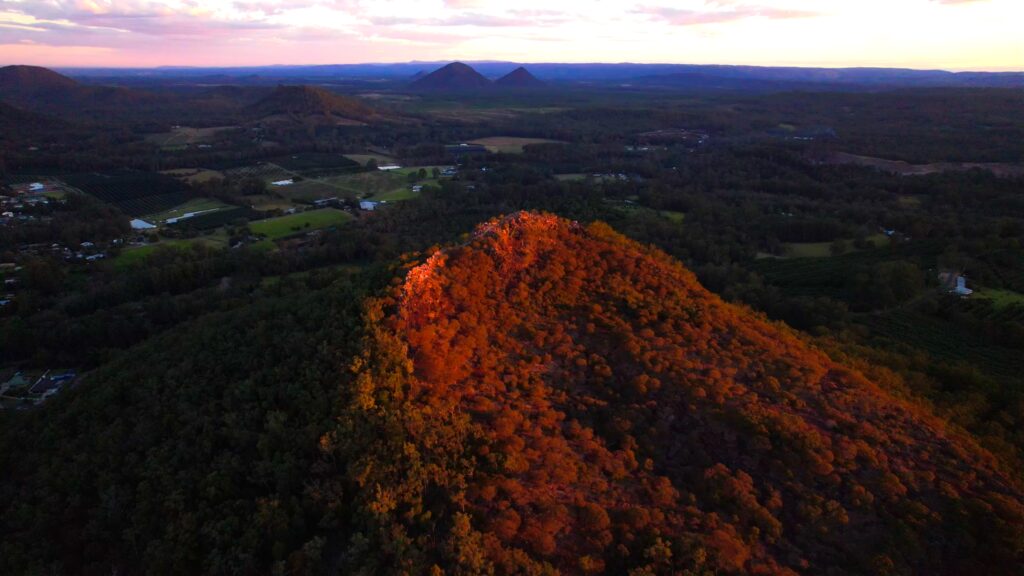
The Glass House Mountains rise out of the flat hinterland north of Brisbane like something left behind by an older world. They are volcanic plugs, the hardened cores of eruptions that happened around twenty six million years ago, and there are eleven of them scattered across the Sunshine Coast hinterland. The Mount Ngungun hike is the one most people climb first, and for good reason.
At 253 metres, Ngungun is the sixth tallest of the group and one of the more approachable summits. The track is short, the views at the top are genuinely spectacular, and it sits within an easy hour of Brisbane. It gives you the full drama of the range without the long, technical scramble that the bigger peaks demand.
This guide covers the whole walk. How to get to the trailhead, what the track is actually like, the cave along the way, the summit views, what to bring, when to go, and how to fold it into a wider day among the mountains. It is a small hike with a large payoff, and a little planning makes it better. One of many amazing hikes in Queensland!
Where Is Mount Ngungun and How Do You Get There
Mount Ngungun sits in the Glass House Mountains National Park, in the Sunshine Coast hinterland of South East Queensland. The nearest town is Glass House Mountains, a small village on the rail line, and the trailhead is a short drive from it. The whole range is signposted from the Bruce Highway, so it is hard to miss once you are close.
Getting There from Brisbane
From Brisbane, the drive is around an hour, covering roughly 70 kilometres north on the Bruce Highway. Take the Glass House Mountains exit and follow the signs through the township toward the peaks. The Ngungun trailhead is about three kilometres from the village via Coonowrin Road and Fullertons Road, with a car park and roadside parking at the base.
Getting There from the Sunshine Coast
Coming from the coast, Ngungun is even closer. Caloundra is around thirty minutes away, and Maroochydore, Mooloolaba, or Noosa sit within forty five minutes to an hour. This makes the hike an easy morning trip from almost anywhere on the Sunshine Coast, out and back before the heat of the day settles in.
Practical Tip
The car park is small and fills fast, especially at sunrise and on weekends. Arrive early to get a spot and to walk in the cool of the morning. There are no toilets or drinking water at the trailhead, so sort both before you leave the township.
The Mount Ngungun Hike, What to Expect

The walk earns its popularity by packing a lot into a short distance. It begins gently and ends with real views, and while it is rated as moderate, most reasonably fit walkers manage it without much trouble.
Distance, Grade, and Time
The Mount Ngungun summit track is 2.8 kilometres return, with a climb of around 190 metres to the top. Queensland Parks rates it Grade 4, which reflects the steeper rocky sections and the exposed cliff edges near the summit rather than the overall difficulty. In practice it is widely considered one of the easier Glass House Mountains climbs. Allow around ninety minutes to two hours return, though a strong walker can do it in closer to an hour, plus time at the top.
The track opens in a beautiful stretch of eucalypt forest, with scribbly gums overhead and ferns across the floor. It stays fairly flat at first, then gradually steepens into sections of stone steps and uneven rock. None of it is technical, but good footwear and a little care go a long way, particularly on the way down.
The Cave
About halfway up, a short detour leads to a cave set into the rock, sometimes called Lovers Cave. It is a large overhang rather than a deep cavern, and it makes a natural pause point with a frame of forest beyond it. Photographers tend to linger here, since the light and the rock make for a striking shot on the way to the top.
The Summit and the Views
The top of Ngungun is a broad, rocky platform, and the view is why the track is never quiet. From here you look straight across to the sheer face of Mount Tibrogargan, the spire of Mount Coonowrin, and the great dome of Mount Beerwah, with the hinterland rolling out to the coast beyond. It is a genuine 360 degree panorama, and few short walks anywhere in the country deliver this much for so little effort.
Safety Note – The summit has unfenced, sheer cliff edges. Stay well back from the drop, watch your footing on the rock, and keep children close. In wet weather the rock becomes very slippery, and this is not a hike to attempt after heavy rain.

What to Bring
This is a short walk, but the Queensland sun and the rocky terrain mean a few things are worth carrying. Water is the main one, since there is none on the track and the climb warms you up quickly. A litre per person is a sensible minimum, more in summer.
Wear proper shoes with grip rather than thongs or flat sneakers, as the rock steps can be slick. Bring sun protection, a hat, and sunscreen, because the summit is fully exposed. A small daypack keeps it all manageable and leaves your hands free for the steeper sections. A comfortable hiking daypack is worth having if you plan to climb more of the Glass House Mountains than just this one.
Best Time to Hike Mount Ngungun
The cooler months from April to September are the best time to walk Ngungun. The temperatures are comfortable, the air is clearer, and the light across the range is at its softest. Summer, from December to February, brings heat and humidity that make the exposed summit hard work, so if you go then, start at first light.
Sunrise is the standout time on this track. The early light catches the other peaks and the coast beyond, and the summit is quiet before the day fills up. Sunset is beautiful too, though you need to leave enough daylight to get back down safely. Avoid the walk in the rain or immediately after it, when the rock turns treacherous.
Things Worth Knowing Before You Go
The Glass House Mountains are deeply significant to the Jinibara and Gubbi Gubbi peoples, who hold the range as a family of mountains with its own long story. Walk with that in mind. Some peaks in the group are culturally sensitive and climbing them is discouraged, though the Ngungun summit track is open to walkers. Treating the place with respect is simply part of visiting it well.
A few practical points. Dogs are not permitted in the national park. Snakes and ticks live in the bush here, so watch where you step and check yourself afterwards. There are no bins, so carry out what you carry in. If you plan to fly a drone, note that recreational drone use in Queensland national parks requires a permit, which is worth sorting before you go rather than being turned back. For current track conditions and any closures, the official Queensland Parks page is the reliable source.
Combine It With the Other Glass House Mountains
Ngungun makes a natural first stop rather than a whole day on its own. Once you are done, the Glass House Mountains Lookout gives you the full range in a single sweep with almost no walking. The Tibrogargan circuit at the base of that peak is an easy, mostly flat loop, and the more experienced can take on the steeper Tibrogargan or Beerwah summit routes.
The township of Glass House Mountains has cafes for afterwards, and the wider Sunshine Coast hinterland spreads out around it with lookouts, produce stands, and small towns worth a slow drive. Guided hikes and Sunshine Coast day tours that take in the range can be found through the OneLife Viator shop if you would rather have the driving and logistics handled. If you want to make a weekend of it, hinterland and coast accommodation can be compared on Booking.com.

Frequently Asked Questions
How hard is the Mount Ngungun hike?
It is rated Grade 4, or moderate, mainly because of the steep rocky sections and the exposed cliff edges near the top. Despite that rating, it is one of the easier Glass House Mountains summits, and most reasonably fit walkers manage it comfortably with good shoes and a little care.
How long does it take to climb Mount Ngungun?
The track is 2.8 kilometres return. Allow around ninety minutes to two hours including time at the summit, though a strong walker can complete the climb itself in closer to an hour.
Is there a cave on the Mount Ngungun track?
Yes. About halfway up, a short detour leads to a large rock overhang, sometimes called Lovers Cave. It is a popular spot to stop and take photos before continuing to the summit.
Can you take dogs up Mount Ngungun?
No. Dogs are not permitted anywhere in the Glass House Mountains National Park, including the Ngungun summit track, to protect the wildlife and the environment.
When is the best time to hike Mount Ngungun?
The cooler months from April to September are ideal, and sunrise is the standout time on this track. Start early in summer to beat the heat, and avoid the walk in wet weather when the rock becomes slippery.
Final Thoughts on Mount Ngungun
Some hikes ask a great deal and give a little. Mount Ngungun does the opposite. An hour or so of walking on a short, forested track delivers one of the finest views in South East Queensland, with the whole family of volcanic peaks standing around you and the coast glinting in the distance.
It is the kind of walk that suits an early start and an unhurried summit. Sit for a while at the top, watch the light move across Tibrogargan and Beerwah, and let the age of the place settle in. These mountains are millions of years old and hold a story far longer than any track notes can carry.
The Mount Ngungun hike is the easiest way into that story, and a fine first step into the Glass House Mountains. Go early, tread lightly, and give yourself time at the top. It is a small effort for something you will remember long after your legs have forgotten the climb.
This post contains affiliate links. If you book or purchase through them I may earn a small commission at no extra cost to you.