 Skip to content

Introduction: Where New Zealand Begins
Northland – New Zealand. Northland sits at the top of the North Island, a long finger of land reaching up into the Pacific and Tasman simultaneously. It’s the kind of place that gets underestimated. People treat it as a day trip from Auckland, or a footnote between the city and the Bay of Islands. They miss the point entirely.
This is where New Zealand began. Where the first Māori voyagers made landfall, where the Treaty of Waitangi was signed, where ancient kauri trees have stood for two thousand years watching empires rise and fall. The Far North — as locals refer to the tip of the region — carries that weight lightly. The roads are narrow, the beaches are often empty, and conversations tend to drift the way they do when no one is in a rush to be anywhere.
What stood out most, from my own time wandering the region, was the contrast. Northland holds some of the country’s most dramatic landscapes — sweeping sand dunes, cathedral forests, glassy harbours — and yet it never performs for you. There are no grand entrances. You arrive at something remarkable and it simply exists, waiting.
This guide covers the whole region: from the laid-back Bay of Islands in the south to Cape Reinga at the very top, where two oceans meet and the Māori believe spirits depart for the afterlife. Whether you have three days or three weeks, Northland deserves your full attention.
This is the travel guide to the Far North that most people wish they’d read before they went.
Where Is Northland, New Zealand?
Northland is the northernmost region of New Zealand’s North Island, stretching roughly 350 kilometres from just above Auckland to Cape Reinga at its tip. Administratively, the region is anchored by Whāngārei, its largest city, though the heart of the tourist experience tends to cluster around Paihia and Russell in the Bay of Islands, and then push further north through Kerikeri, Kaitaia, and out to Ahipara on the west coast.
The region is shaped like a peninsula — narrow in places, wide in others — with the Pacific Ocean to the east and the Tasman Sea to the west. This dual-coast geography is one of Northland’s defining qualities: you can watch the sunrise over white-sand east coast beaches and drive less than an hour to watch the sunset over the wild, surf-battered west coast. That kind of geographic intimacy is rare anywhere in the world.
Kauri forests occupy the interior in places, and the region carries a distinctly subtropical humidity compared to the rest of New Zealand. In summer, Northland feels genuinely tropical. In winter, it’s mild and often uncrowded — something worth knowing if you’re weighing up timing.
Why Visit Northland?
There are several reasons travellers come to Northland, and they rarely overlap. Some come for the sailing and diving in the Bay of Islands. Some come to walk through kauri forests older than European civilization. Others come to stand at Cape Reinga and feel the symbolic and spiritual weight of the place. A few come simply to drive Highway 1 north until the road runs out, with no particular destination in mind.
What ties all of these experiences together is an absence of pretension. Northland doesn’t try hard to impress you. The camping is genuine, the food is humble in the best places, the beaches are working beaches where locals actually swim and fish, not curated backdrops. There’s an authenticity here that’s increasingly hard to find in places that have been written about too many times.
For those interested in New Zealand’s cultural history, there is nowhere more important. The Treaty Grounds at Waitangi represent the founding document of modern New Zealand, and the region’s iwi — particularly Ngāpuhi, the largest Māori tribe in the country — maintain strong cultural visibility. You don’t have to be a history enthusiast to feel the significance; it’s in the place names, the carvings, the way people speak about the land.
And then there is the sheer physical beauty. Ninety Mile Beach, the Cape Reinga lighthouse, the kauri at Waipoua Forest, the harbour at Russell — these are images you carry with you long after the trip is over.
Best Things To Do in Northland

Visit Cape Reinga
Cape Reinga is the kind of place that earns its reputation. Standing at the very top of New Zealand, watching the Tasman and Pacific waters collide in a visible, churning line, is one of those travel experiences that doesn’t require any embellishment. The wind usually has something to say; the views stretch further than feels reasonable. A gnarled pōhutukawa tree clings to the cliff face below the lighthouse, and in Māori tradition, it’s the point from which the spirits of the dead begin their journey back to Hawaiki, the ancestral homeland.
One thing worth knowing: the most dramatic light at Cape Reinga is late afternoon, when the sun drops behind the Tasman and the western horizon turns amber. Most day tours arrive around midday, which is fine but rarely stunning. If you’re driving yourself, arriving later rewards the effort.
Drive Ninety Mile Beach
Ninety Mile Beach is technically 88 kilometres — the name is either a quirk of history or a small act of poetic license, depending on who you ask. What matters is the experience: a straight, flat expanse of sand so wide it has been legally classified as a highway. Coaches and 4WDs drive its length as part of the Cape Reinga loop, and there’s something genuinely surreal about watching a bus disappear into the ocean haze.
Local tip: If you’re renting a standard car, don’t drive on the beach itself. The sand is deceptive and the tidal zones change constantly. Rental car insurance explicitly excludes Ninety Mile Beach. The best views come from the dunes at Te Paki Stream, where you can also sandboard down into the water.
Explore the Bay of Islands
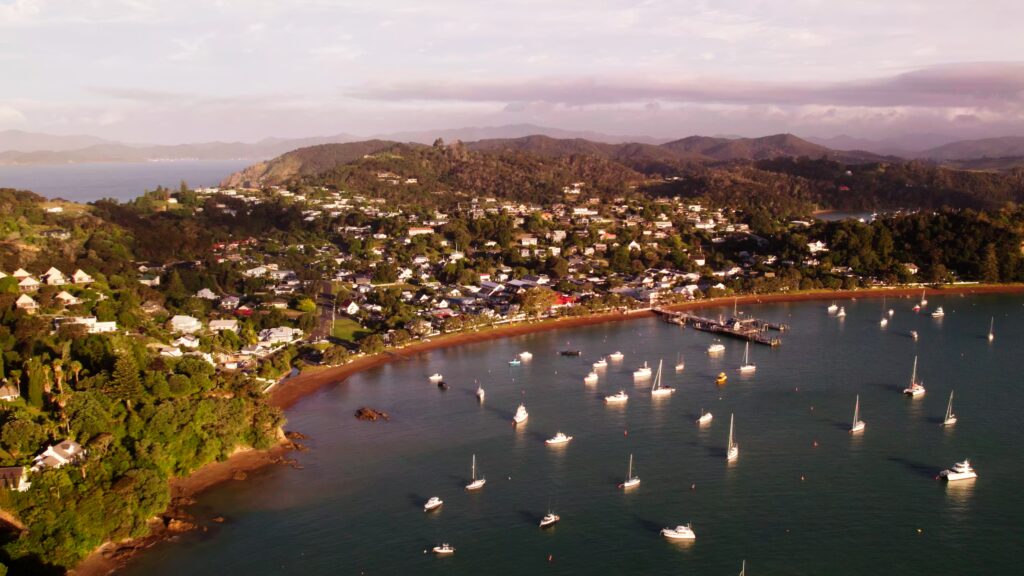
The Bay of Islands needs little introduction — it’s Northland’s most famous drawcard, and justifiably so. 144 islands scattered across a sheltered harbour, with sailing, kayaking, dolphin-watching, diving, and some of the best fishing in the Southern Hemisphere. Paihia is the main hub, functional and pleasant. Russell, a short ferry ride across the harbour, is the one worth lingering in.
Russell is quietly wonderful. Its streets feel like they belong to a different era — wooden colonial buildings, pohutukawa trees overhanging the waterfront, a pub that claims to be the oldest in New Zealand. When I visited in the shoulder season, the main street was almost deserted by mid-morning. A man was sitting outside the Four Square with a coffee, watching the water. No one was in a particular hurry.
Dolphin-watching cruises run daily from Paihia, and the Bay of Islands is also home to the Hole in the Rock — a sea cave accessible by boat at Piercy Island. It’s touristy in the best sense: genuinely spectacular and worth doing.
Walk Through Waipoua Forest
If Northland has a spiritual centre, it might be Waipoua Forest. This is one of the last stands of ancient kauri — trees that can live for over two thousand years and grow to staggering dimensions. The walk to Tāne Mahuta, the largest known kauri in New Zealand, is short (about fifteen minutes each way), but standing in front of the tree changes the mood immediately. It’s 51 metres tall with a girth of nearly fourteen metres. The forest around it is cathedral-quiet.
Local tip: Arrive early. Tāne Mahuta is accessible directly from the road, which means by mid-morning it can feel surprisingly visited. The forest in early morning light — shafts of sun cutting through the canopy — is worth waking up for. Also, kauri dieback disease is a serious ecological threat; clean your footwear thoroughly at the cleaning stations provided before and after any kauri walk. This is not optional.
Waitangi Treaty Grounds
The Treaty Grounds at Waitangi are essential, not optional. This is where, in 1840, representatives of the British Crown and over five hundred Māori chiefs signed the founding document of New Zealand. The site is beautifully maintained and takes at least half a day to do properly — the museum is genuinely excellent, and the guided cultural performances add context that transforms what might otherwise feel like a historical visit into something more alive.
The carved meeting house (Te Whare Rūnanga) is extraordinary in detail, and the view down over the bay from the grounds is one of the most quietly beautiful in the region.
Best Beaches and Nature Spots in Northland

Northland’s beaches are its secret. While the Bay of Islands gets the attention, the region’s eastern and western coastlines hide beaches that many New Zealanders haven’t visited themselves.
Maitai Bay, on the Karikari Peninsula east of Kaitaia, is the kind of beach that makes you wonder why you ever bother going anywhere popular. A sheltered bay with two arcs of white sand and almost no facilities — just water, sky, and the occasional local family with a fishing rod.
Tauranga Bay and Matai Bay on the east coast of the Karikari Peninsula are equally unmarked on most tourists’ maps. The Karikari Peninsula generally rewards a detour: wild, sparsely visited, and extraordinarily beautiful.
Ahipara sits at the southern end of Ninety Mile Beach on the west coast. A working community, slightly rough around the edges in the best way — proper surfing, real camping, sunsets that last longer than they have any right to. If I came back to Northland, Ahipara is where I’d base myself for a few quiet days.
Poor Knights Islands, off the coast near Tutukaka, are considered among the world’s top ten dive sites. The marine reserve holds visibility that experienced divers describe as almost unreal — arches, sea caves, and kelp forests teeming with species found nowhere else. Surface-level snorkelling is also excellent.
Best Time to Visit Northland
The best time to visit Northland depends entirely on what you’re after, but the honest answer is: most of the year is fine, and the peak season brings complications that the shoulder seasons don’t.
December to February is peak summer. Schools are out, campgrounds fill, Paihia gets busy, and the Bay of Islands becomes the boating capital of New Zealand. The weather is warm and often humid, the water is at its best for swimming and diving, and the whole region has an energy to it. Book accommodation months in advance if you’re coming in January.
March to May is the sweet spot. The crowds thin, the light turns golden and less harsh, the sea is still warm enough to swim, and prices drop. Many travellers who know the region prefer March above all other months.
June to August is mild rather than cold — Northland’s subtropical position means winter temperatures rarely drop below twelve or thirteen degrees Celsius at night. This is the quietest period, and certain experiences — Waipoua Forest, Cape Reinga at sunset, empty beaches — become genuinely meditative. Rain is more likely, but storms up here can be spectacular.
September to November brings spring and increasing warmth. Wildflowers, uncrowded campsites, and that particular quality of light before the summer crowds arrive. An excellent time for those who want landscapes without the noise.
Where To Stay in Northland
Budget
The camping in Northland is excellent and genuinely affordable. DOC campsites (managed by the Department of Conservation) are scattered throughout the region — some basic, some with facilities — and they represent some of the finest camping in New Zealand. Maitai Bay, Tauranga Bay, and Te Paki (near Cape Reinga) all have DOC sites worth booking. Prices are typically between $10 and $20 per person per night.
For backpackers, Pipi Patch Lodge in Paihia is well-run and social without being chaotic. Ahipara Holiday Park on the west coast offers affordable cabins and powered sites with direct beach access.
Mid-Range
Paihia has several mid-range options that are reliable without being remarkable — Scenic Hotel Bay of Islands and Aloha Beachfront Apartment Hotel are consistent choices. For something with more character, look at staying in Kerikeri, which has a slower pace and some lovely B&B-style accommodation amid citrus orchards and subtropical gardens.
Whangarei is a useful overnight stop and has grown into a genuinely pleasant small city. Lupton Lodge offers beautiful rooms in a private garden setting and is worth the slight premium.
Premium
The Lodge at Kauri Cliffs is one of New Zealand’s best destination lodges. Perched on clifftops above the Pacific, with a world-ranked golf course, private beaches, and rooms that make you understand why people travel specifically for accommodation. It is not inexpensive, but it is exceptional. This is the kind of place where the light through the window in the morning feels like it was arranged for you.
Eagles Nest in Russell is smaller, more intimate, and arguably even more beautiful. Five private villas on a hillside above the Bay of Islands, each with uninterrupted views, private pools, and the kind of service that disappears when you don’t need it and materialises exactly when you do.
How To Get There and Getting Around
Getting to Northland from Auckland is straightforward. The drive from Auckland to Paihia in the Bay of Islands takes approximately three hours — longer in summer traffic leaving the city on Friday afternoons. Whāngārei is about ninety minutes from Auckland, making it an easy day trip from the city or a practical first overnight stop heading north.
Air New Zealand operates flights from Auckland to Kerikeri Airport, which takes around fifty minutes and makes the Bay of Islands accessible without the drive. Kaitaia Airport serves the Far North if you’re heading directly for Cape Reinga.
Getting around Northland independently requires a car. This is not a region for public transport — buses exist but are infrequent and impractical for reaching the places that matter most. Renting a car from Auckland and driving north is the standard approach and, arguably, part of the experience itself. The drive through Northland’s interior, past farms and forests and small communities that seem undisturbed by the twenty-first century, is part of what makes the region feel distinct.
A 4WD is useful but not essential unless you plan to drive specific tracks — Te Paki Stream and some beach access points benefit from higher clearance. For Ninety Mile Beach itself, as mentioned, avoid driving on the sand in a standard vehicle.
Travel Tips for Northland
Carry cash. Northland has gaps in EFTPOS coverage, particularly in the Far North. Smaller campgrounds, roadside stalls, and some local operators are cash-only. ATMs become scarce north of Kaitaia.
Fill your tank. Between Kaitaia and Cape Reinga there are very few petrol stations, and none at the cape itself. The same applies on the west coast north of Ahipara. Don’t assume you can top up at the next town.
Book DOC campsites in advance. The online booking system fills quickly for popular sites in summer. Arriving without a booking at Maitai Bay in January is a gamble that doesn’t always pay off.
Bring sun protection and layers. The subtropical latitude means UV levels are high even in cooler months. Northland also has a habit of delivering perfect mornings followed by afternoon rain, particularly in summer. A light waterproof layer costs nothing to carry and saves numerous afternoons.
Download offline maps. Cell coverage in the Far North is unreliable. Google Maps works offline if you download the region before you leave reception range.
Common Mistakes To Avoid
Trying to do Cape Reinga as a quick stop is one of the most common errors. Day tours from Paihia spend roughly forty-five minutes at the cape — enough for photos, not enough to actually feel the place. If the site matters to you, stay north of Kaitaia the night before and arrive on your own schedule.
Skipping Russell in favour of staying only in Paihia is another. Paihia is functional. Russell is beautiful. The ferry costs a few dollars and takes ten minutes.
Not allocating time to Waipoua Forest is a mistake made by travellers who underestimate it. It’s not just a tree — the whole forest has a weight to it that takes time to absorb. Plan a morning, not an hour.
Underestimating driving times is easy to do on a map and painful to discover in practice. Northland’s roads are narrow, winding, and often shared with logging trucks or slow-moving campervans. What looks like a ninety-minute drive can take two hours comfortably.
Finally — and this is specific but important — do not approach Tāne Mahuta or any kauri tree without using the kauri dieback cleaning stations. This is both legally required and morally important. The disease has already killed significant stands of kauri, and every unclean boot carries risk.
Sample 3-Day Northland Itinerary
Day One: Auckland to Bay of Islands
Leave Auckland early, before the city properly wakes up. Drive north on Highway 1, stopping in Whāngārei for a coffee at the town basin — the harbour area is pleasant and the cafes are good. Continue to Paihia, check in, then take the ferry to Russell in the late afternoon. Walk the waterfront, have an early dinner, watch the light go off the bay. The Russell waterfront at dusk is one of those uncomplicated pleasures.
Day Two: Bay of Islands and Waitangi
Spend the morning at the Waitangi Treaty Grounds — arrive at opening, take the guided tour, allow yourself to be moved by the carved house and the sweep of history held in the place. Afternoon: either join a sailing or dolphin cruise in the bay, or rent a kayak and find your own island. Evening back in Russell or Paihia.
Day Three: North to Cape Reinga
Wake before dawn and drive north. Stop at Waipoua Forest for Tāne Mahuta — the early morning light through the canopy is worth every minute of the early start. Continue north to Kaitaia for fuel and a late breakfast, then push to Cape Reinga. Spend at least an hour. Walk to the lighthouse. Sit with the view. On the way back, stop at Te Paki Stream for sandboarding on the dunes. Return to Paihia or, if the trip allows, stay overnight near Ahipara and drive the Ninety Mile Beach coast at sunset.
FAQs About Visiting Northland, New Zealand
Is Northland worth visiting beyond the Bay of Islands?
Absolutely. The Bay of Islands is the entry point, but the Far North — Cape Reinga, Ninety Mile Beach, Waipoua Forest, the Karikari Peninsula — is where Northland reveals its true depth. Many travellers who spend time beyond the bay consider it the highlight of their entire New Zealand trip.
Is Northland safe for solo travellers?
Yes. Northland is safe and welcoming. The main considerations for solo travellers are practical rather than safety-related: cell coverage gaps in the Far North mean you should inform someone of your plans, carry a physical map or offline version, and ensure your vehicle is reliable before heading into remote areas.
What is the best way to see Cape Reinga?
Driving yourself gives you the most flexibility and allows you to arrive early or late when the crowds thin. If you don’t have a car, day tours from Paihia are comfortable and informative, though the time at the cape itself is limited. The tour up Ninety Mile Beach and back via Cape Reinga is the classic route.
Can I swim at Ninety Mile Beach?
Swimming is possible but caution is advised. The west coast beaches in Northland, including Ninety Mile Beach, have strong rip currents and are not patrolled by lifeguards. Ahipara at the southern end has slightly calmer conditions. Always check local conditions and, if in doubt, don’t swim unaccompanied.
What should I know about Māori culture in Northland?
Northland has the highest concentration of Māori population and cultural significance in New Zealand. Visiting Waitangi with genuine curiosity and respect is important. If you’re invited to a marae (meeting ground), follow your hosts’ guidance carefully. Learning a few words of te reo Māori — kia ora (hello/thank you), tēnā koe (greetings), ka pai (good/well done) — is appreciated and goes a long way.
Conclusion: The North Stays With You
I’ve been thinking about what it is that makes Northland feel different to the rest of New Zealand. It’s not just the landscape, though the landscape is extraordinary. It’s something in the pace. A willingness, built into the culture of the place, to let time move at its own speed.
Standing at Cape Reinga as the afternoon light broke over the Tasman, watching those two bodies of water argue at the surface, I felt something I’ve felt rarely in heavily visited places: the sense that the land didn’t need me there to be significant. It was remarkable entirely on its own terms.
That’s the quality Northland asks you to bring. Not wonder, exactly. More like attentiveness. The beaches will be there whether you photograph them or not. Tāne Mahuta has been standing since before the Norman Conquest. The treaty grounds hold a history that exists whether tourists visit or look away. The Far North doesn’t perform.
What it offers instead is rarer: the chance to be genuinely still in a place that has earned its stillness over centuries. To drive roads that thin to single lanes, to stop when something catches your eye, to sleep where the sky is dark enough for stars.
Go north. Go further than you planned. Stay a day longer than seems sensible.
You won’t regret the extra time. You might regret not taking it.
onelife101.com — Travel guides written for people who travel to feel something, not just to say they’ve been.