 Skip to content

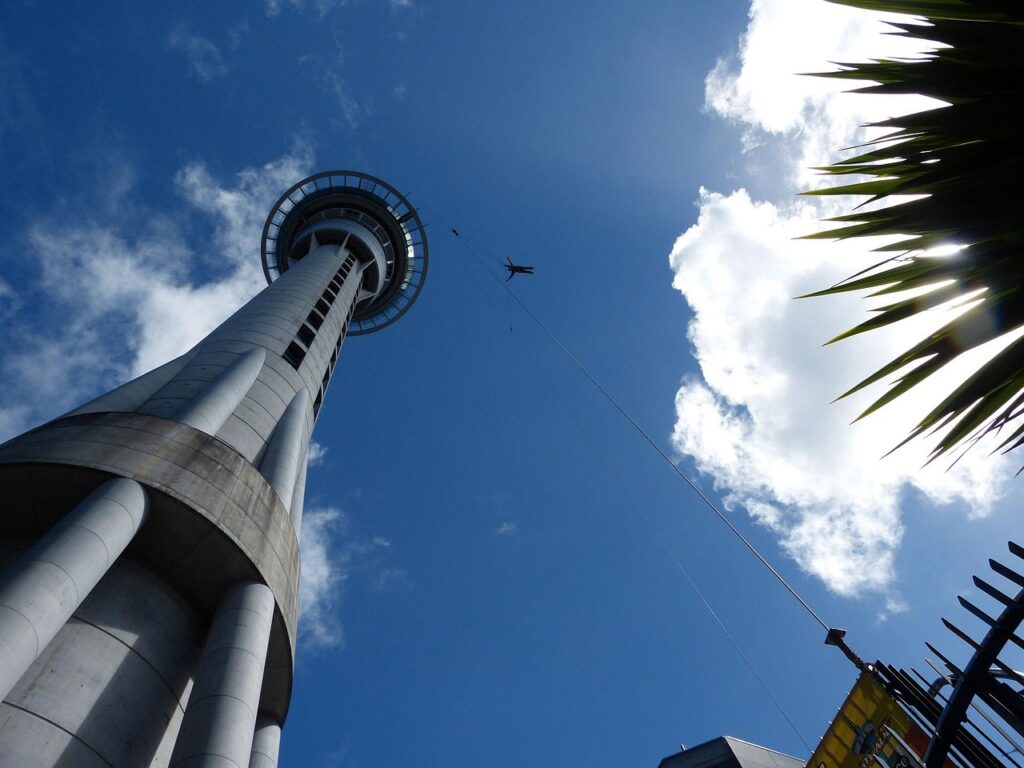
Photo and Drone Spots · New Zealand · Updated 2026 · 10 min read
Auckland is a city built for photographers, though not everyone works out why. It sits on a narrow isthmus between two harbours. Scattered with fifty volcanic cones, and its two coasts face opposite directions. That geography is the whole trick. The best photo spots in Auckland are not a random collection of lookouts. They are a set of high points and coastlines that each catch the light at a different hour of the day.
Get that timing right and the city gives you a great deal. Shoot the east coast at dawn, when the sun comes up behind Rangitoto. Shoot the west coast at dusk, when the Tasman turns the black sand gold. Nearly everything on this list follows that one rule.
Below are the viewpoints worth planning a morning or an evening around. What each one actually gives you, and when to be standing there. There is also a section on drone rules, because Auckland has more restrictions than most people expect.
Read Next –
The Best Photo Spots in Auckland
The best photo spots in Auckland divide neatly between the volcanic summits inside the city, the harbour vantage points on either side of the water, and the wild coast an hour west. Each group suits a different light. Here they are, roughly in the order you would work through them.
Maungawhau (Mount Eden)
The highest natural point in the city at 196 metres. Maungawhau gives you the single most complete view of Auckland: the Sky Tower and the CBD in the middle distance. Both harbours on either side, and Rangitoto sitting out on the water. The deep grassed crater in the foreground is what makes the composition. Giving you something to anchor the frame rather than a flat skyline.
Two practical things matter here. The summit road has been closed to private vehicles since 2016, so you walk up from the car parks off Mountain Road, which takes ten to fifteen minutes. The crater itself, Te Ipu Kai a Mataaho, is wāhi tapu and must not be entered, so shoot from the rim track and stay on the paths.
Best light: sunrise · Access: free, 10 to 15 minute walk · Shoot: crater in foreground, skyline behind.
Mount Victoria, Devonport
If you want the classic Auckland skyline shot. The one with the whole city stacked behind the harbour, this is where it is taken from.
The compression works in your favour here. A longer lens pulls the Sky Tower and the harbour bridge together into a tight, layered frame that no city-side viewpoint can give you. It is a short walk up from the village, and you can drive most of the way if you are carrying gear.
Sunset is the hour. The sun drops behind the city, the buildings light up against a warm sky, and the harbour holds the colour for another twenty minutes after. Stay for blue hour, when the lights come on and the water goes deep navy.
Best light: sunset and blue hour · Access: Devonport ferry, then a short walk · Shoot: long lens, city across the water.
Bastion Point and the Michael Joseph Savage Memorial
East of the city above Ōrākei, Bastion Point looks out across the Waitematā to Rangitoto with a formal garden and memorial in the foreground. It is one of the easiest good viewpoints to reach, ten minutes from the centre by car, and the elevated lawn gives a clean, uninterrupted line out to the gulf.
This is a sunrise location. The sun comes up more or less behind Rangitoto through the middle of the year, and on a still morning the harbour goes to glass. The memorial’s stone and columns give you a strong foreground if you want something more than water and sky.
Best light: sunrise · Access: free, car park on site · Shoot: Rangitoto on the horizon, memorial in foreground.
Maungakiekie (One Tree Hill)
The obelisk on the summit of Maungakiekie is one of Auckland’s defining silhouettes, and the surrounding Cornwall Park, with its avenues of old trees and grazing sheep, gives you a pastoral foreground you would not expect within a city. It is the most photogenic of the volcanic cones for that reason.
The summit gives a wide view over the southern half of the isthmus and out to the Manukau. Late afternoon is best, when the low sun rakes across the paddocks and the obelisk casts a long shadow down the slope. Autumn and winter give the strongest side light.
Best light: late afternoon · Access: free, walk up from Cornwall Park · Shoot: obelisk silhouette, sheep and trees below.

The Sky Tower
Shooting from the Sky Tower rather than at it gives you the only true aerial view of the city that does not involve a drone permit. From 328 metres the observation decks look down on the harbour, the wharves and the volcanic cones spread across the isthmus, and the glass floor panels are worth a frame of their own.
Glass reflections are the challenge. Press the lens close to the window, shoot with a lens hood or a dark sleeve, and avoid using flash. General admission runs around NZ$40, and the decks stay open into the evening, which is when this is worth doing. You can book Sky Tower admission here.
Arrive about an hour before sunset and stay through blue hour. You get the golden light, the sunset itself and the city lights from the same spot without moving.
Best light: sunset to blue hour · Cost: around NZ$40 · Shoot: lens against the glass, no flash.
North Head (Maungauika)
Just beyond Devonport, North Head sits at the entrance to the harbour and gives you a different angle on the city, wider and lower than Mount Victoria, with the added interest of old military tunnels and gun emplacements cut into the headland. The tunnels are free to explore and photograph, and they make strong frames if you are shooting anything more than landscapes.
Ferries and container ships pass close below on their way in and out, which gives you moving subjects in an otherwise static view. Good at either end of the day, though the light is kinder in the evening.
Best light: late afternoon and evening · Access: free, short walk from Devonport · Shoot: harbour traffic, tunnels, headland.
Mercer Bay Loop
West of the city, the Mercer Bay Loop runs along the highest coastal cliffs in Auckland, and it is the most dramatic landscape you can reach in under an hour from downtown. The track drops through low scrub to a headland with sheer drops to the Tasman, and views stretching south toward Karekare and north past Piha.
The scale here is genuinely hard to convey, so put something in the frame for reference: the track, a figure on the path, the line of the cliffs receding into haze. It is exposed and often windy, so a stable tripod matters more than usual.
This is a sunset location, and one of the best in the region. The sun sets straight out over the water, and the cliffs go from gold to deep blue in the space of half an hour.
Best light: sunset · Access: free, 1 hour loop, car needed · Shoot: wide, with the cliff line receding.
Piha and Lion Rock
Piha is the most photographed beach in the country and still worth your time, mostly because of Lion Rock, the weathered volcanic outcrop that splits the black sand in two. The combination of dark sand, white surf and that single strong shape gives you a composition that works in almost any weather.
The classic angle is from the beach itself with the rock centred and the surf leading in, though the view from the lookout on Piha Road as you come down the hill is the one that shows the whole bay. Long exposures on the wet sand at low tide give you reflections and softened water.
Sunset again, and it is worth staying past it. The best colour here often arrives fifteen or twenty minutes after the sun has gone.
Best light: sunset and after · Access: free, car needed, 40 minutes from the city · Shoot: low tide reflections, Lion Rock centred.
Muriwai Gannet Colony
A little further north, Muriwai holds one of the most accessible seabird colonies anywhere. Hundreds of gannets nest on the cliffs and rock stacks from around August to March, close enough to the viewing platforms that you can shoot them landing and taking off without a long lens, though a long lens helps.
The birds themselves are the subject, but the setting does a lot of the work: black cliffs, white surf below, and a long beach curving north into the distance. Overcast days are kinder here than bright sun, which blows out the white plumage.
Best light: overcast, or late afternoon · Season: roughly August to March · Shoot: telephoto for birds, wide for the cliffs.
Karekare Falls and Beach
The quietest of the west coast spots, Karekare gives you two subjects within a few minutes of each other: a waterfall set back in the bush, and a wide black-sand beach framed by high cliffs that is often almost empty. It is the beach from The Piano, and it still has that same brooding quality on a grey day.
The falls suit a slow shutter and an overcast sky, and the stream crossing to reach the beach gives you foreground in the wider shots. There are no facilities and no crowds, which is the point.
Best light: overcast for the falls, sunset for the beach · Access: free, car needed · Shoot: slow shutter at the falls.
Tips for Shooting in Auckland
Learn the drone rules before you fly, because Auckland is stricter than most of New Zealand. Regional parks including the Waitākere Ranges require a permit from Auckland Council, applied for in advance, and drones over 2.5 kilograms need permission on any council-managed land. Check the Auckland Council drone page before you plan a shoot.
The four kilometre rule catches out most visitors. You cannot fly within four kilometres of an airport, airfield or helipad without clearance, and central Auckland has several helipads, which puts much of the CBD and waterfront out of bounds for casual flying. Department of Conservation land needs its own permit, and Auckland Transport does not allow recreational flights over the road network. Log requests through AirShare and assume the answer is no until you have checked.
Work the two coasts by the clock. East-facing spots like Bastion Point, Maungawhau and Mount Victoria are morning and evening city shots. West coast locations like Piha, Karekare and Mercer Bay are sunset, every time. Trying to shoot the west coast at dawn is the most common wasted trip.
Pack for wind and salt. The clifftops and beaches are exposed, and spray carries a long way, so a solid travel tripod and a few lens cloths earn their space. Wipe everything down when you get home.
Several of these spots involve clifftop edges, slippery rock and heavy surf, and the west coast in particular is unforgiving. Stay behind the barriers, watch the swell if you are shooting from rocks, and consider being covered. World Nomads includes hiking and adventure activities in its travel insurance, and camera gear can often be added.
Respect the maunga. The volcanic cones are ancestral sites co-governed with mana whenua, and several craters are tapu and closed to entry. Stay on the marked paths, do not climb into craters, and treat them as the significant places they are rather than as free elevation.
How to Reach the Viewpoints
The city viewpoints need no car. Maungawhau, Maungakiekie and the Sky Tower are all reachable on foot or by bus from the centre, and Mount Victoria and North Head are a twelve minute ferry to Devonport followed by a short walk. If you are based downtown for a few days, you can shoot most of this list without hiring anything.
The west coast is the exception. There is no public transport into the Waitākere Ranges, so Mercer Bay, Piha, Karekare and Muriwai all require a car. Allow more time than the map suggests, as the roads through the ranges are narrow and slow, and leave before full dark if you are unfamiliar with them.
Sunrise shoots are much easier if you sleep nearby. Staying in the city centre or Devonport puts you within a short walk of the dawn locations, which matters when you are trying to be in position before first light. You can compare places to stay in Auckland here and pick a base that suits your shoot times.
Keep Exploring –
Frequently Asked Questions
What is the best viewpoint in Auckland?
Maungawhau, or Mount Eden, gives the most complete view of the city, with the crater in the foreground and both harbours visible from the rim. For the classic skyline photograph looking back at the city across the water, Mount Victoria in Devonport is the better choice. The right answer depends on whether you want to shoot the city or shoot from within it.
Can you fly a drone in Auckland?
In some places, with permission. Regional parks including the Waitākere Ranges require a permit from Auckland Council, and drones over 2.5 kilograms need approval on any council land. You also cannot fly within four kilometres of an airport, airfield or helipad without clearance, which rules out much of the central city. Always check the current rules before flying, as penalties apply.
Where are the best photo spots in Auckland for sunrise?
Face east. Bastion Point looks straight out to Rangitoto and is the pick for a still morning on the water, while Maungawhau catches the first light on the city itself. Both are quiet at dawn and easy to reach from the centre, which makes them practical even without a car.
Do you need a car to reach Auckland’s viewpoints?
Not for the city ones. The volcanic cones, the Sky Tower and the Devonport lookouts are all reachable on foot, by bus or by ferry. You do need a car for the west coast spots at Piha, Karekare, Mercer Bay and Muriwai, as no public transport runs into the Waitākere Ranges.
When is the best time of year to photograph Auckland?
Autumn, around March and April, gives the most settled light and the lowest sun angles without the summer haze or the winter rain. Summer brings long evenings and reliable beach conditions but harsher midday light. Winter is wetter, though the storm light on the west coast can be the most dramatic of the year.
Final Thoughts
Auckland rewards photographers who pay attention to direction more than location. Two coasts facing opposite ways, fifty hills to stand on, and a harbour that changes colour twice a day is a lot to work with, and most people only ever shoot the middle of it.
Pick the coast that matches the hour, get there before the light does, and stay past the point where everyone else packs up. The frames that hold up are almost always the ones taken twenty minutes after sunset.
Go early, stay late, and let the city show you what it looks like when nobody is watching.
Some of the links in this guide are affiliate links. If you book or buy through them, OneLife may earn a small commission at no extra cost to you. We only recommend places and services we would genuinely use ourselves.