 Skip to content

Updated 2026 · Hastings, New Zealand · Estimated read: 14 min
Most people arrive in Hawke’s Bay looking for Napier and its Art Deco streets. Hastings sits twenty minutes inland, quieter and less photographed, and it is where the region actually grows its food and makes its wine. This Hastings travel guide is written for the travellers who want the working heart of the place rather than the postcard version of it.
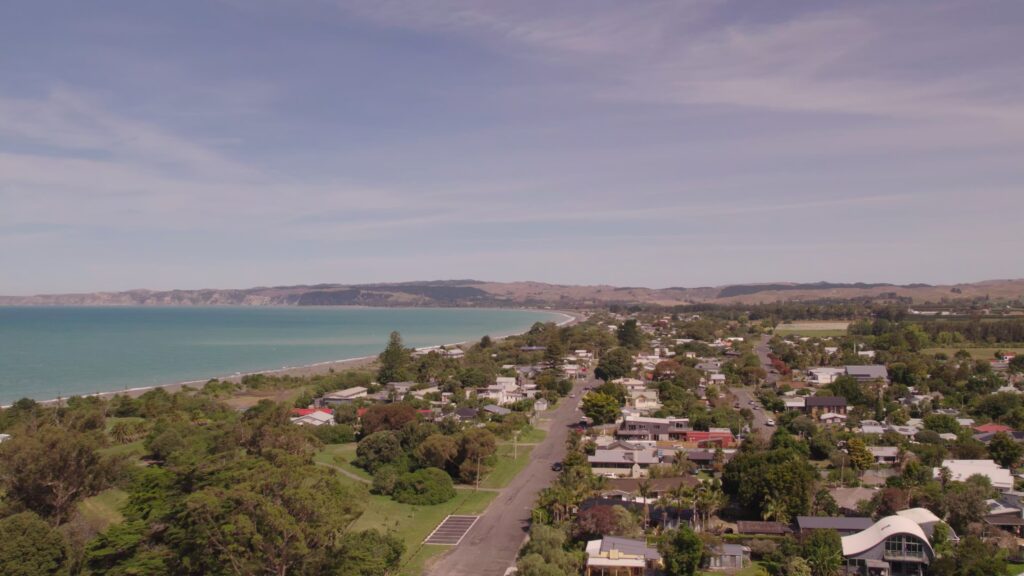
The town spreads across the Heretaunga Plains, a flat expanse of orchards, vineyards, and market gardens hemmed in by hills. Behind it rises Te Mata Peak, a limestone ridge with a Māori legend attached to its shape. In front, the coast runs out to white cliffs at Cape Kidnappers where thousands of gannets nest on the edge of the sea. It is a small district holding a lot of different landscapes.
This guide covers where Hastings sits and how to reach it, what deserves your time once you arrive, where to stay across three budgets, what a few days will cost, and when to come. The aim is the practical detail alongside the feel of the place.
More North Island Guides
Auckland Travel Guide — Everything You Need to Know Before Visiting
Taupo Travel Guide — Everything You Need to Know Before Visiting
Tongariro National Park Travel Guide — Everything You Need to Know
Where Is Hastings and How Do You Get There
Hastings sits on the east coast of New Zealand’s North Island, in the Hawke’s Bay region. It forms one half of a pair with Napier, its coastal neighbour about twenty kilometres north. Together they are often called the Twin Cities, and most visitors end up moving between them without much thought. Hastings is the larger district by area and the agricultural centre of the region.
Getting There from Auckland
Driving from Auckland takes around five and a half hours, covering roughly 420 kilometres south along State Highway 1 and then east. It is a long day behind the wheel but a good one, and breaking it in Taupo makes the trip considerably better. The final stretch over the hills on State Highway 5 drops you into the Bay with the plains spread out below.
Flying is the faster option. Air New Zealand runs daily services from Auckland into Hawke’s Bay Airport, and the flight takes about 65 minutes. Return fares often sit near NZD 170 if you book ahead. The airport is technically in Napier, roughly twenty minutes drive from central Hastings, with rental cars, taxis, and shuttles at the terminal.
Getting There from Wellington
From the capital, the drive north takes just over four hours on State Highway 2 through the Wairarapa. This route is sometimes called the Classic New Zealand Wine Trail, and it earns the name by linking Martinborough to Hawke’s Bay in a single run. Daily flights also connect Wellington to Hawke’s Bay Airport in under an hour.
Coming across from Australia, there are no direct international services into the region. Fly into Auckland or Wellington and connect domestically, or pick up a rental car and make the drive part of the trip. Australian passport holders need an NZeTA arranged online before departure.
Practical Tip
Hire a car. Hawke’s Bay is spread out, public transport between the wineries and the coast is limited, and the best parts of the district sit ten to thirty minutes apart by road. If you plan to drink at cellar doors, a guided wine tour solves the problem properly.
What to Do in Hastings
Hastings rewards a slower approach than most destinations. The town centre is small and easy to walk, but the district around it holds the real substance. Wine, food, a limestone ridge, a coastline of white cliffs, and more than two hundred kilometres of flat cycle trail linking it all together. Here is where to spend your days.
Te Mata Peak
Te Mata Peak rises 399 metres above the plains behind Havelock North, and it is the defining landmark of the district. On a clear day the view from the summit stretches across the whole of Hawke’s Bay to the snow on Mount Ruapehu in the distance. You can drive to the top via Te Mata Peak Road, which makes it accessible to almost everyone, or walk up through 99 hectares of parkland on a network of graded tracks.
A return walk to the summit takes between 90 minutes and three hours depending on the route. The yellow track is the gentler option if you are unsure of the climb. Along the way, detour into the grove of Californian redwoods, which feels like a different country entirely. Paragliders have been launching off this ridge for more than thirty years, and watching them go is worth the stop on its own.
In Māori tradition, the shape of the ridge is the body of a giant, Te Mata o Rongokako, who choked while eating his way through the hills. Once someone points out the profile of the sleeping figure, you cannot unsee it.
The Hawke’s Bay Wineries
Hawke’s Bay is New Zealand’s oldest wine region and its largest producer of full-bodied reds. There are more than seventy wineries here and around thirty cellar doors open to visitors, most of them within a short drive of Hastings. The Gimblett Gravels sub-region, an old riverbed of stony soil just northwest of town, produces the Syrah and Bordeaux blends the area is known for internationally.
Craggy Range sits directly beneath Te Mata Peak and is worth visiting for the setting as much as the wine. Black Barn, Te Mata Estate, and Askerne cluster near Havelock North. Out toward the coast, Elephant Hill, Clearview Estate, and Te Awanga Estate combine tastings with sea views. Many cellar doors charge a small tasting fee that is waived with a purchase.
Guided winery tours, food experiences, and small group day trips across the region can be booked through the OneLife Viator shop, which is the simplest way to visit several cellar doors without anyone drawing the short straw on driving.
Cape Kidnappers and the Gannet Colony
Roughly twenty kilometres east of Hastings, the coastline ends in a headland of pale sandstone cliffs. Cape Kidnappers, known as Te Kauwae-a-Māui, holds the largest accessible mainland gannet colony in the world. At the height of the season around 20,000 birds nest here, close enough that you can stand a few metres away and watch them come and go.
The colony is active from roughly September through April, and there are three ways to reach it. Gannet Safaris Overland runs 4WD tours across private farmland with no walking required, departing daily in season. Gannet Bikes offers a fat bike ride along the beach that takes around four hours return. The free option is walking from Clifton, a five to six hour return trip that must be timed around low tide.
Practical Tip
If you walk to the cape from Clifton, check the tide tables before you set out rather than after. The beach route is only passable around low tide and people get caught out every season. Take water, sun protection, and give yourself more time than the estimate suggests.
The Hawke’s Bay Farmers’ Market
On Sunday mornings the Tomoana Showgrounds on Kenilworth Road fill with growers selling directly to the public. The Hawke’s Bay Farmers’ Market has run for more than twenty years and is among the oldest and largest in the country. It opens at 8.30am and packs down at 12.30pm, so this is not a lie-in kind of morning.
What you find here depends entirely on the season, which is the point. Stone fruit in summer, apples through autumn, plus local cheese, bread, coffee, and preserves year round. If you happen to be in the district on a Sunday, build the morning around it.
Cycling the Hawke’s Bay Trails
The region has more than two hundred kilometres of cycle trail, and almost all of it is flat. These are proper sealed and gravel paths rather than roadside shoulders, linking Napier, Hastings, Havelock North, and the coast through vineyards, orchards, and river stopbanks. Bike and e-bike hire is easy to arrange, and several operators run self-guided winery rides with a shuttle at the end.
This is one of the genuinely great things about Hastings. The landscape is gentle enough that cycling between cellar doors is a realistic idea rather than an ambitious one, even for people who have not ridden in years.
Havelock North, the Town Centre, and the Coast
Havelock North sits at the foot of Te Mata Peak and has been voted the most beautiful suburb in New Zealand. The village is small, walkable, and full of independent shops and cafes. Central Hastings has its own draw in Toitoi, the arts and events centre, and the Hastings Art Gallery. Families tend to gravitate to Splash Planet in summer. Out east, the beaches at Ocean Beach, Waimarama, and Te Awanga are wide, unhurried, and often close to empty outside the holiday weeks.

Where to Stay in Hastings
Choosing a base here is a choice between three characters. Central Hastings is practical and close to the market, the trails, and the main road links. Havelock North is prettier, quieter, and better for food and wine, sitting right beneath Te Mata Peak. The coastal settlements at Te Awanga and Clifton put you near the water and the gannets, though you will drive for everything else.
Budget
Hastings has holiday parks, motels, and a handful of backpacker options, most of them in or near the town centre. Expect roughly NZD 40 to 70 a night for a dorm bed or a powered site, and from around NZD 110 for a basic motel unit. Holiday parks here are a good option for families, since several have pools and kitchens.
Mid-Range
The middle of the market is where Hastings is strongest. Motels, apartments, and boutique bed and breakfasts generally run between NZD 150 and 250 a night, with Havelock North sitting at the higher end of that range. Vineyard cottages and self-contained rural stays are a regional speciality and often better value than an equivalent hotel room. You can compare current rates and availability on Booking.com before you lock anything in.
Splurge
At the top end the region moves into lodge territory. Vineyard estates with guest accommodation, private coastal retreats, and the luxury lodge at Cape Kidnappers all operate here, with rates starting around NZD 400 and climbing steeply into the thousands for the flagship properties. For a milestone trip or a slow anniversary weekend, Hawke’s Bay does this particularly well.
How Much Does Hastings Cost
Hastings is noticeably cheaper than Auckland or Queenstown, and a lot of the district costs nothing at all. Te Mata Peak is free. The beaches are free. Walking the cycle trails costs nothing if you have your own wheels. The spending happens on beds, food, and the guided experiences.
Accommodation runs NZD 40 to 70 at the budget end, NZD 150 to 250 in the middle, and NZD 400 upward for lodges. On food, a cafe breakfast sits around NZD 20 to 28, a casual dinner between NZD 28 and 42, and a winery restaurant lunch with a glass closer to NZD 60 a head. Coffee is taken seriously across the Bay and the standard is high.
For activities, budget around NZD 10 to 20 for a cellar door tasting, often credited against a bottle. A guided gannet colony tour runs somewhere between NZD 120 and 170 depending on the operator and format. Bike or e-bike hire costs roughly NZD 45 to 90 for a day. Rental cars start near NZD 60 to 90 daily. A comfortable mid-range day covering everything lands around NZD 220 to 300 per person.
Best Time to Visit Hastings
Hawke’s Bay is one of the sunniest and driest parts of New Zealand, which is exactly why the fruit and the grapes do so well here. That works in your favour across most of the year, though the seasons each offer something quite different.
Summer, December to February. Hot, dry, and long. Stone fruit is at its peak, the beaches are worth the drive, and the gannet colony is busy with chicks. This is also the most expensive and most booked out window, particularly over the Christmas holidays.
Autumn, March to May. The best season here, and it is not especially close. Harvest runs through March and April, the vineyards turn colour, the weather stays warm and settled, and the crowds thin out. If you can choose freely, choose autumn.
Winter, June to August. Cool, quiet, and cheap. The cellar doors stay open, the restaurants are easier to get into, and Te Mata Peak on a crisp still morning is a genuine pleasure. The gannet colony is empty in these months.
Spring, September to November. Blossom across the orchards, gannets returning to the cape, and rates below summer levels. A strong shoulder option with slightly less certain weather.
If the gannets are your reason for coming, you need to visit between September and April. Outside that window the colony is largely deserted and the tours do not run.
Things Worth Knowing Before You Go
Cyclone Gabrielle hit Hawke’s Bay hard in February 2023, and the region carries the memory of it. Roads, bridges, and orchards have been repaired, State Highways 2 and 5 are fully open, and tourism operators are running normally. Some rural communities are still rebuilding. Visiting, buying at the market, and spending at local businesses is the most useful thing a traveller can do here, and it is worth understanding that context before you arrive.
On practicalities, New Zealand drives on the left and the roads around Te Mata Peak are narrow and winding in places. Tap and pay works almost everywhere. Tipping is not expected. The tap water is safe. Sun protection matters more than the mild temperatures suggest, because the UV in this part of the world is strong even on overcast days.
Travel insurance is worth arranging for a trip that involves rental cars, coastal walks timed to tides, and cycling on unfamiliar trails. A policy through World Nomads covers the kind of activities Hawke’s Bay tends to involve, and it costs very little against the price of the trip itself.
One piece of gear worth packing: a decent insulated water bottle. Summer days on the plains get genuinely hot, the cycle trails have long stretches without shade, and a good insulated bottle earns its place in the bag. Current events, cellar door hours, and trail conditions are all listed on the official Hawke’s Bay tourism site, which is worth a look before you finalise anything.
How Long Should You Spend in Hastings
Two to three days covers the district properly. One day handles Te Mata Peak, Havelock North, and a few cellar doors. A second gives you the gannet colony at Cape Kidnappers with an afternoon at the coast afterwards. A third opens up a full day on the cycle trails or a trip into Napier for the Art Deco streets.
Anyone building a wider North Island route should treat Hastings as a stop rather than a destination in itself. It pairs naturally with Taupo, about two and a half hours northwest on State Highway 5, which puts the lake and Tongariro within easy reach afterwards. Arrive on a Saturday and you catch the Sunday market before moving on, which is the version most people would choose if they knew.
Keep Planning Your North Island Trip
3 Day Itinerary Taupo and Tongariro, New Zealand
Where to Stay in Taupo, New Zealand — Best Areas Explained
Waitomo Travel Guide — Everything You Need to Know Before Visiting
Frequently Asked Questions
Is Hastings worth visiting?
Yes, particularly if food, wine, and cycling appeal to you. Hastings gives you New Zealand’s oldest wine region, the largest accessible mainland gannet colony in the world, and a landscape flat enough to explore by bike. It is quieter than Napier and, for a lot of travellers, more interesting once you slow down into it.
How long should you spend in Hastings?
Two to three days is right for most visitors. That covers Te Mata Peak and the wineries, a trip out to Cape Kidnappers, and either a day on the cycle trails or an afternoon in Napier. A single night is enough only if you are passing through and want the peak and one cellar door.
What is the best time of year to visit Hastings?
Autumn from March to May is the strongest all-round season, with harvest underway, warm settled weather, and fewer people. Summer is hotter and busier, and best if beaches and stone fruit are the priority. Remember that the gannet colony only operates from roughly September to April.
How do you get to Hastings from Auckland?
Driving takes about five and a half hours and works well with a stop in Taupo. Flying is quicker, with daily Air New Zealand services into Hawke’s Bay Airport taking around 65 minutes. The airport is about twenty minutes from central Hastings, with rental cars available on site.
What is the difference between Hastings and Napier?
Napier sits on the coast and is known for the Art Deco architecture it was rebuilt in after the 1931 earthquake. Hastings lies inland and is the agricultural and wine heart of the region. They are twenty minutes apart, so most visitors see both regardless of where they sleep.
Do you need a car in Hastings?
For most trips, yes. The wineries, the peak, and the coast are all separated by short drives, and public transport between them is limited. The exception is a cycling-focused trip, since the trail network genuinely does connect the main areas without a car.
Final Thoughts on Hastings
Hastings does not perform for visitors the way some places do. It is a working district first, built around orchards and vineyards and the seasons that run them, and the travellers who enjoy it most are the ones who let it move at its own speed.
The moments that stay tend to be small ones. Sunlight coming across the plains from the top of the ridge. A cellar door on a weekday afternoon with nobody else there. The noise of twenty thousand seabirds on a cliff edge, which is louder and stranger than any photograph prepares you for.
This Hastings travel guide covers the practical side, but the district rewards curiosity more than planning. Take the slow road between the wineries. Stop at the roadside fruit stalls. Give the place two or three unhurried days and it repays them, which is more than most towns of this size manage.
This post contains affiliate links. If you book or purchase through them I may earn a small commission at no extra cost to you.