 Skip to content

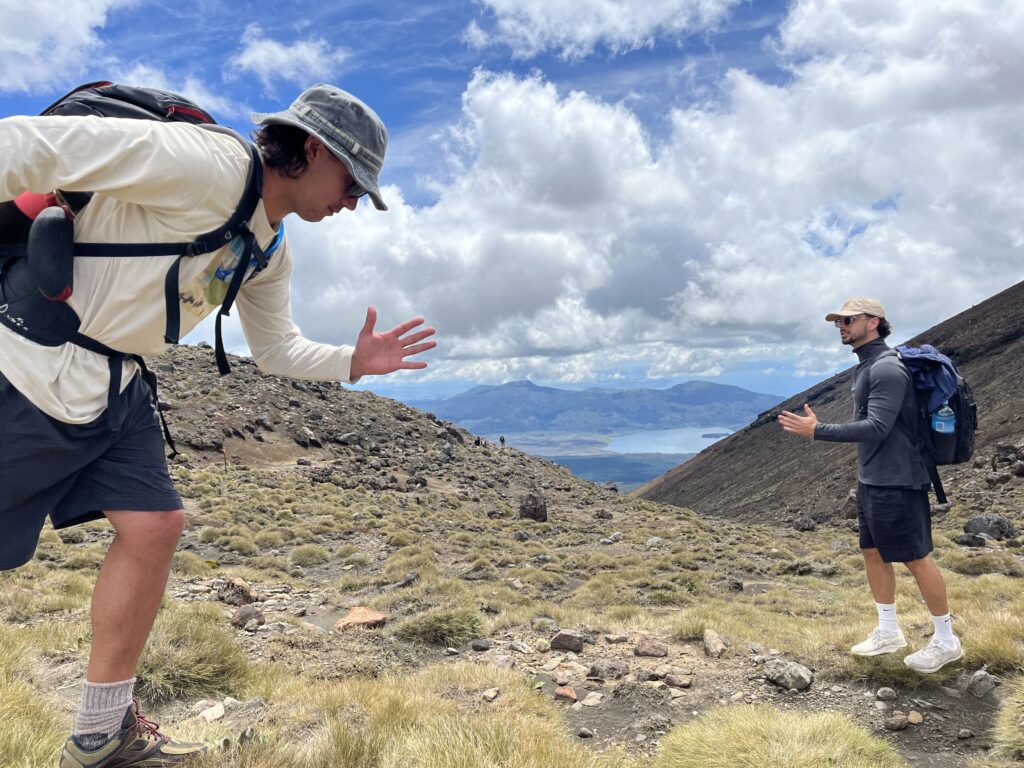
There is a stretch of the North Island’s central plateau where the landscape stops pretending to be anything other than what it is. No softness. No gentle hills rolling toward the coast. Just three active volcanoes rising from a wide open plain, a sky that changes by the hour, and terrain that looks like it belongs somewhere much further from Earth. Tongariro National Park is not a backdrop. It is the main event, and this Tongariro National Park travel guide exists to help you do it justice.
Established in 1887 as New Zealand’s first national park, Tongariro spans more than 80,000 hectares and holds UNESCO Dual World Heritage status, recognised for both its volcanic geology and its profound cultural significance to Ngati Tuwharetoa, the Maori people for whom this land is an ancestor. Mount Ngauruhoe, Mount Tongariro, and Mount Ruapehu stand at the heart of the park, each active, each commanding, and each worth understanding before you arrive.
Complete Tongariro Alpine Crossing
At a Glance
Location: Central North Island, New Zealand
Closest towns: National Park Village, Whakapapa Village, Turangi, Ohakune
Distance from Auckland: Approximately 330 km, around 4 to 5 hours by car
Distance from Wellington: Approximately 320 km, around 3.5 to 4 hours by car
UNESCO status: Dual World Heritage Site (natural and cultural)
Best season: November to April for hiking, June to October for skiing
Main attraction: Tongariro Alpine Crossing
Other highlights: Taranaki Falls, Tawhai Falls, Whakapapa Ski Area, Ohakune Mountain Road, Tongariro Northern Circuit
Why Tongariro National Park Is Worth the Trip

Most national parks earn their status through one defining feature. Tongariro earns it through an accumulation of things that do not occur anywhere else in the same place. Active volcanic craters. Vivid mineral lakes. A landscape that served as Peter Jackson’s Mordor for a reason. Deep Maori cultural history embedded in every peak and valley. And one of the most compelling day hikes on the planet running straight through the middle of it all.
The park does not reward a rushed visit. Two to three days gives you time to do the crossing, explore the shorter walks, and absorb the scale of the place at a pace that lets it actually land.
Complete Tongariro Alpine Crossing
Getting to Tongariro National Park
By Car
Driving is the most practical option for most visitors and offers the most flexibility. From Auckland, follow State Highway 1 south through Hamilton, then take SH5 through the Waikato toward the central plateau. The drive takes around four to five hours and includes some genuinely striking scenery as you approach the mountains.
From Wellington, follow SH1 north through the Tararua foothills and across the central plateau. Allow three and a half to four hours.
By Bus and Train
InterCity operates coach services connecting Auckland and Wellington to National Park Village and Ohakune. Journey times from Auckland are around six to seven hours. The Northern Explorer train run by KiwiRail connects Auckland to National Park Station on selected days and is a scenic alternative worth considering if you are not in a hurry.
From National Park Village, local shuttles connect to trailheads and Whakapapa Village.
Where to Stay
Choosing where to base yourself depends largely on what you are there to do. The park has several distinct accommodation hubs, each with a different character.
National Park Village
The most practical base for the majority of visitors. National Park Village, also known as Waimarino, sits on the western edge of the park and offers a solid range of accommodation from budget hostels and lodges through to more comfortable options. Shuttle services to the Tongariro Alpine Crossing depart from here, and the village has cafes, a small grocery, and everything you need for a few nights.
Whakapapa Village
Whakapapa is the only village located inside the national park itself. Accommodation options are more limited here, but the setting is extraordinary. The historic Chateau Tongariro Hotel, sitting against a backdrop of Ngauruhoe, is one of the more memorable places to stay in New Zealand regardless of budget. Whakapapa is also the closest base to the ski fields in winter and to several of the park’s shorter walking tracks.
Ohakune
Ohakune is the largest and most services-rich town in the area, sitting on the southern edge of the park. It has more restaurant and cafe options than the other villages, a good range of accommodation, and a lively atmosphere particularly during ski season. The trade-off is distance. Ohakune is further from the Alpine Crossing start point, which adds time to an already long day.
Turangi
Turangi sits at the southern end of Lake Taupo and serves as a quieter gateway to the park. It is particularly well-positioned for those combining a Tongariro visit with time on the lake or trout fishing on the Tongariro River. Drive time to the crossing is around 40 minutes.
For accommodation across all of these areas, Trip.com is a good starting point for comparing options and availability:
Search Tongariro National Park accommodation on Trip.com
Things to Do in Tongariro National Park
The Tongariro Alpine Crossing

The crossing is the reason most people come, and it delivers on its reputation. The 19.4 km one-way track crosses the volcanic terrain of Mount Tongariro, climbs to 1,886 metres at Red Crater, and descends past the Emerald Lakes to the Ketetahi road end. It takes six to eight hours at a steady pace and is one of the finest day walks in the world.
A free DOC registration is required for all hikers. A shuttle is essential given the one-way nature of the track and parking restrictions at both ends. Book both well in advance during the main season.
To book guided crossing experiences and shuttle tours:
Tongariro Alpine Crossing guided tours on Viator
Taranaki Falls
Taranaki Falls is the most accessible and rewarding short walk in the park, and one that earns its keep. The loop track takes around two hours and follows the Wairere Stream to a 20-metre waterfall tumbling over an ancient lava flow. The surrounding landscape is open and volcanic, with views back toward Ruapehu on clear days. This is an excellent option for those who want something substantial but are not up for the full crossing, or as a complementary walk on a second day in the park.
Tawhai Falls
Smaller and more enclosed than Taranaki Falls, Tawhai Falls holds a particular draw for Lord of the Rings visitors. This is the location used to film Gollum’s Pool in The Two Towers. The falls drop into a dark, mossy basin and the atmosphere is genuinely cinematic without any embellishment needed. The walk in from the road is short and manageable for most fitness levels.
The Tongariro Northern Circuit
For those who want more than a single day in the volcanic landscape, the Northern Circuit is a multi-day Great Walk that loops around the volcanic massif over four days. It passes through the same terrain as the Alpine Crossing and extends well beyond it, taking in the Oturere Valley, the Waihohonu plains, and a series of huts managed by DOC. Note that as of 2026, the Mangatepopo section of the Northern Circuit remains closed following the November 2025 fire. Check the DOC website for current track status before planning a multi-day trip.
Whakapapa and Turoa Ski Fields
In winter, Tongariro becomes a ski destination. Mount Ruapehu hosts two ski fields, Whakapapa on the northern side and Turoa on the southern side, which together form one of the larger ski areas in New Zealand. The season runs from approximately late June through to October, though this varies with snowfall. Both fields offer terrain for beginners through to advanced skiers and snowboarders.
The Ohakune Mountain Road
The road that climbs from Ohakune toward the Turoa ski field is worth driving or cycling even in summer. As the altitude increases, the vegetation shifts from lowland native bush to alpine tussock, and the views across the southern plateau are expansive. Several short walks branch off the road at various points.
Cycling and Mountain Biking
The 42 Traverse is a multi-day mountain biking trail that cuts through the park, covering around 70 kilometres of varied terrain from Owhango to National Park Village. The Old Coach Road is a more accessible alternative, a historic route connecting Horopito and Ohakune through regenerating native bush. A new section from Pokaka opened in late 2025 and has been well received for adding a flatter, more scenic approach.
Lord of the Rings in Tongariro National Park
Peter Jackson understood what this landscape could do on screen. Tongariro National Park was the primary location for all Mordor scenes across the Lord of the Rings trilogy. Mount Ngauruhoe, rising to 2,291 metres in its perfect volcanic cone, became Mount Doom. The Rangipo Desert, a stark wind-scoured plain on the eastern side of the park, provided the sweeping Mordor wasteland shots. Tawhai Falls became Gollum’s Pool. The dark cliffs of Mead’s Wall stood in for the Emyn Muil.
Walking the Alpine Crossing with that context adds a layer to the experience that no amount of dramatic scenery alone provides. Ngauruhoe rises beside the track throughout the crossing and the volcanic character of the terrain does not require much imagination to complete the picture.
One important note: while it is technically possible to climb Ngauruhoe via a side track that branches from the crossing, local Maori hapū have asked visitors not to summit the mountain out of respect for its cultural and spiritual significance. DOC removed trail markers from the summit route in 2017. The request is genuine, and the crossing itself provides views of the mountain that are more than enough.
Practical Information for 2026
Booking the Alpine Crossing
All hikers must register with the Department of Conservation before walking the track. The registration is free and currently uncapped. International visitors should note that a small fee is being introduced from late 2027. Book at doc.govt.nz and secure your shuttle at the same time.
Getting Around the Park
A car gives you the most flexibility. Public shuttle services connect the main villages to trailheads and operate most reliably during the main hiking season from October through April. Outside of that window, private or pre-booked transfers are often necessary.
Weather
Weather in Tongariro can change fast and dramatically. The alpine environment is exposed, and conditions at the summit of the crossing can differ significantly from those in the valley below. Always check the MetService mountain forecast before any activity above the treeline. Shuttle operators monitor conditions closely and will cancel services when it is not safe to walk.
Cultural Awareness
Tongariro is not simply a scenic reserve. The mountains are ancestors to Ngati Tuwharetoa, and the land carries deep spiritual significance that predates any tourist infrastructure. Stay on formed tracks, respect closed areas, and do not climb Ngauruhoe. The 2025 wildfire damaged parts of the native ecosystem, and a rahui remains in place over certain areas as part of the healing process. Follow current DOC guidance on restricted zones.
The 2025 Fire
In November 2025, a wildfire burned through approximately 3,000 hectares of the park. The Alpine Crossing itself was reopened on 17 November 2025 and the main volcanic features were unaffected. The Mangatepopo Track, which connects Whakapapa to Mangatepopo Hut, remains closed. Some sections of the landscape in the lower crossing area are visibly affected. Check the DOC website for the current status of all tracks before your visit.
Frequently Asked Questions
How many days do you need in Tongariro National Park? Two to three days is a solid minimum. One day for the Alpine Crossing, one day for shorter walks like Taranaki Falls, and a third day as weather buffer or for exploring the wider area around Ohakune or Whakapapa.
Is Tongariro National Park worth visiting without doing the crossing? Yes. The shorter walks, the drive up Ohakune Mountain Road, the ski fields in winter, and simply being in the landscape make it worthwhile even if the crossing is not on the agenda. That said, the crossing is the centrepiece for good reason.
Can I drive myself to the crossing start? DOC enforces a four-hour parking limit at Mangatepopo from mid-October through April. This makes a personal vehicle impractical for the full crossing. A shuttle is the standard and recommended solution.
When is the best time to visit Tongariro National Park? For hiking, November to April. February offers the most stable weather for the crossing. For skiing, June to October, depending on the season’s snowfall.
Is it safe to visit after the 2025 fire? Yes. The crossing and most other tracks are open. Some vegetation around the lower crossing sections is visibly damaged. The key volcanic features are unaffected. Always check current DOC conditions before visiting.
How far is Tongariro National Park from Taupo? Around 50 to 60 kilometres from Taupo town centre to National Park Village, approximately one hour by car. Many visitors combine Taupo and Tongariro on the same North Island trip.
A Final Thought
Tongariro National Park is one of those places that rewards unhurried attention. The landscape is vast and the details are worth noticing: the colour of the mineral deposits on the crater walls, the way the wind moves across the tussock, the silence between the steam vents and the next ridgeline. Come prepared, come with flexibility built into your schedule, and give the place the time it deserves.
For current tours, guided crossing experiences, and Taupo and Tongariro region day trips:
For current tours, guided crossing experiences, and Taupo and Tongariro region day trips: