 Skip to content

Updated 2026 · Auckland, New Zealand · Estimated read: 15 min
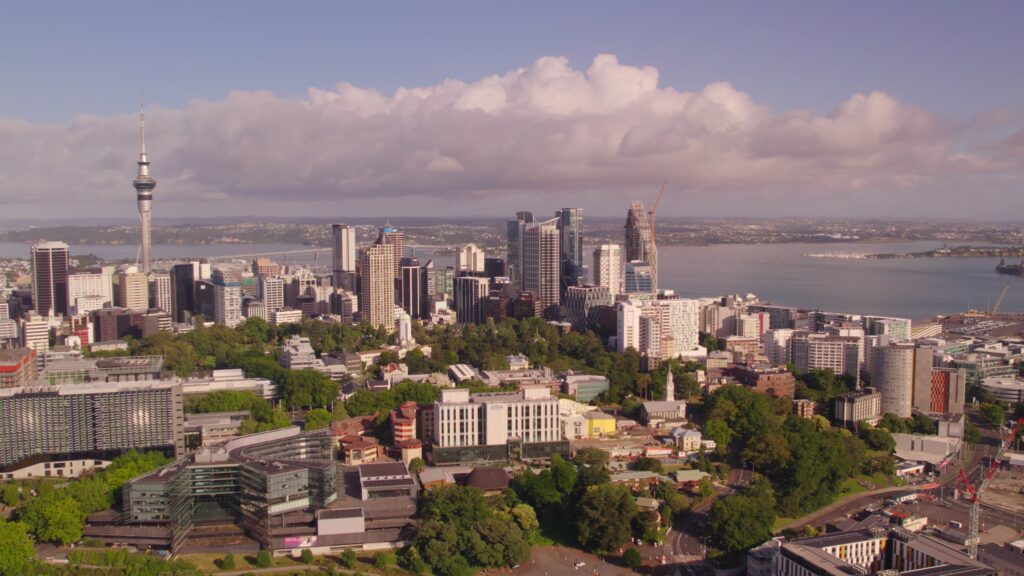
HERO IMAGE · Auckland skyline and Sky Tower across the Waitemata Harbour at dusk, yachts on the water
ALT: Auckland travel guide hero image, Sky Tower and harbour at duskAuckland from the water, the view most people only glimpse on the way to somewhere else.
Auckland is the first thing most travellers see of New Zealand and the last thing they tend to plan for. Flights land here, connections route through here, and the city quietly becomes a place to pass through on the way to somewhere more famous. This Auckland travel guide is written for the people who want to arrive with a plan and leave with a reason to come back.
The city sits on a narrow isthmus between two harbours, built across roughly fifty old volcanic cones, with the islands of the Hauraki Gulf spread out to the east. Māori know it as Tāmaki Makaurau, a name usually translated as the place desired by many. It earned the name. Water is everywhere, which is why it is called the City of Sails, and much of what makes Auckland worth your time is a short ferry ride or a forty minute drive from the centre.
What follows covers the whole visit. Where Auckland is and how to reach it, what to actually do with your days, where to stay, what it costs, when to come, and how long to give it. The aim is a guide that is more useful than the tourism brochures and more honest than the highlight reels.
More North Island Guides
Waitomo Travel Guide — Everything You Need to Know Before Visiting
Taupo Travel Guide — Everything You Need to Know Before Visiting
Tongariro National Park Travel Guide — Everything You Need to Know
Where Is Auckland and How Do You Get There
Auckland sits in the upper third of New Zealand’s North Island, on the country’s largest urban area. It is home to roughly a third of New Zealand’s population and functions as the main international gateway to the country. Almost every long haul route into New Zealand lands at Auckland Airport before travellers scatter south. That position is worth understanding, because it means Auckland is rarely a detour. It is usually the door you walk through first.
Getting There from Australia
For Australian travellers, Auckland is one of the easiest international trips available. Direct flights run daily from Brisbane, Sydney, Melbourne, and the Gold Coast, with the Brisbane route taking around three and a half hours. It is a short enough hop that a long weekend in Auckland is a realistic idea rather than a stretch. Australian passport holders do not need a visa, but you do need an NZeTA, the New Zealand Electronic Travel Authority, arranged online before you fly. Sort it out weeks ahead rather than the night before.
From further afield, Auckland connects to most major hubs across Asia, North America, and the Pacific. If New Zealand’s South Island is your real destination, it is still often cheaper and simpler to route through Auckland and connect domestically than to fly direct to Christchurch or Queenstown.
Getting from the Airport to the City
Auckland Airport sits about twenty kilometres south of the city centre, in Manukau. The old SkyBus no longer runs. It has been replaced by SkyDrive, an express coach operated by Ritchies that runs directly between both terminals and SkyCity in the central city. The fare is around NZD 20 one way, buses leave every thirty minutes, and the trip takes roughly forty minutes. For most visitors staying in the central city, this is the simplest option.
If you are counting dollars, the cheapest route is the bright orange AirportLink bus to Puhinui Station, then a Southern Line train into Britomart in the heart of town. Paid with an AT HOP card, the combined fare is about NZD 7.80. It takes closer to an hour but it is reliable and it drops you right in the centre. A taxi or Uber runs between NZD 60 and 90 and takes thirty to forty five minutes depending on traffic.
Practical Tip
Auckland’s City Rail Link is due to open in late 2026, adding new underground stations in the central city and making the train from the airport corridor even faster. If you are visiting later in the year, check current timetables before you land, since routes and stops are still settling in.
What to Do in Auckland
The mistake with Auckland is treating it as a single city block of shops and coffee. The better way to see it is as a base. The centre gives you the harbour, the tower, and the food. Everything else worth doing radiates outward, and most of it is reachable in under an hour. Here is where to spend your time.
The Sky Tower
The Sky Tower has defined the Auckland skyline since 1997. At 328 metres it remains the tallest structure in the country, and the observation deck gives you the clearest possible orientation to the city on arrival. From the top you can see the harbour, Rangitoto rising out of the gulf, and the volcanic cones scattered across the suburbs. Entry to the observation deck starts at around NZD 42, and it is the version most visitors should do.
For anyone drawn to heights, the SkyWalk is the one worth the money. It is a guided forty five minute circuit around the outside of the tower at 192 metres, harnessed to a rail, with no glass between you and the drop. It costs around NZD 165 and gives you time to actually absorb the height. The SkyJump, a wire controlled descent from the same level, is faster, louder, and over in eleven seconds. It is a novelty rather than a serious adventure, and if you only do one, choose the walk.
Waiheke Island
Waiheke is the day trip that turns a lot of people’s opinion of Auckland around. The ferry from the downtown terminal takes about forty minutes and drops you into a landscape of rolling hills, boutique wineries, olive groves, and some of the best beaches in the region. There are more than thirty vineyards on the island, many with restaurants and views back across the water. A return ferry fare sits around NZD 50 to 60, and once you land, a hop on hop off bus or an e-bike will get you between the cellar doors and the beaches at Onetangi, Palm Beach, and Oneroa.
You can browse Waiheke wine tours, island excursions, and Auckland day trips through the OneLife Viator shop, which is often the easiest way to lock in a tour before the peak summer crowds book them out.
Rangitoto Island
Rangitoto is Auckland’s youngest volcano, a near perfect cone that rose out of the sea around six hundred years ago. It is close enough to feel like part of the skyline and strange enough to feel like another planet once you are on it. The ferry from the downtown terminal is short, and the walk to the summit takes about an hour across old lava fields and through pohutukawa forest, with lava caves to detour into along the way. The view from the top back across the gulf to the city is one of the best in Auckland.
Rangitoto is a pest free island, so there is a biosecurity check before you board and no shops once you arrive. Bring water, food, sun protection, and proper shoes. The lava underfoot is sharp and there is no shade on the exposed sections.
Devonport and the Volcanic Cones
A twelve minute ferry from the city takes you to Devonport, a Victorian seaside village with two small volcanic cones behind it. Walk up Mount Victoria or North Head for a wide view back over the harbour to the city, then come down for coffee along the waterfront. It is one of the simplest good half days in Auckland.
Back on the mainland, the volcanic field is part of daily life. Maungawhau, also known as Mount Eden, is the highest natural point in the city and its crater and summit give a full circle view of Auckland. One Tree Hill, set in the green expanse of Cornwall Park, is another cone worth the climb, often with sheep grazing on the slopes below the summit. These are sacred sites to Māori, so access to some summits is now on foot rather than by car, which has quietly made them better places to be.
The Waitakere Ranges and Piha
Drive forty five minutes west of the city and the landscape changes completely. The Waitakere Ranges are dense, green, and rugged, and beyond them the west coast opens onto black sand beaches shaped by the Tasman Sea. Piha is the most famous of them, a wide sweep of dark sand watched over by Lion Rock, with serious surf and a raw, cinematic quality that feels a long way from the harbour. Take care in the water here, since the rips are strong and this is a coast that demands respect.
Practical Tip
Some Waitakere walking tracks remain closed or restricted to protect the kauri trees from dieback disease. Check the Auckland Council track status before you go, stay on the boardwalks, and use the cleaning stations at the trailheads. The beaches and main lookouts are open and easy to reach even when a few forest tracks are not.
The Waterfront and City Neighbourhoods
Back in the centre, the Viaduct Harbour and Wynyard Quarter are where the city eats and drinks by the water. This is the heart of the City of Sails, lined with restaurants and moored yachts, and it comes alive on summer evenings. A short walk uphill, Ponsonby and Karangahape Road, known locally as K Road, give you the other side of Auckland: independent cafes, small galleries, vintage stores, and a nightlife that feels genuine rather than staged. The Auckland Art Gallery Toi o Tāmaki, with free general entry, is worth an hour on a grey afternoon.
You can find guided city tours, harbour cruises, and food experiences through the OneLife Viator partner shop, which pulls together the better rated Auckland operators in one place.

Where to Stay in Auckland
Where you base yourself in Auckland shapes the trip more than the specific hotel does. The central city keeps you close to the tower, the ferries, and the Viaduct. Ponsonby and Parnell trade a little walking distance for character and better food on your doorstep. Devonport and Mission Bay put you near the water and away from the noise. Most visitors do well staying central for the first couple of nights, then deciding what kind of trip they actually want.
Budget
Auckland has a well established hostel and backpacker scene, most of it clustered around the central city and K Road. Dorm beds start around NZD 40 to 55 a night, with private hostel rooms and budget hotels available a little higher. Staying central at this level is genuinely convenient, since the ferries and main sights are walkable and you save on transport.
Mid-Range
The mid-range covers the widest choice, from central apartment hotels to boutique stays in Ponsonby and Parnell. Expect roughly NZD 180 to 280 a night for a comfortable double in a good location. This is the sweet spot for most travellers, and booking a few weeks ahead in summer makes a real difference to both price and availability. You can compare Auckland stays and check live rates on Booking.com before you commit.
Splurge
At the top end, Auckland has proper luxury on the waterfront. Harbourfront hotels around the Viaduct and Britomart offer rooms with water views, fine dining downstairs, and everything a short walk away. Rates generally start around NZD 400 a night and climb from there for suites and harbour outlooks. For a special occasion or a first and last night bookending a longer New Zealand trip, it is an easy indulgence.
How Much Does Auckland Cost
Auckland is not a cheap city, but it is manageable if you plan around the free and the low cost. Many of the best things to do, the volcanic cone walks, the waterfront, the west coast beaches, cost nothing. The money goes on accommodation, food, and the ferries.
On accommodation, budget travellers can get by on NZD 40 to 60 a night in a dorm, mid-range visitors should plan for NZD 180 to 280, and the top end starts near NZD 400. For food, a cafe brunch runs around NZD 22 to 30, a casual dinner sits between NZD 30 and 45, and a serious dinner with wine climbs past NZD 80 a head. Coffee is taken seriously here and is worth the few dollars.
On activities, the Waiheke ferry return is around NZD 50 to 60, the Sky Tower deck is about NZD 42, and a rental car runs NZD 80 to 100 a day if you want to explore the west coast and beyond. A useful rule of thumb: a comfortable mid-range day in Auckland, covering a bed, food, transport, and one paid activity, lands somewhere around NZD 250 to 350 for one person.
Best Time to Visit Auckland
Auckland has a mild, temperate climate that rarely swings to extremes, though it is famous for changing its mind. Locals joke about four seasons in one day, and the joke has some truth to it. Rain can arrive at any time of year, so a light waterproof layer is worth carrying whenever you visit.
Summer, December to February. The warmest and busiest window. Long days, warm harbour water, and the islands at their best for swimming and wine. Ferries and accommodation book out, and prices are at their highest. This is peak season for good reason.
Autumn, March to May. Arguably the best overall balance. The weather stays mild, the crowds thin out, and vineyard country takes on autumn colour. Accommodation prices ease off the summer peak.
Winter, June to August. Cooler and wetter, with the quietest streets and the lowest prices. The city’s cafes, galleries, and restaurants come into their own, and clear winter days over the harbour can be sharp and beautiful.
Spring, September to November. A strong shoulder season. The weather warms, the crowds have not fully returned, and rates sit below summer. A good window for travellers who want decent weather without the peak.
For visitors coming across from Australia, the late November and December window is the natural time to go, catching the start of the New Zealand summer as it warms into the season.
Things Worth Knowing Before You Go
A few practical details make Auckland easier. The public transport network of buses, trains, and ferries is run by Auckland Transport, and an AT HOP card is the cheapest way to pay across all of it. The ferries in particular are part of the sightseeing, not just the commute, so factor them into your plans early. You can check live sailings and fares through Fullers360, the main gulf ferry operator.
New Zealand drives on the left, and if you plan to explore the west coast or head south afterwards, a rental car is worth having. The city itself does not require one. Tap and pay is standard almost everywhere, tipping is not expected, and the tap water is clean and safe to drink. Sun protection matters more than the mild temperatures suggest, since the UV here is strong even on cloudy days.
Travel insurance is one of those things that feels unnecessary until it is the only thing that matters. With ferries, coastal walks, west coast surf, and the occasional cancelled sailing in the mix, it is worth being covered. A policy through World Nomads is a straightforward option for New Zealand trips and covers the kind of activities Auckland tends to involve.
One small piece of gear that earns its place: a universal travel adapter, since New Zealand uses the same plug type as Australia but not much of the rest of the world. A basic universal adapter handles it and saves the scramble on arrival.
How Long Should You Spend in Auckland
Two to three full days is the honest answer for a first visit. One day covers the central city, the Sky Tower, and the waterfront. A second day is enough for one island, either Waiheke for the wine and beaches or Rangitoto for the volcano and the view. A third day opens up the west coast at Piha or a slower morning across the harbour in Devonport.
If Auckland is your entry point to a longer New Zealand trip, treat it as the bookends rather than the middle. Give it two days on arrival to adjust and see the city, then head south to the rest of the North Island, and leave a final night here before you fly home. Beyond three days, Auckland works well as a base for wider Waikato and Northland day trips, but most travellers will want to keep moving.
Keep Planning Your North Island Trip
3 Day Itinerary Taupo and Tongariro, New Zealand
Waitomo Caves Guide — What to Expect, Tours, and How to Book
Where to Stay in Taupo, New Zealand — Best Areas Explained
Frequently Asked Questions
Is Auckland worth visiting?
Yes, as long as you treat it as more than an airport. Given a couple of days, Auckland delivers a harbour city, volcanic cones you can walk up, wine islands a ferry ride away, and black sand beaches within an hour. The travellers who write it off are usually the ones who only saw the inside of the terminal.
How long should you spend in Auckland?
Two to three days is the sweet spot. One day for the city and waterfront, a second for either Waiheke or Rangitoto, and a third for the west coast or Devonport. If it is the start of a longer trip, split your time across arrival and departure.
What is the best time of year to visit Auckland?
Summer from December to February brings the warmest weather and the busiest streets. Autumn from March to May is arguably the better balance, with mild days, thinner crowds, and lower prices. For Australian travellers, late November into December catches the start of the New Zealand summer.
How do you get from Auckland Airport to the city?
The SkyDrive express coach runs to the central city for around NZD 20 and takes about forty minutes. The cheapest option is the AirportLink bus to Puhinui Station and a train into Britomart, roughly NZD 7.80 with an AT HOP card. A taxi or Uber costs NZD 60 to 90.
Do you need a car in Auckland?
Not for the city itself. The central sights, ferries, and neighbourhoods are walkable or a short bus ride apart. A car becomes useful only if you want to explore the west coast at Piha or continue south afterwards, in which case a rental picked up on the way out is the simplest approach.
Final Thoughts on Auckland
Auckland asks for a little patience. It does not announce itself the way Queenstown or Milford Sound does, and its best moments are quieter and slightly further out. The view from a volcanic summit at the edge of a suburb. A ferry pulling away from the city toward an island. Black sand underfoot on a coast that feels much older than the skyline behind it.
Give it two days and it becomes a real place rather than a connection. Give it three and it starts to feel like somewhere you would return to. The city is built on water and old volcanoes, and once you start noticing that, the whole shape of it makes more sense.
This Auckland travel guide covers the essentials, but the city rewards the wandering more than the ticking of boxes. Book the ferry. Walk up the hill. Let the harbour be the thing you keep coming back to between everything else. That is the version of Auckland most people never slow down enough to find.
This post contains affiliate links. If you book or purchase through them I may earn a small commission at no extra cost to you.