 Skip to content

Visiting Waitomo requires a deliberate decision. It sits off the main tourist corridor between Auckland and Rotorua, tucked into the King Country farmland of the Waikato, and the drive there feels like you are going somewhere rather than passing through something. That quality of intention is part of what makes the place work. Most visitors come specifically for the caves. What they find, in addition to one of the most extraordinary natural experiences in New Zealand, is a small and quiet village that does not overstate itself and a landscape above ground that rewards the people who slow down long enough to notice it.
This Waitomo travel guide covers everything you need before you go. The caves, the accommodation, the food, the free things worth doing, how to get there, and when to visit. It is written for people who want to plan it properly rather than improvise on arrival.
Waitomo at a Glance
| Region | Waikato, North Island |
| From Auckland | ~2.5 to 3 hours |
| From Rotorua | ~2 hours |
| From Hamilton | ~1 hour |
| Best Visited | Year-round |
| Time Needed | 1 to 2 days |
What is Waitomo
Waitomo is a small rural village in the Waikato region of New Zealand’s North Island, named from the Māori words wai (water) and tomo (hole or shaft) — a description that captures the landscape precisely. Beneath the rolling green hills of the King Country runs one of the most significant limestone cave systems in the Southern Hemisphere, and the village exists largely because of what lies underground.
The limestone beneath Waitomo was formed on an ancient seabed approximately 30 million years ago, then gradually lifted above sea level. Over millions of years, underground rivers carved the cave systems that now attract visitors from across the world. The fossils embedded in the cave floors are genuine remnants of that ancient marine origin. Moreover, the glowworms that inhabit the caves — Arachnocampa luminosa — are unique to New Zealand and produce bioluminescent light as part of their predatory behaviour. Together, the geology and the biology create something that genuinely has no equivalent anywhere else on earth.
Above Ground
Above ground, Waitomo is small and unhurried. The village has a visitor centre, a handful of accommodation options, two or three places to eat, a general store, and a local pub. There are no shopping strips or tourist infrastructure beyond what the caves require. That restraint is part of the appeal. You come for the underground world. The surface world is quiet, green, and largely left to itself.
The surrounding Waikato countryside is genuinely beautiful, particularly in the late afternoon when the light on the farmland and the limestone outcroppings takes on a quality that the caves, for all their drama, cannot match. The Ruakuri Bushwalk, the Mangapohue Natural Bridge, and the Marakopa Falls are all accessible from the village and add dimension to a visit that goes beyond the caves alone.
King Country Farmland — Waitomo Region, Waikato
The Caves — What to Book and Why
The caves are the reason most people visit Waitomo, and choosing the right combination of tours before you arrive is the single most important planning decision for the trip. There are three walking cave tours and two black water rafting adventure tours. They are not interchangeable, and understanding what each one delivers helps you spend your time and budget well.
The Glowworm Caves Tour
The 45-minute guided Glowworm Caves tour is the essential Waitomo experience. It culminates in a silent boat ride through the glowworm grotto — engine off, guide pulling the vessel by a wire overhead, thousands of Arachnocampa luminosa covering the cave ceiling in blue-green light. Photography is not permitted inside. Adults pay approximately NZD $61. This is the tour that defines the region and the one to prioritise if time is limited.
Ruakuri and Aranui Caves
Ruakuri is a 1.5-hour guided walk through a larger cave system with close-up glowworm viewing, dramatic limestone formations, and photography permitted throughout. It has a wheelchair-accessible spiral entrance and suits visitors who want more than the 45-minute tour offers. Aranui Cave, meanwhile, is the quietest and least visited of the three, with intricate dry limestone formations and small groups. Both are worth adding if you have a full day in the region. A Glowworm Caves and Ruakuri combo costs approximately NZD $98 for adults and is the most popular two-cave option.
Black Water Rafting
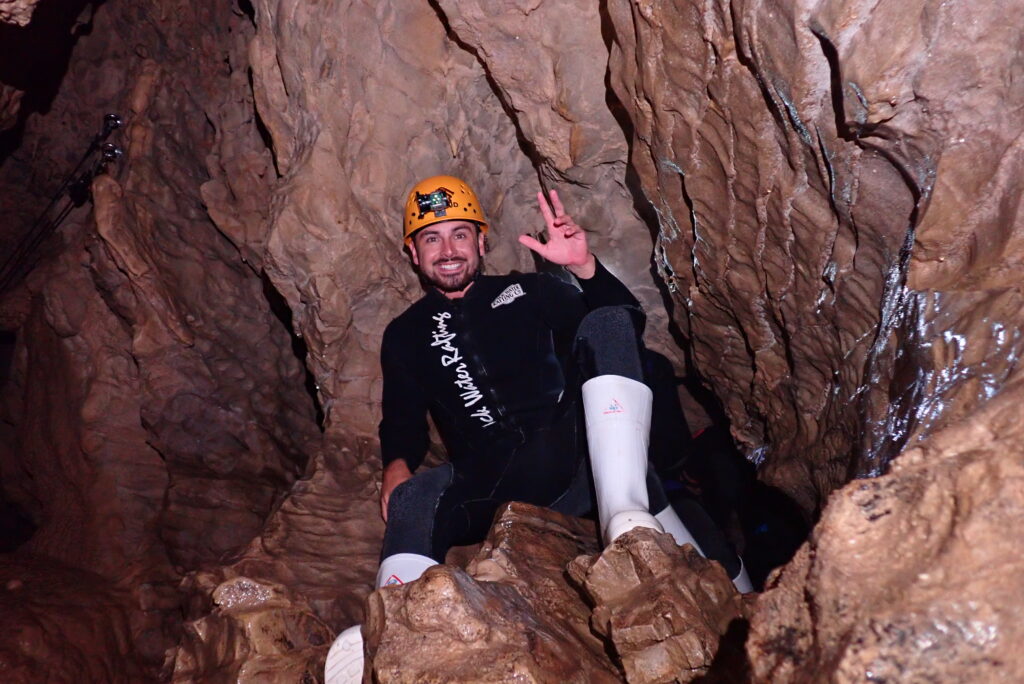
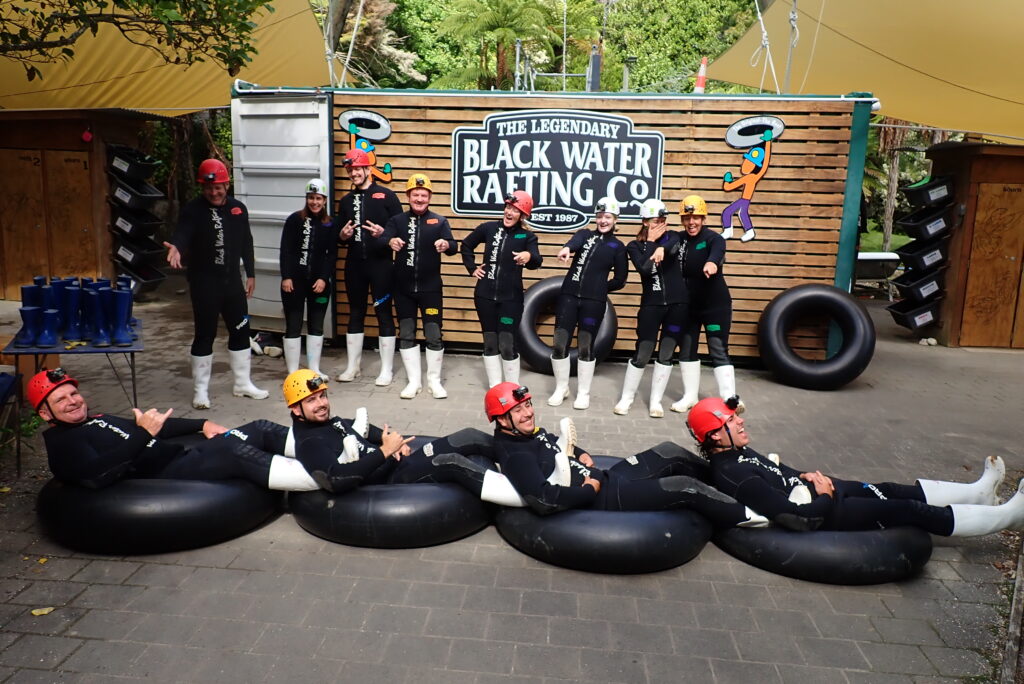
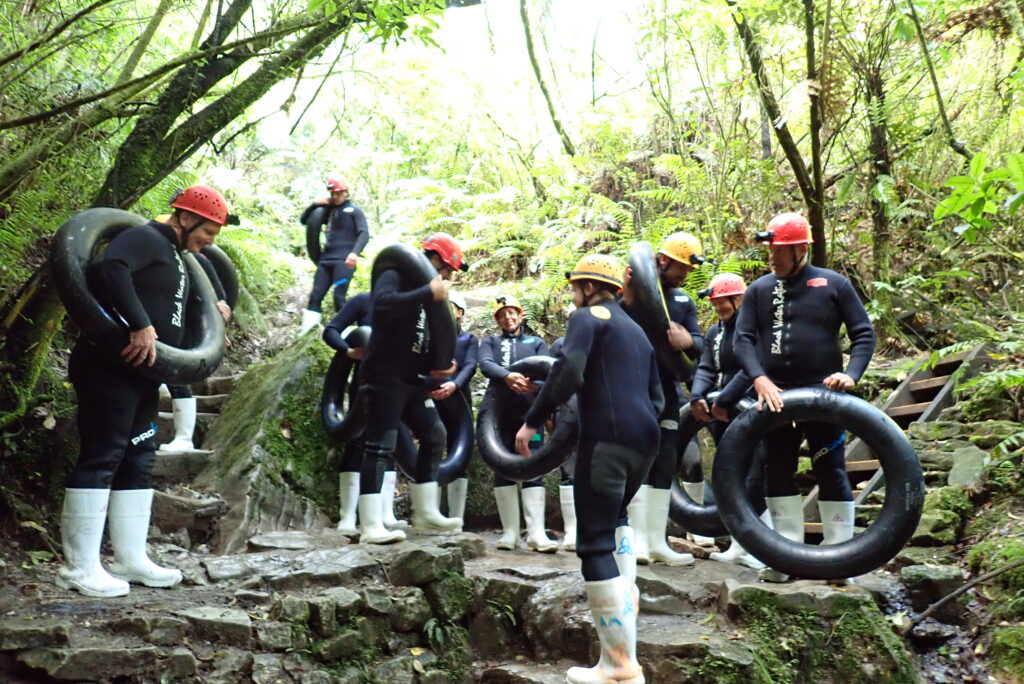
Beyond the walking tours, The Legendary Black Water Rafting Co. operates two adventure experiences through Ruakuri Cave’s underground river. The Black Labyrinth is a three-hour tour for ages 12 and over, involving tubing, waterfall jumps, and the glowworm float. The Black Abyss is a five-hour tour for ages 16 and over that begins with a 35-metre abseil into the cave in near-complete darkness. Both are a different category of experience from the walking tours and suit visitors who want the underground world on its own terms rather than from a guided walkway.
Book before you arrive
All Waitomo cave tours operate with capped group sizes. During summer between December and February, popular time slots fill days or weeks ahead. Same-day availability is unreliable for the Glowworm Caves tour in particular. Booking through Viator offers free cancellation on most slots up to 24 hours before departure, which adds useful flexibility for itineraries that can shift.
Browse all Waitomo Caves tours on Viator →
Free Things to Do Around Waitomo
The caves are the headline, but several free experiences in the wider Waitomo area are worth building into the itinerary. Together they give the trip a more complete picture of the region than the underground world alone provides.
Ruakuri Bushwalk
The Ruakuri Bushwalk is a free 30-minute loop track that starts at the Ruakuri Reserve carpark on Tumutumu Road. The track follows a natural limestone gorge carved by the Waitomo Stream and passes through native bush, limestone arches, and a section of the gorge where glowworms are visible in sheltered overhangs after dark. It is one of the few places in the Waitomo region where you can see glowworms without paying for a cave tour. The track is well-maintained and suitable for most fitness levels.
Mangapohue Natural Bridge
The Mangapohue Natural Bridge is a large limestone arch spanning a gorge approximately 26 kilometres from Waitomo village via Marakopa Road. The walk to the arch takes around 20 minutes each way through farmland and native bush. The arch itself is the remnant of a collapsed cave system and contains glowworms in its sheltered sections. It is one of the larger natural limestone formations accessible on foot in the region and worth the drive if you have an afternoon to fill after the caves.
Marakopa Falls
Marakopa Falls sit further along Marakopa Road, approximately 32 kilometres from the village. The falls drop 35 metres into a bush-lined gorge and are accessible via a short ten-minute walk from the road. They are among the wider and more photogenic waterfalls in the Waikato region. The drive out to the falls along Marakopa Road passes through farmland and native bush that represents the quieter, less-visited side of the Waitomo district well.
Ruakuri Bushwalk — Waitomo Stream Gorge, New Zealand
Where to Eat in Waitomo
Waitomo does not have a significant food scene, and being honest about that upfront is more useful than pretending otherwise. The village is small and the dining options are limited. However, what exists in and around Waitomo is genuinely good, and planning your meals in advance removes the disappointment of arriving hungry to a limited spread.
HUHU Café
HUHU Café is the best restaurant in Waitomo and it would hold its own in a considerably larger town. Situated directly opposite the Waitomo Caves Guest Lodge on Waitomo Village Road, it serves locally sourced New Zealand cuisine with a menu that changes seasonally and a wine list that takes the regional produce seriously. The desserts in particular are frequently cited as a reason to return. HUHU is open for lunch and dinner and reservations are recommended, particularly in summer. It is a genuine highlight of a visit to the region and not something to treat as an afterthought.
The Tomo Bar and Eatery
The Tomo is the local pub, a short walk from the Guest Lodge and HUHU along Waitomo Village Road. It serves straightforward pub food in a setting that feels like it belongs to the locals rather than to the visitor economy. After a day underground or on a trail, the Tomo is the practical and honest option for dinner without ceremony. Behind the Tomo sits the Morepork Café and pizzeria, which handles casual evening meals when the main dining options are full or closed.
Waitomo General Store
The Waitomo General Store on Waitomo Village Road is the village convenience shop and also operates an all-day cafe. It is the right option for a quick coffee, cabinet food, or supplies before heading out on a walk or a drive. Do not expect it to be more than it is, but for the basics it serves the village reliably.
Practical note – If you are self-catering or staying at the holiday park, the General Store is the only in-village option for supplies. For a wider grocery selection, Te Kuiti is the nearest town at approximately 16 kilometres from Waitomo and has a full supermarket. Stock up before arriving if you plan to cook your own meals during a longer stay.
Where to Stay in Waitomo
Accommodation in Waitomo is limited and books quickly in summer. The options that exist cover a useful range — from the most centrally positioned guest lodge in the village to self-contained chalets and a well-equipped holiday park. Choosing where to stay depends on your budget, your travel style, and how long you plan to spend in the region.
Waitomo Caves Guest Lodge
Location: 7 Waitomo Village Road
Rooms: 8 ensuite studio units
Breakfast: Continental buffet included
The Waitomo Caves Guest Lodge is the best-positioned property in the village, sitting opposite HUHU Café and within walking distance of the Glowworm Caves visitor centre, the i-SITE, the Tomo Bar, and the cave tour operators. The family-owned lodge has eight ensuite studio units in a garden setting with countryside views. A continental breakfast buffet is included in the rate and served in the dining room each morning.
The hosts are a genuine highlight of the property. Guest reviews consistently mention the owners’ warmth, local knowledge, and willingness to make dinner reservations and suggest off-the-beaten-track activities in the wider region. For a village this small, that kind of local knowledge is worth as much as the accommodation itself. The lodge does not have an on-site restaurant, but with HUHU directly across the road, this is not a practical limitation.
Check availability at Waitomo accommodation on Trip.com →
Waitomo Top 10 Holiday Park
Location: 12 Waitomo Village Road
Options: Cabins, powered sites, pool
Best for: Families, budget travellers
The Waitomo Top 10 Holiday Park sits on Waitomo Village Road within easy walking distance of the cave visitor centre and the village amenities. It offers cabin accommodation, powered caravan and tent sites, an outdoor pool, and laundry facilities. The holiday park is the most affordable in-village option and suits families, campervan travellers, and budget visitors who want to be close to the caves without the cost of the guest lodge. The pool is a genuine asset for families with children who have spent the day underground.
Woodlyn Park
Location: 1177 Waitomo Valley Road
Style: Converted aircraft, rail cars, hobbit home
Best for: Couples, memorable stays
Woodlyn Park on Waitomo Valley Road is the most unusual accommodation option in the region. Guests can stay in converted Bristol Freighter aircraft, a WWII patrol boat, vintage rail carriages, or a genuine hobbit-style underground home. The property sits about ten minutes from the village on a working farm and offers a level of novelty that is genuinely hard to find. For couples or solo travellers who want a more memorable stay than a standard room provides, Woodlyn Park delivers something that cannot be replicated elsewhere in the Waikato.
When to Visit Waitomo
Waitomo works year-round because the caves are consistent regardless of season. Temperature underground stays at around 12 to 15 degrees Celsius in every month. The glowworm activity does not change with the surface weather. What changes between seasons is everything above ground — crowd levels, accommodation prices, and the quality of the driving experience through the surrounding countryside.
Summer — December to February
Busiest period. Tours fill weeks ahead. Prices at their highest. The surrounding landscape is green and the days are long. Book everything in advance.
Autumn — March to May
Excellent visibility and manageable crowds. Accommodation rates begin to drop from the summer peak. One of the better windows for the free outdoor walks.
Winter — June to August
Quietest and most affordable period. Cave tours run as normal. The surrounding landscape can be misty and atmospheric. Ideal for those who prefer fewer visitors.
Spring — September to November
Crowds begin to build from October onward. The Waikato countryside is at its most vivid. Good availability before the summer peak takes hold.
Waitomo does not change underground. The glowworms are there in every season. What changes is how quiet the world is above them — and in winter, that quiet is something worth seeking out.
Getting to Waitomo
Waitomo sits in the King Country, approximately 195 kilometres south of Auckland and 120 kilometres from Rotorua. The approach from either direction passes through Waikato farmland and, as you get closer, the distinctive limestone country that signals the cave system beneath the surface.
For official visitor information, the Discover Waitomo tourism site is a reliable reference before you book. Adventure tours also make travel cover worth having. A policy like World Nomads suits most travellers heading through New Zealand.
By Car from Auckland
From Auckland, take State Highway 1 south and turn onto State Highway 39 at Otorohanga. From there, follow the signs to Waitomo Caves — it is a further 16 kilometres from Otorohanga. The total drive takes approximately 2.5 to 3 hours. Free parking is available at the Waitomo Glowworm Caves Visitor Centre on Waitomo Village Road. Since there is no public transport within the village, a car is the most practical way to access the free walks and outlying attractions like the Mangapohue Natural Bridge and Marakopa Falls.
By Car from Rotorua
From Rotorua, the drive takes approximately 2 hours via State Highway 30 connecting west through the Waikato. Many North Island itineraries include both Rotorua and Waitomo as part of a two-day loop, using Hamilton as an overnight stop between them or staying directly in the Waitomo village.
By Bus
InterCity buses connect Auckland, Hamilton, and Rotorua to Otorohanga, from where shuttle transfers to Waitomo are available. Some organised cave tours from Auckland include return transport and handle the logistics entirely, which is a practical option for visitors who are not self-driving or who prefer not to manage the regional road network independently.
Combining with Hobbiton
Hobbiton at Matamata is approximately 1 hour 20 minutes from Waitomo. The two attractions are regularly combined in a single day from Auckland, and several tour operators run combined packages that include transport, the cave tour, and the Hobbiton movie set tour. If you are doing both independently, Waitomo in the morning and Hobbiton in the afternoon works well logistically for a day trip from Auckland with an early start.
Practical Information
Getting Around
Within Waitomo village, most things are walkable. The Glowworm Caves visitor centre, the guest lodge, the holiday park, HUHU Café, the Tomo Bar, and the General Store all sit within comfortable walking distance of each other on Waitomo Village Road. However, a car is necessary to reach Aranui Cave, the Ruakuri Reserve carpark, Mangapohue Natural Bridge, and Marakopa Falls. There is no public transport within the village or between the village and these outlying sites.
Mobile Coverage
Mobile coverage in Waitomo is variable. The village itself has reasonable coverage, but the surrounding rural roads and outlying attractions can have poor or no signal depending on your carrier. Download offline maps before leaving Otorohanga if you are relying on your phone for navigation. The cave visitor centre has WiFi and the guest lodge provides it free to guests throughout the property.
What to Wear
For the walking cave tours, wear comfortable closed-toe shoes with grip and bring a warm layer. Cave temperature sits at 12 to 15 degrees Celsius year-round, which feels cooler than expected after a warm surface day. For the black water rafting tours, a wetsuit is provided — bring a swimsuit underneath, a towel, and spare dry socks for afterward. For the outdoor walks, standard walking shoes and a waterproof layer are sufficient in most conditions.
How Long to Stay
One day covers the essential cave experience and a free walk. Two days allows you to do all three walking caves, a black water rafting tour, the Ruakuri Bushwalk, and the outlying drives without rushing. Beyond two days, Waitomo works well as a base for exploring the wider King Country region, including the Timber Trail cycle route and the coastal beaches of the Tasman Sea around Marakopa.
Frequently Asked Questions
Is Waitomo worth visiting?
Yes. The Waitomo Glowworm Caves are genuinely one of the most extraordinary natural experiences in New Zealand and there is nothing comparable elsewhere in the world. Even as a half-day detour from the Auckland to Rotorua route, the region justifies the drive. For those who add the black water rafting and the outlying walks, it becomes a complete and memorable two-day destination.
How long do you need in Waitomo?
A minimum of half a day covers the Glowworm Caves tour. A full day suits the Glowworm and Ruakuri combo plus a free walk. Two days is the recommended length if you want to include black water rafting, all three walking caves, and the outlying attractions like Mangapohue Natural Bridge and Marakopa Falls.
Do you need a car to visit Waitomo?
A car is strongly recommended. While the village itself is walkable, most of the outlying attractions — Aranui Cave, Ruakuri Reserve carpark, Mangapohue Natural Bridge, and Marakopa Falls — require driving. InterCity buses connect from Hamilton and Auckland to Otorohanga, from where shuttles run to Waitomo, but without a car your options within the region are significantly limited.
What is the best time of year to visit Waitomo?
The caves are consistent year-round, so there is no bad season for the underground experience itself. For smaller crowds and lower prices, autumn between March and May or winter between June and August are the better windows. Summer between December and February is the busiest period with the highest accommodation rates and the most competition for cave tour time slots.
Is there anything free to do in Waitomo?
Yes. The Ruakuri Bushwalk is a free 30-minute loop track with glowworms visible after dark at no cost. The Mangapohue Natural Bridge and Marakopa Falls are both free and within a 30-minute drive of the village. The Waitomo i-SITE Discovery Centre also provides free exhibits on the geology and biology of the cave system.
Final Thoughts
Visiting Waitomo requires intention, and that intention is rewarded in kind. The region does not announce itself from the motorway. Instead, you turn off, drive through green hills and limestone country, and arrive somewhere that operates entirely on its own terms. The caves are the reason you came. The village, the walks, the quiet, and the food turn out to be reasons to stay longer than you planned.
Plan the cave tours before you arrive. Book HUHU for dinner. Do the Ruakuri Bushwalk in the late afternoon before the light goes. Drive out to the Mangapohue Natural Bridge on the second day if you have it. Stay long enough that the return drive feels like leaving somewhere rather than finishing a checklist.
That is the right way to do Waitomo. Everything else, as it turns out, follows naturally from that.