 Skip to content


Visiting Taupo means arriving at the edge of something that does not make complete sense until you are standing in front of it. Lake Taupo is the largest lake in New Zealand and the result of one of the most violent volcanic eruptions in recorded geological history. The water stretches further than you can see from the shore. Snow-capped volcanic peaks rise on the southern horizon. Trout move through water so clear you can count them from the bank. This Taupo travel guide covers everything you need before you visit — the lake, the falls, the hot pools, the adventure activities, where to stay, where to eat, and how to get the most from the time you have there.
Taupo sits in the centre of New Zealand’s North Island, approximately 3.5 hours south of Auckland, 1 hour from Rotorua, and 1.5 hours from the Tongariro Alpine Crossing trailhead. Its position makes it one of the most practical bases for a North Island itinerary, and the town is better than most gateway towns at being worth visiting in its own right.
Taupo at a Glance
| Region | Waikato, North Island |
| From Auckland | ~3.5 hours |
| From Rotorua | ~1 hour |
| From Wellington | ~4.5 hours |
| Best Visited | Year-round |
| Time Needed | 2 to 3 days |
What Makes Taupo Worth Visiting
Lake Taupo is the centrepiece of the region and the thing that gives Taupo its particular quality. The lake was formed by a supervolcanic eruption approximately 26,500 years ago. In geological terms, it is a caldera — a collapsed volcanic crater filled by water over millennia. The eruption that created it was so powerful it is estimated to have affected global climate for years afterward. Standing on the shore of the lake knowing this does not make it look more dramatic than it already does, which is saying something.
The town of Taupo sits on the northeastern shore of the lake and has grown around the tourism, fishing, and outdoor adventure industries that the lake and surrounding landscape support. It is larger and more developed than Waitomo but retains a character that feels specific to the place rather than generic to New Zealand tourism. The lakefront is well-maintained and genuinely pleasant. The surrounding region — Huka Falls to the north, the Wairakei geothermal area, the Tongariro National Park to the south — gives Taupo a catchment area for day trips that few other North Island towns can match.
The Volcanic Context
Understanding the volcanic history of the Taupo region changes how the landscape reads. The Taupo Volcanic Zone runs northeast from Tongariro National Park through the centre of the North Island and is one of the most active volcanic regions on earth. The geothermal activity that produces hot pools and steaming ground throughout the region is a direct surface expression of that ongoing underground energy. Rather than being a background detail, it is the defining geological fact of the entire central North Island. Everything in the landscape — the lake, the falls, the volcanic peaks to the south, the hot springs — connects back to it.
Lake Taupo Shoreline — Volcanic Peaks South, New Zealand

Things to Do in Taupo
Taupo has more to do than a two-day visit can comfortably fit, which is one of the reasons most visitors end up staying longer than they planned. The activities span a wide range — from the completely free and unhurried to the genuinely adrenaline-dependent — and the region suits visitors with very different ideas of what a good day looks like.
Huka Falls
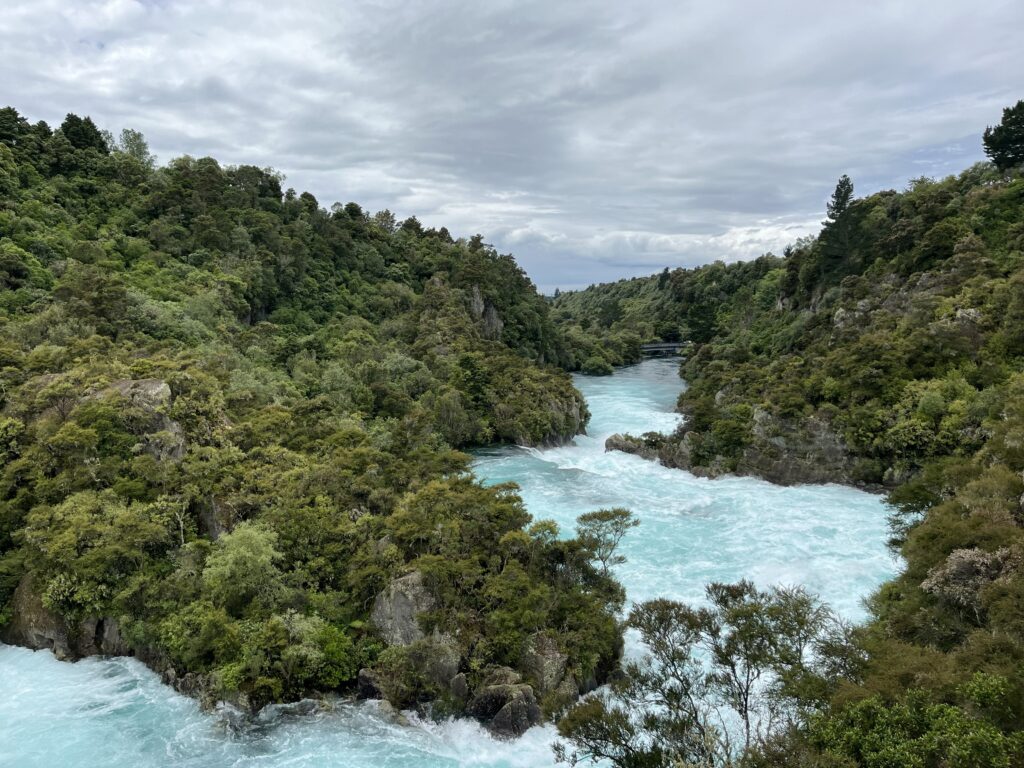
Huka Falls is the most visited natural attraction in New Zealand and it earns that designation without relying on superlatives. The Waikato River narrows from roughly 100 metres to a gorge just 15 metres wide before dropping 11 metres into a turquoise pool below. The volume of water passing through the gorge — approximately 220,000 litres per second — creates a noise and a visual force that is genuinely difficult to prepare for. Entry is free and the viewing platform is a short walk from the car park off Huka Falls Road, approximately five minutes north of the Taupo town centre.
Because it is free and close to town, Huka Falls works as a first stop on arrival or a last stop before leaving. The light on the falls is best in the morning before it becomes front-lit and flat. Earlier visits also tend to have fewer people on the viewing platform, which improves the experience considerably.
Mine Bay Maori Rock Carvings
The Mine Bay rock carvings are accessible only by water, located on the western cliffs of Lake Taupo approximately eight kilometres from the Taupo Marina. The largest carving — a 10-metre face of Ngatoroirangi, the navigating tohunga who guided the Tuwharetoa people to the Taupo region — was carved into the volcanic rock face by Matahi Whakataka-Brightwell in the 1970s and 1980s using traditional tools. It is the largest rock carving in the Southern Hemisphere. Tour boats, kayaks, and sailing vessels all visit the carvings regularly. Sunset cruises to the carvings are among the most memorable ways to see them, combining the scale of the lake with the fading light on the cliff face.
Huka Falls Jet Boat
The Huka Falls jet boat experience operates on the Waikato River directly below the falls. The boats reach speeds of up to 80 kilometres per hour in a gorge less than 15 metres wide, spinning within their own length in the river. It is one of the more genuinely thrilling activities available from the Taupo town centre, and the proximity to the falls adds a dimension that jet boat experiences on open water cannot replicate. Tours depart from the Huka Falls Jet Boat base on Karetoto Road throughout the day.
Geothermal Experiences
The Taupo region has several geothermal experiences worth knowing about. Wairakei Terraces and Thermal Health Spa offers silica terraces, cultural tours, and mineral hot pools. AC Baths is the most affordable thermal pool option in the town itself, with indoor and outdoor thermal pools open daily. Craters of the Moon — a geothermal park approximately ten minutes north of Taupo on SH1 — offers a free walking loop through steaming vents, boiling mud pools, and craters formed by underground hydrothermal activity. It is one of the more striking landscapes available within easy reach of the town centre and the admission is modest.
Skydiving over Lake Taupo
Taupo has one of the highest concentrations of skydiving operators in the Southern Hemisphere and consistently ranks among the world’s best skydiving destinations. The view on the descent — Lake Taupo below, the volcanic peaks of Tongariro National Park on the horizon, the surrounding North Island spreading out in every direction — is specific to this location in a way that makes the activity more than a generic adrenaline experience. Tandem jumps are available from 9,000, 12,000, and 15,000 feet, with the highest altitude giving the longest freefall of approximately 70 seconds.
Trout Fishing on Lake Taupo
Lake Taupo is one of the most famous trout fishing destinations in the world. The lake and its feeder rivers hold both rainbow and brown trout, and the water clarity makes sight-fishing possible in conditions that most trout anglers never encounter elsewhere. A fishing licence is required and is available online or from local sports shops. Guided fishing tours depart daily from the Taupo Marina and range from half-day lake trips to full-day river expeditions into the surrounding backcountry. Even for visitors who do not fish, watching a guide land a 3-kilogram rainbow trout in clear water is a worthwhile side effect of a Taupo morning.
Huka Falls — Waikato River, Taupo New Zealand
For the Tongariro Alpine Crossing – Taupo is the most convenient base for the Tongariro Alpine Crossing, New Zealand’s most famous day walk. The trailhead at Mangatepopo is 1.5 hours south of Taupo via State Highway 1 and State Highway 47. Shuttle transfers run daily from Taupo to the trailhead during the walking season. Browse Tongariro Alpine Crossing transport and guided tour options below.
Browse Tongariro Alpine Crossing tours from Taupo on Viator →
Free Things to Do in Taupo
Several of the best things in Taupo cost nothing, which makes the region work well for visitors managing a budget or simply preferring to spend their money on accommodation and food rather than entrance fees.
Huka Falls
Free entry, five minutes from town. One of the most visited natural attractions in New Zealand and genuinely worth every visit.
Taupo Lakefront Walk
A flat, easy walk along the lake foreshore from the town centre. The views extend south toward the volcanic peaks on clear days. Free and accessible at any time.
Craters of the Moon
A modest entry fee (approximately NZD $8 for adults) makes this one of the most affordable geothermal experiences in the region. A loop track of around 45 minutes passes boiling mud pools, steam vents, and craters formed by hydrothermal collapse.
Taupo Saturday Market
Runs every Saturday from 9 AM to 1 PM at the lakefront. Fresh produce, local crafts, food stalls, and a free art exhibition. Free to enter and worth building into a Saturday morning in the town.
Spa Thermal Park
Free thermal pools on the Waikato River accessible via a short walk from the Spa Park carpark on County Avenue. Natural hot water seeps from the riverbank into pools where visitors can soak for free. The water temperature varies by pool and by season.
Aratiatia Rapids
The Aratiatia Dam releases its gates at set times during the day, flooding the river gorge below with a spectacular rush of water. Viewing platforms overlook the release. Free to watch and one of the more dramatic free spectacles in the region. Release times are posted at the dam site and on the Genesis Energy website.
Where to Eat in Taupo
Taupo has a food scene that reflects its position as a genuine destination town rather than simply a service centre. The best restaurants are concentrated around the lakefront and the town centre on Tongariro Street, and the range covers everything from casual lakeside dining to more considered evening meals worth planning around.
Bistro Lago
Bistro Lago at the Hilton Lake Taupo is the most upmarket dining option in the town and suits a special occasion or an evening meal with the lake view as the backdrop. The menu focuses on New Zealand produce and changes seasonally. The setting is formal enough to feel considered without being stiff, and the wine list draws heavily on Hawke’s Bay and Marlborough producers. Reservations are recommended for dinner service.
Storehouse
Storehouse on Roberts Street is a consistently well-reviewed café and restaurant that handles breakfast and lunch with real care. The cabinet food is worth noting alongside the menu — the baking is done in-house and the cabinet is one of the better ones in Taupo. Because it fills quickly on weekend mornings, arriving before 9 AM gives you the best experience without waiting for a table.
Two Mile Bay Sailing Club
Two Mile Bay Sailing Club is the best lakeside dining option in Taupo for a casual meal or drinks. The view of Lake Taupo from the deck is unobstructed and the pizzas are frequently cited as among the best in the region. It opens until 10 PM, which means summer evenings with the lake in the last light are a practical reality rather than a rushed experience. The atmosphere is relaxed and the setting justifies the drive two kilometres south of the town centre.
Plateau Restaurant and Bar
Plateau on Tuwharetoa Street is the most consistently recommended mid-range dining option in the town centre. The menu covers New Zealand beef, local fish, and vegetarian options with a bar list that extends beyond the standard pub range. It suits a group dinner or a solo meal at the bar and handles both without making either feel like an afterthought.
Where to Stay in Taupo
Taupo has a well-developed accommodation market that reflects the town’s role as a year-round destination. Options range from luxury lakefront hotels to self-contained holiday homes, budget hostels, and holiday parks with thermal pools. The right choice depends on the kind of visit you are making and whether proximity to the lake or the town centre matters more.
Hilton Lake Taupo
The Hilton Lake Taupo is the most complete luxury option in the town. It sits above the valley with views over the lake and the surrounding landscape. Junior suites and apartment-style rooms are available, all with private balconies. The property has a thermally heated outdoor pool, gym, tennis courts, a restaurant, and a lounge bar. Room rates start at approximately NZD $300 to $400 per night. For a special occasion or a longer stay where facilities matter, the Hilton is the obvious choice.
Baycrest Thermal Lodge
The Baycrest Thermal Lodge sits directly opposite Lake Taupo on the main road and offers rooms with private hot tubs. The thermal pools use natural geothermal water, which gives the experience a quality that hotel spa pools rarely match. The location provides lake views from most rooms and the proximity to the town centre means the restaurants and lakefront are walkable. It is a strong mid-range option that the thermal pool element lifts above standard motel territory.
Taupo DeBretts Spa Resort
Taupo DeBretts is one of the more family-friendly and value-conscious options in the region. The resort has a full range of thermal pools, water slides, and spa facilities on-site, making it a destination in itself rather than simply a place to sleep. Cabins and standard rooms are available. Because the facilities mean you can spend a full afternoon or evening on-site without needing to drive anywhere, DeBretts suits families and visitors who want to build relaxation into the itinerary rather than filling every hour with activities.
Budget and Backpacker Options
Taupo has a well-established backpacker scene reflecting its popularity on the New Zealand touring circuit. The Taupo YHA hostel offers dormitory and private room options in a central location. Several independent backpacker hostels operate around the town centre, most within walking distance of the lakefront and the main restaurant strip. For self-driving visitors who want maximum flexibility, campervanning is a practical option given the range of holiday parks with powered sites in and around Taupo.
Browse Taupo tours and experiences on Viator →

When to Visit Taupo
Unlike Waitomo, where the caves are consistent year-round, Taupo is genuinely seasonal in terms of what the visit delivers. The lake, the outdoor activities, and the Tongariro Alpine Crossing all change significantly between summer and winter.
Summer — December to February
Peak season. Warm lake temperatures, long days, and the busiest period for all activities. Accommodation rates are highest. The Tongariro Crossing is at its most accessible, though snow is still possible on the upper sections.
Autumn — March to May
Excellent conditions with falling crowds. Lake temperatures remain warm enough for swimming into April. The Tongariro Crossing is still accessible and less crowded than summer. Accommodation prices begin to drop.
Winter — June to August
The volcanic peaks are snow-covered and the region becomes a skiing destination at Whakapapa and Turoa ski areas on Mount Ruapehu. The Tongariro Crossing requires alpine gear and good conditions in winter. The town is quieter and accommodation rates are at their lowest.
Spring — September to November
Crowds begin to build from October. The volcanic landscape transitions between the snow-covered winter profile and the summer green. Trout fishing is excellent in the spring rivers. A strong shoulder season for most activities.
Taupo in autumn is the version most visitors do not know they want until they arrive. The crowds have gone. The water is still warm. The light on the lake in the afternoon is different from anything summer produces.
Getting to Taupo
Taupo is accessible by road from all major North Island centres and sits in a geographically central position that makes it easy to reach from multiple directions.
By Car from Auckland
From Auckland, take State Highway 1 south through Hamilton and continue on SH1 through the central North Island. The total distance is approximately 280 kilometres and the drive takes around 3.5 hours without stops. The route is straightforward and well-signposted throughout. Because it passes through Hamilton, combining Waitomo as a detour on the way to or from Taupo is logistically simple with only a small additional distance.
By Car from Rotorua
From Rotorua, Taupo is approximately 80 kilometres south on State Highway 5. The drive takes around one hour and passes through the Waikato geothermal zone, with steam vents and geothermal features visible from the road on the approach to Taupo. Many visitors combine Rotorua and Taupo over two or three days, treating them as adjacent destinations rather than separate trips.
By Bus
InterCity buses connect Auckland, Hamilton, Rotorua, and Wellington to Taupo with multiple daily services. The Taupo i-SITE on Tongariro Street is the main bus stop and visitor information centre. Journey times are longer than driving but the service is reliable for visitors not self-driving. Several adventure tour operators also run transport packages from Auckland that combine Taupo activities with return transport in a single booking.
By Air
Taupo Airport is a small regional airport approximately four kilometres from the town centre. Air Chathams and several scenic flight operators serve the airport. However, most domestic visitors reach Taupo by road rather than air, given the relatively short drive times from Auckland and Wellington and the limited scheduled services at the airport.
Practical Information
Getting Around Taupo
A car is strongly recommended for visiting Taupo and the surrounding region. While the town centre and lakefront are walkable, most of the best attractions — Huka Falls, Craters of the Moon, Aratiatia Rapids, Wairakei Terraces, the Mine Bay boat tours, and the Tongariro Alpine Crossing trailhead — require driving. Rental cars are available at Taupo Airport and from several in-town operators. Taxis and rideshare services are available within the town but are not a practical way to access the outlying attractions.
How Long to Stay
Two to three days covers the essential Taupo experiences without rushing. One day is enough for Huka Falls, the lakefront, and a geothermal experience. Two days adds the Mine Bay carvings, a skydive or jet boat experience, and a proper evening at a lakefront restaurant. Three days allows for the Tongariro Alpine Crossing as a day trip, which is worth the additional night if the weather cooperates. Beyond three days, Taupo works well as a base for exploring the wider central North Island, including Rotorua, Waitomo, and the national park.
What to Pack
Pack for variable conditions regardless of season. Wind off the lake can be sharp even on warm days. A waterproof layer is worth carrying year-round. If you are planning the Tongariro Alpine Crossing, appropriate alpine gear is essential — the crossing has an exposed ridge section that requires warm and waterproof clothing regardless of the base temperature in Taupo town. Sunscreen is important in summer when UV levels on the water and at altitude are significantly higher than in shaded environments.
Frequently Asked Questions
Is Taupo worth visiting?
Yes, without qualification. Lake Taupo is one of the most extraordinary natural environments in New Zealand and the town has enough activities, food, and surrounding landscape to justify two to three days. For anyone tackling the Tongariro Alpine Crossing, Taupo is additionally the most practical base on the North Island for that experience.
How long should you spend in Taupo?
Two to three days is the recommended length. One day covers the free highlights. Two days adds an adventure activity and a proper exploration of the lake. Three days allows for the Tongariro Alpine Crossing as a day trip, which is the most significant single experience available from Taupo and worth planning around if conditions allow.
What is Taupo known for?
Taupo is known for Lake Taupo, which is the largest lake in New Zealand and the result of a supervolcanic eruption 26,500 years ago. It is also known for Huka Falls, the Tongariro Alpine Crossing, world-class trout fishing, skydiving, geothermal experiences, and its position as the most practical base for Tongariro National Park on the North Island.
What is the best time of year to visit Taupo?
Summer between December and February offers the warmest lake temperatures and best conditions for outdoor activities. Autumn between March and May is, however, arguably the better overall window — the crowds have dropped, accommodation prices are lower, the lake is still swimmable, and the Tongariro Crossing remains accessible without the summer competition for transport and accommodation.
Do you need a car in Taupo?
Yes, a car is strongly recommended. The town centre is walkable, but most of the best experiences — Huka Falls, Craters of the Moon, Aratiatia Rapids, and the Tongariro Crossing trailhead — require driving. Rental cars are available from Taupo Airport and several in-town operators.
Final Thoughts
Visiting Taupo is one of those North Island decisions that compounds well. The lake is extraordinary on arrival and becomes more so the longer you stay with it. Huka Falls is free and takes twenty minutes. The Tongariro Crossing is within reach if you want it. The geothermal pools are there at the end of a long day. The food on the lakefront is better than a town this size has any obligation to provide.
Plan two nights as a minimum. If the weather is good and the Crossing is open, stay for three. Let the lake be the thing you keep returning to between everything else. In the morning before the town is fully awake, the water reflects the peaks to the south and the whole scale of the place — the caldera, the geological time, the fact that you are sitting at the edge of something formed by forces that dwarf anything human — becomes quietly legible.
That is what Taupo offers. Not just activities. A sense of proportion that most places cannot provide.