 Skip to content

Travel Guides · Queensland · Updated 2026 · 9 min read
OneLife acknowledges the Wulgurukaba people as the Traditional Custodians of Yunbenun, known today as Magnetic Island, and of the surrounding sea country. We pay our respects to their elders past, present and emerging, and to their enduring connection to this land and water.
Magnetic Island is one of the best places in Australia to see wildlife in the wild. Around 800 koalas live in its bushland, the largest wild colony in northern Australia. Spotting koalas on Magnetic Island takes a little patience, but the odds here are better than almost anywhere. Add the rock wallabies that gather at dusk, and it is a genuine wildlife haven.
Unlike a zoo, these animals roam free across the island’s hills and headlands. Finding them is part of the pleasure. Know where and when to look, and you will rarely be disappointed.
This guide covers the best spots for both koalas and rock wallabies, when to go, and how to watch them with care. Here is where to look.
Read Next
Best Things to Do on Magnetic Island
The Forts Walk on Magnetic Island
Where to Stay on Magnetic Island
Where to See Koalas on Magnetic Island
The koalas on Magnetic Island live across the island’s bush, but a few places give you the best odds. The hills and gum forests of the east and north hold the most. Here is where to point your search.
The Forts Walk
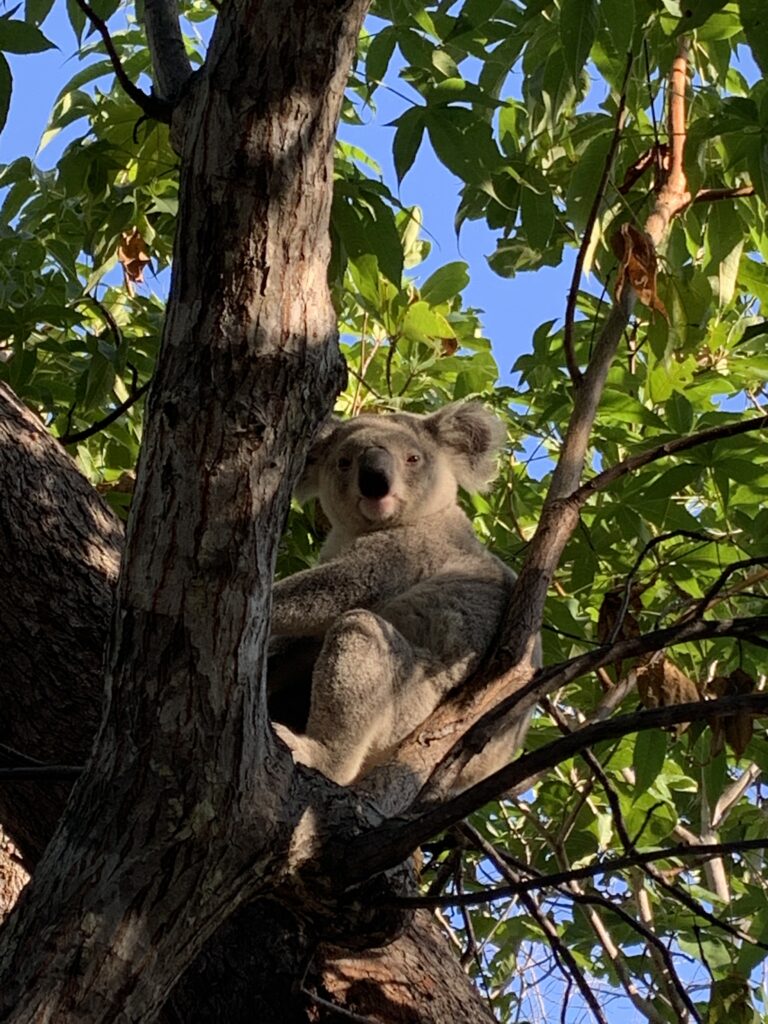
The Forts Walk is the single best place to see wild koalas in the country. This four-kilometre return track climbs through prime koala habitat to old wartime fortifications. Koalas doze in the gum trees right beside the path, often just metres away.
Walk slowly and scan the forks of the trees as you go. Listen too, as the males give a deep, grunting call that sounds oddly like a lawnmower. Other walkers often gather beneath a tree, which is usually a sign one has been found. For the full track, see our Forts Walk guide.
Where: Forts Walk track, northeast · Best for: wild koalas and views · Time: 1.5 to 2 hours.
Around Arcadia and the Bush Tracks
Koalas are not confined to the Forts Walk. They turn up across the island, especially in the leafy streets and gullies around Arcadia. Early risers sometimes spot them in trees near the bays and roadsides.
The quieter walking tracks to the secluded bays pass through good habitat too. Keep looking up as you walk, and you may be rewarded away from the crowds. Patience and a slow pace are everything here.
Where: Arcadia and island bush tracks · Best for: quieter, unexpected sightings.
Bungalow Bay Koala Village
If you would rather not leave it to chance, Bungalow Bay Koala Village at Horseshoe Bay guarantees a sighting. This small wildlife park runs koala and wildlife encounters, where you can get close and learn about the animals. You can even hold a koala for a photo.
It is a good option for families, or as a backup if the wild search comes up short. The park also houses other native animals, from snakes to lizards. Booking ahead is wise in peak season.
Where: Horseshoe Bay · Best for: a guaranteed sighting and families.
Where to See Rock Wallabies on Magnetic Island
The island’s other wildlife star is the allied rock wallaby. These small, agile marsupials live among the granite boulders, and there is one reliable place to meet them. They are a highlight of any visit.
Geoffrey Bay
Geoffrey Bay in Arcadia is the place to see rock wallabies. As the light fades, they emerge onto the boulders near the old jetty to feed. They are shy but used to people, and often come surprisingly close.
Arrive in the hour before sunset and wait quietly. Keep your distance, stay still, and let them approach on their own terms. Please do not feed them, as human food harms their health.
Where: Geoffrey Bay jetty, Arcadia · Best for: rock wallabies · Time: the hour before dusk.

The Best Time to Spot Them
Timing makes all the difference with both animals. Koalas sleep for most of the day, so they are easiest to spot when they are awake and shifting about. Early morning and late afternoon are the prime windows.
In the heat of midday, they tuck into shady forks and barely move, which makes them hard to see. The cooler hours bring more movement and more calls. Rock wallabies, by contrast, come out at dusk, so plan Geoffrey Bay for the end of the day.
How to Spot a Koala
Koalas are masters of blending in, so train your eye. Look for a grey, rounded shape wedged in the fork of a gum tree, often high up. Scan slowly rather than sweeping past.
Listen as much as you look. Rustling leaves, falling bark or that low grunting call all give them away. A pair of compact binoculars helps enormously for the higher ones.
Be patient and keep walking. The more trees you scan, the better your chances. If you see other people stopped and staring upward, go and join them.
Watching Wildlife Responsibly
These are wild animals in their own home, so watch them with care. Keep your distance, stay quiet, and never touch or feed them. Human food makes wildlife sick, and getting too close causes them stress. Stay on the tracks, and if you are driving, go slowly, as koalas do cross the roads.
Give koalas space, and photograph them without flash. A stressed koala is not worth a photo. The goal is to leave them exactly as you found them.
The same care applies to the rock wallabies at Geoffrey Bay. Let them come to you, and resist the urge to offer food, however tame they seem. Responsible viewing keeps these colonies healthy for the long term.
Getting There and Around
Reaching the wildlife is straightforward. A local bus runs from the ferry terminal to the Forts Walk car park and to Geoffrey Bay in Arcadia. From the Forts stop, the track begins a short walk away.
Hiring a car or scooter gives you more freedom to roam at the quiet hours. Drive slowly on the island roads, especially at dawn and dusk. For the wider island, see our Magnetic Island travel guide.
Staying overnight lets you catch the best early and late viewing times. You can compare places to stay on Magnetic Island here, and book a guided wildlife tour here if you would like an expert to find them for you.
Keep Exploring
The Magnetic Island Travel Guide
Frequently Asked Questions
Where can you see koalas on Magnetic Island?
The Forts Walk is the best place, with wild koalas resting in the gum trees beside the track. They also turn up around Arcadia and the island’s bush tracks. For a guaranteed sighting, Bungalow Bay Koala Village at Horseshoe Bay runs wildlife encounters.
Are there really wild koalas on Magnetic Island?
Yes, around 800 of them, forming the largest wild colony in northern Australia. They live free across the island’s bushland rather than in enclosures. The Forts Walk gives you the best chance of seeing one in the wild.
Where do you see rock wallabies on Magnetic Island?
Geoffrey Bay in Arcadia is the spot. Allied rock wallabies emerge onto the boulders near the old jetty at dusk to feed. Arrive in the hour before sunset, keep your distance, and do not feed them.
What is the best time to see koalas on Magnetic Island?
Early morning and late afternoon are best, when koalas are most active. During the midday heat they tuck into shady tree forks and barely move, which makes them harder to spot. Rock wallabies, by contrast, appear at dusk.
Can you hold a koala on Magnetic Island?
Yes, at Bungalow Bay Koala Village at Horseshoe Bay, where you can hold one for a photo as part of a wildlife encounter. In the wild, you should always keep your distance and never touch them. Wild viewing is about watching, not handling.
Final Thoughts
Few places let you walk among wild koalas the way Magnetic Island does. Finding koalas on Magnetic Island, then watching rock wallabies appear at dusk, is one of the island’s quiet joys. It asks only patience, good timing and a little respect.
Walk slowly, look up often, and keep your distance. The best sightings are the ones where the animal never knows you were there.
Take your time, and let the island’s wildlife come to you.
Some of the links in this guide are affiliate links. If you book or buy through them, OneLife may earn a small commission at no extra cost to you. We only recommend places and products we would genuinely use ourselves. These are wild animals, so please watch them responsibly and never feed or handle wildlife.