 Skip to content

Best Of · Bay of Plenty, New Zealand · Updated 2026 · 12 min read
Rotorua is the one place in New Zealand where the ground itself does some of the cooking. Steam drifts up between houses, hot pools bubble in the parks, and for centuries the people here have used that heat to prepare food. Working out where to eat in Rotorua means understanding that the town offers something you cannot get anywhere else in the country, alongside the usual run of good cafes and restaurants.
That distinction sits at the centre of the town’s food. This is the heartland of Māori culture on the North Island, and the traditional hāngī, food cooked slowly in an underground oven, is a genuine local practice rather than a tourist add-on. In a few places, meals are still steamed directly over the geothermal vents. Around all of that sits a compact, walkable dining scene built for a town that has hosted travellers for well over a century.
This guide covers both sides. The everyday places locals actually eat, the covered laneway that holds most of the restaurants, the markets worth timing your visit around, and the cultural dinners that are the reason to come hungry. It also covers the practical notes, opening hours, tipping and coffee, that make the difference between a good meal and a missed one.
Understanding Rotorua’s Food Scene
Rotorua is small and its food is easy to map. The compact town centre holds most of the restaurants and cafes, the cultural villages sit a few minutes out on the fringes, and the markets appear on set days each week. You can cover the whole scene on foot and by short drive over a couple of days.
The centre of gravity is Eat Streat, a covered and heated laneway at the lake end of Tutanekai Street that gathers a dozen or so restaurants and bars in a single block. It is the easy call for dinner, particularly in cooler months, because the whole strip is sheltered and you can walk it before deciding. Around it, the surrounding streets hold cafes, bakeries and a scattering of ethnic restaurants.
Then there is the food you came here for. Hāngī dinners are served at the Māori cultural villages on the edge of town, usually as part of an evening that includes performance and story rather than a standalone meal. Geothermal steam cooking, where corn and full meals are cooked directly over the vents, happens at the living villages built around the thermal ground. Neither is available in the town centre, so both need planning.
The markets fill in the rest. A Thursday night market brings street food and local kai to the centre, and a Saturday morning market runs beside one of the thermal parks. Between the laneway, the villages and the markets, you have the whole of Rotorua’s food covered.
Eat Streat: The Heart of Where to Eat in Rotorua
If you only have one evening and no plan, walk down Eat Streat and choose from there. The laneway is heated and covered, lined with outdoor tables and strung with lights, and it works just as well on a wet winter night as a warm summer one. It is genuinely the centre of dining in the town.
Atticus Finch is the one locals name first. It runs a share-plate menu built around fresh, seasonal produce and a modern take on New Zealand flavours, with a drinks list of local craft beer, wine and cocktails. It suits a group happy to order across the table, and it holds its reputation as the standout on the strip. For steak, Mac’s Steakhouse handles premium cuts and a solid wine list in a relaxed room.
The rest of the laneway covers most moods. Brew, tied to Rotorua’s own Croucher Brewing, pours local craft beer alongside burgers and fish and chips. CBK leans into flame-grilled dishes and loaded plates for a bolder, meatier meal. Wholly Smoked draws seafood eaters, and there are casual and family options at either end.
One practical note on the strip. It is popular and it is central, so it books out on weekends and through the summer. A same-night table is usually findable if you walk early, but for a specific restaurant on a Friday or Saturday it is worth reserving ahead.
Hāngī and Geothermal Cooking
This is the meal to build an evening around, and it is the reason Rotorua’s food is unlike anywhere else in the country. A hāngī is meat and vegetables cooked slowly in a covered pit oven, which gives the food a soft texture and a distinct earthy, smoky flavour that no domestic oven reproduces. In Rotorua it comes wrapped inside a wider cultural evening rather than served on its own.
The main cultural villages each run their own version. Te Pā Tū sets a seasonal, three-course feast inside a forest village with performance and story built around the lunar calendar. Mitāi Māori Village pairs its hāngī buffet with a war canoe, a forest walk and glow worms. Te Puia serves its buffet at a restaurant overlooking the geothermal valley and the Pōhutu geyser. All three include transport from town and all three book out in peak season, so reserve well ahead.
For the geothermal side, Whakarewarewa is the place to see it done. This is a living village where people still cook over the steam vents and boiling pools, and the guided tour includes corn cooked in a mineral pool and a full steam-cooked hāngī meal. It is a working community rather than a show, which is exactly what makes it worth the visit.
You can compare the cultural dinner options and check what each evening includes on Viator, which lists most of the villages with recent reviews and free cancellation on many bookings. Book the evening before the rest of your plans, since these are the hardest tables to get.
Everyday Local Spots
Away from the laneway and the villages, Rotorua has the honest, everyday food that a working town runs on, and some of it is the most memorable eating here.
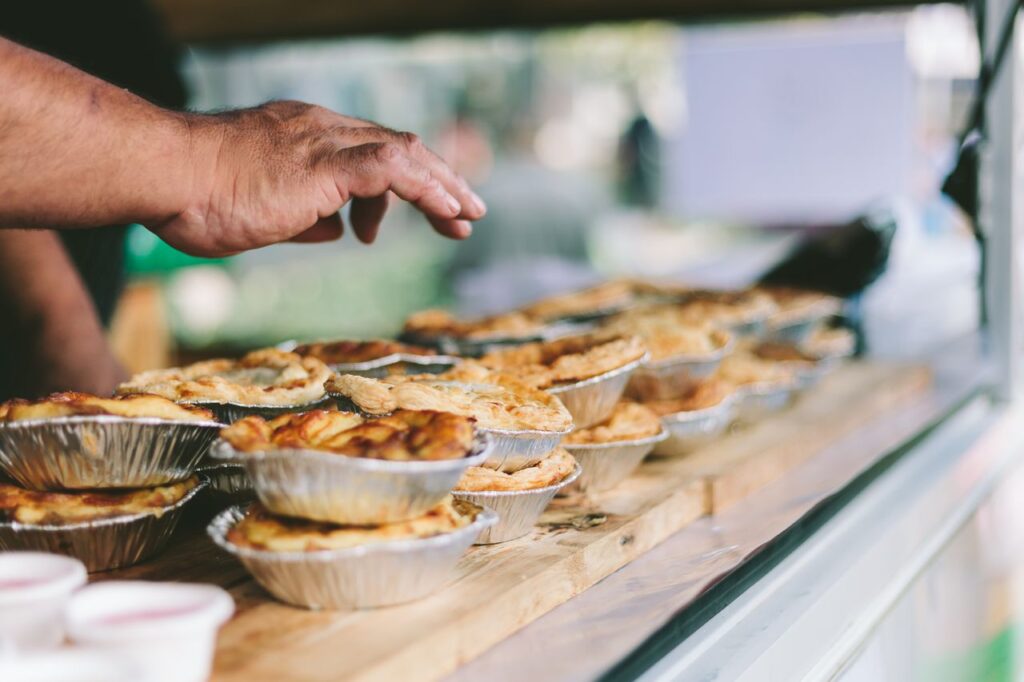
The pies deserve a mention of their own. Ngāpuna Bakery has built a real local reputation on them, with the mince and jalapeño the one people make a detour for. It is a no-frills bakery where the food does the talking, and it is the right stop before a day on the trails or the drive out of town.
For a sit-down breakfast, Capers Café is the long-running favourite, a large cafe and store that fills up on weekend mornings. Fat Dog Café is the other institution, colourful and casual with big portions and a menu that suits families. The Pig and Whistle, set in a historic building in the centre, handles the classic pub feed and pours local beer.
Rotorua also does its international food well for a town this size. El Mexicano Zapata has a strong local following for tacos and street-style Mexican, and there are reliable Thai, Indian and Japanese kitchens scattered through the centre. None of it is fancy, and that is rather the point.
Markets Worth Timing Your Visit For
Two markets are worth planning around, because they show you the town’s food at its most relaxed and its best value.
The Rotorua Night Market runs on Thursday evenings along Tutanekai Street, bringing street food, local kai and international stalls into the centre for a few hours. It is the easiest way to eat well and cheaply, and to try a spread of things in one walk rather than committing to a single restaurant. Hours shift slightly with the season, running a little later in summer.
The Kuirau Park market on Saturday mornings sits beside one of the thermal parks, with steam rising off the pools behind the stalls. It leans more toward produce and casual bites than the night market, and the setting alone makes it worth the early start. Both are outdoor, so both are weather-dependent.
Practical Notes Before You Eat
Tipping is not expected in New Zealand. Staff are paid a full wage, and leaving nothing is completely normal. A little at a higher-end restaurant is welcomed rather than assumed, and there is no obligation anywhere casual.
Kitchens close earlier than many visitors expect, particularly midweek and in winter. Eat Streat stays open latest, while cafes and suburban spots often stop serving in the early evening. If you are eating outside the laneway, check the hours before you head over, especially on a Sunday or Monday.
Coffee is taken seriously here, as it is across the country. A flat white is the local default and the standard at an ordinary cafe is high. For current opening hours, market times and the cultural village schedules, the official Rotorua visitor site is the most reliable source.
Local Tip
Book the hāngī evening first, then plan the rest of your nights around it. The cultural villages are the one meal here you cannot improvise on the day, they sell out in peak season, and they are the reason to eat lightly earlier. A good rhythm is a market or laneway meal on one night and the cultural dinner on another, so you are hungry enough to do the buffet justice rather than picking at it after a big lunch.

Frequently Asked Questions
What food is Rotorua known for?
The hāngī above all, a traditional Māori meal cooked in an underground oven, along with food steamed directly over the area’s geothermal vents. Beyond that, Rotorua is known for its covered Eat Streat dining laneway and a couple of well-loved local bakeries and cafes.
What is a hāngī and where can I try one?
A hāngī is meat and vegetables slow-cooked in a covered pit, giving a soft texture and a smoky, earthy flavour. In Rotorua you try one at a cultural village such as Te Pā Tū, Mitāi or Te Puia, usually as part of an evening that includes performance and story.
Where do locals eat in Rotorua?
For everyday food, locals lean on the bakeries and cafes rather than the tourist spots, with Ngāpuna Bakery a standout for pies and Capers and Fat Dog reliable for breakfast. Eat Streat covers the sit-down dinner end, and the Thursday night market is a local fixture.
Do you need to book restaurants in Rotorua?
For the cultural hāngī dinners, yes, and well ahead, since they sell out in peak season. On Eat Streat a walk-in usually works midweek, though a specific restaurant on a Friday or Saturday is worth reserving. Markets and bakeries never need a booking.
Is eating out in Rotorua expensive?
It is mid-range for New Zealand. A main on Eat Streat generally lands between twenty-five and forty dollars, while the markets and bakeries keep a full meal well under twenty. Cultural hāngī dinners cost more because they bundle the meal with an evening of performance and transport.
Final Thoughts
The meal people remember from Rotorua is almost always the hāngī, eaten in a forest village after a performance, or the corn pulled steaming from a thermal pool. The everyday food is good, the laneway is easy and warm, and the markets are worth timing for. Together they make a small town eat far bigger than its size.
So book the cultural dinner early, walk the laneway on another night, and leave a morning for the market and a bakery pie. Deciding where to eat in Rotorua comes down to one choice made in advance, the hāngī evening, and the rest of it falls into place around that.
Some links in this guide are affiliate links. If you book through them, OneLife may earn a small commission at no extra cost to you. We only point to places and experiences we would genuinely recommend. If you are still planning the trip, our Rotorua accommodation guide covers the best areas to base yourself, and it is worth comparing travel cover with World Nomads before you go.