 Skip to content

By OneLife · Updated September 2026 · 19 min read
This 7 day Japan itinerary follows the Golden Route, the line that most first trips take from Tokyo to Kyoto. It moves from the density of Tokyo to a hot spring town in the Hakone mountains. Then it settles into a city that still keeps time by its temple bells. It is the classic route for a reason. Few weeks anywhere change shape this much.
Seven days is not long in Japan. It is long enough to feel the country shift around you, as long as you stop trying to see all of it. This route is built around three bases rather than a new hotel every night. You unpack in Tokyo, sleep one night in the mountains, then settle into Kyoto for the rest of the week.
It suits first-time visitors, couples and solo travellers who want both sides of Japan. The city side is loud, precise and endlessly layered. The quieter side lives in cedar forests, onsen steam and gravel gardens raked at dawn. This itinerary gives each side its own time rather than squeezing them together.
The structure is simple. Days one to three are in Tokyo. Day four is Hakone and a night in a ryokan. Days five to seven are Kyoto, with Nara on the final morning before you fly home from Kansai. Times throughout are rough guides, not a schedule. The best moments on this trip usually happen in the gaps.
Plan the Japan leg in more depth
Tokyo temples and shrines worth the early start
Before You Start: Practical Planning Notes for a 7 Day Japan Itinerary
Getting to the starting point
Fly into Tokyo and out of Osaka. This is called an open-jaw ticket, and it is the single best decision on this route. It saves you a four-hour backtrack on your last day. From Australia, most flights land at Haneda or Narita and depart from Kansai International (KIX).
Haneda is the easier arrival. It sits close to the city, and trains or the limousine bus reach Shinjuku and Shibuya in under an hour. Narita is further out. The Narita Express gets you into central Tokyo in roughly an hour to 90 minutes, depending on where you stay.
Before you fly, register on Visit Japan Web. It generates the QR codes for immigration and customs, which makes the arrival hall far calmer. Australian passport holders can currently visit Japan visa-free for short tourist stays. Check the Smartraveller page for Japan for the latest entry advice.
How to get around
You will not want a rental car on this route. Tokyo and Kyoto are built for trains, and parking is expensive and scarce. The one leg where a car could make sense is Hakone, but the local train, cable car, ropeway and boat loop is the experience itself.
Load a Suica or ICOCA card into your phone’s wallet on day one. It works on almost every train, subway and bus in both cities, as well as in convenience stores. Tap on, tap off, and stop thinking about tickets.
For the long legs, the Odakyu Romancecar runs from Shinjuku to Hakone-Yumoto. The shinkansen then takes you from Odawara to Kyoto. For Hakone itself, the Hakone Freepass covers the loop and most local transport.
Where to base yourself vs moving daily
Moving hotels every night is the fastest way to lose a week in Japan. This route uses three bases. Tokyo gets three nights, Hakone one, and Kyoto three. That gives you only two real travel days.
Send your main suitcase ahead from Tokyo to your Kyoto hotel using a luggage forwarding service. Hotel front desks and convenience stores can arrange this, and it usually arrives the next day. You travel to Hakone with a small overnight bag, which makes the mountain trains and ropeway far easier.
Browse accommodation in Tokyo on Booking.com and book Kyoto and Hakone early. Both fill quickly in spring and autumn. From March 2026, Kyoto also charges a higher accommodation tax, collected per person per night at check-in. It starts at 200 yen for budget rooms and rises steeply for luxury stays.
A note from the road
The JR Pass rarely pays for itself on this exact route. A 7-day pass costs around 50,000 yen, while single shinkansen tickets for Tokyo to Kyoto are roughly 14,000 yen each way. Buy individual tickets unless you plan to add Hiroshima or other long legs. If you extend the trip, run the numbers again.
Day 1: Tokyo, Arriving Into the Noise
Morning
Your first morning is mostly logistics, and that is fine. Clear immigration, load your transit card and find your way into the city. If you land early, drop your bags at the hotel and walk. Tokyo makes more sense on foot than it ever does from a map.
Afternoon
Shinjuku Gyoen is a good first stop after a long flight. The garden is wide, quiet and surprisingly green for somewhere so central. Spend an hour under the trees and let your body catch up with the time zone.
From there, drift through Shinjuku’s side streets. The department store food halls in the basements are worth the detour. They feel like a museum where everything happens to be edible.
Evening
As the light fades, ride the Yamanote line a few minutes south to Shibuya. Stand above the scramble crossing for a few minutes before you walk it. It is one of those places that feels like a film set until you are inside it.
If you want height, book a sunset slot at Shibuya Sky. The open rooftop gives you the whole city turning its lights on at once. The Shibuya travel guide covers the best viewpoints and backstreets in more detail.
Finish in Omoide Yokocho near Shinjuku Station. It is a narrow lane of tiny yakitori bars, smoke rising from the grills. Most seat six or eight people. Sit down, point at what the person next to you is eating, and order a cold beer.
Where to stay tonight: Shinjuku or Shibuya for all three Tokyo nights. Shinjuku gives you the best train connections, including the Romancecar to Hakone. Shibuya feels slightly younger and more walkable. See hotels in Shinjuku on Booking.com.
Day 2: Tokyo, the Old City in Asakusa and Yanaka
Morning
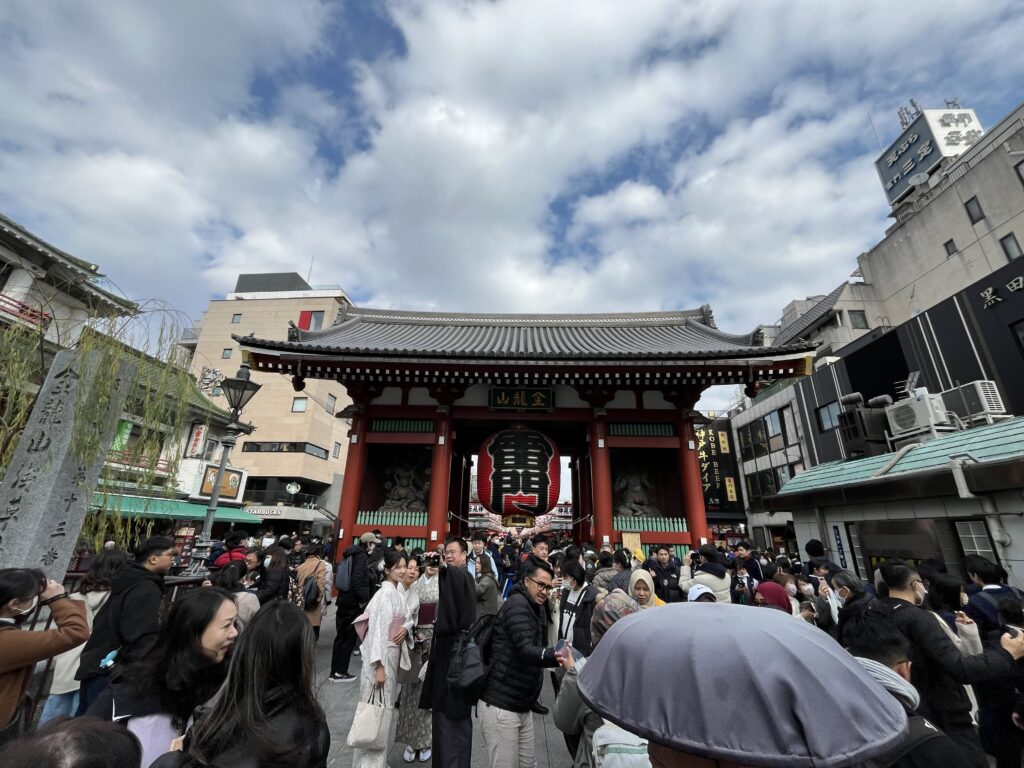
Go to Senso-ji early, ideally before 7am. The grounds never close, and at that hour the incense smoke hangs in still air. Locals stop to pray on their way to work. By mid-morning the same place is shoulder to shoulder.
Walk Nakamise-dori as the shutters go up. Our Senso-ji temple guide covers the history, etiquette and quieter corners of the grounds.
Afternoon
Take the train to Nippori and walk into Yanaka. This is one of the few Tokyo neighbourhoods that survived both the 1923 earthquake and the war. Wooden houses, small temples and cats sleeping on walls give it a pace the rest of the city has lost.
Yanaka Ginza is a short shopping street of old family businesses. Try the menchi katsu from a street counter. Then walk through Yanaka Cemetery, which is calmer and more beautiful than it sounds.
If you still have energy, continue on foot into Ueno Park. The Tokyo National Museum sits at its northern edge and is the best introduction to Japanese art in the country.
Evening
Return towards the Sumida River as the light drops. Tokyo Skytree rises above the east bank, and the river walk gives you a clean view of it without the crowds at the base. If you plan to go up, the Tokyo Skytree guide explains the tickets and best times.
For something a little more sheltered, walk back into Asakusa after dark. The temple is lit at night and almost empty. It feels like a different place from the morning.
For guided food walks and night tours in the city, browse Tokyo experiences on Viator.
Where to stay tonight: Same Tokyo base. Staying put for three nights is what makes this pace work.
Day 3: Tokyo, Forest Shrine and Backstreets
Morning
Meiji Jingu sits inside a forest of around 100,000 trees in the middle of the city. Walk under the huge wooden torii at the Harajuku entrance, and the traffic noise disappears within minutes. Arrive early and the gravel paths are close to silent.
Read the Meiji Shrine guide before you go. It explains the sake barrels, the wishing plaques and the right way to approach the main hall.
Afternoon
Walk out through Harajuku, but skip the busiest part of Takeshita Street. The better streets sit behind it, in the lanes locals call Ura-Harajuku. Small boutiques, coffee bars and quiet design stores fill them.
Follow Omotesando down towards Aoyama. The avenue is lined with zelkova trees and buildings by some of Japan’s best architects. It is one of the most considered streets in the city.
Later, take the train to Shimokitazawa. It is a low-rise tangle of vintage shops, record stores and tiny cafes. There are no big sights here. That is the point.
Evening
Tonight is your last in Tokyo. Arrange your luggage forwarding at the hotel desk, and pack a small bag for Hakone. Then spend the evening in Golden Gai, a cluster of six narrow lanes and around 200 tiny bars. Some charge a cover. Some only take regulars. The friendly ones usually post a sign in English.
Where to stay tonight: Same Tokyo base. Leave early tomorrow for the Romancecar from Shinjuku.
Day 4: Hakone, Mountains, Steam and a Night in a Ryokan
Morning
Catch a mid-morning Romancecar from Shinjuku to Hakone-Yumoto. The ride takes about 85 minutes. Book a seat in the front observation car if one is free. The city thins out, and then the hills start to rise around you.
Afternoon
This afternoon is the Hakone loop, and the journey is the experience. From Hakone-Yumoto, the Hakone Tozan Railway climbs through forest in a series of switchbacks. The train reverses direction several times as it gains height.
At Gora, change to the cable car up to Sounzan. From there, the Hakone Ropeway carries you over Owakudani. It is a volcanic valley where sulphur vents steam out of bare yellow rock. The eggs boiled in the hot springs turn black, and locals say each one adds seven years to your life.
The ropeway drops down to Lake Ashi at Togendai. Cross the lake by sightseeing boat to Moto-Hakone. On a clear day Mount Fuji sits above the far shore. On a cloudy one, the lake still has a quiet, heavy stillness that stays with you.
Walk to Hakone Shrine and its red torii standing in the water. Queue for the photo if you want it. The forest path behind the shrine is the better moment.
The ropeway occasionally pauses for inspections or volcanic gas levels. Check the operator’s notices on the morning you travel, and use the replacement buses if needed.
Evening
This is the night the whole itinerary pivots around. Check into a ryokan, change into a yukata, and soak in the onsen before dinner. The evening meal is usually kaiseki, a long sequence of small seasonal courses served in your room or a private dining space.
Go back to the bath late, when the other guests have gone to bed. Steam, dark trees and the sound of water. You will think about this hour long after the trip.
Note that many onsen still restrict tattoos in shared baths. If you have them, look for a ryokan with a private bath attached to your room.
Where to stay tonight: A ryokan in Gora, Miyanoshita or around Hakone-Yumoto. Rooms with a private open-air bath are worth the extra cost. Browse Hakone ryokan on Booking.com.
Day 5: Hakone to Kyoto, Fushimi Inari in the Late Light
Morning
Take one last soak while the mountain air is still cold. Breakfast in a ryokan is an event in itself, with grilled fish, rice, miso and pickles.
Take the Hakone Tozan line or a bus down to Odawara. From there, the shinkansen runs to Kyoto in around two hours. Only some Hikari and Kodama trains stop at Odawara, so check the timetable the night before. Sit on the right side heading west for a chance at Fuji as you pass.
Afternoon
Your forwarded luggage should be waiting at your Kyoto hotel. Check in, then go straight to Fushimi Inari Taisha in the late afternoon. The shrine is open around the clock. Most day visitors leave by five, and the thousands of vermilion torii gates start to glow as the light softens.
Most people walk only the first section and turn back. Keep climbing towards the Yotsutsuji intersection, about 30 to 45 minutes up. The crowds thin sharply, and the view opens over the city.
Evening
Walk down in the dusk, then take the train back towards central Kyoto for dinner. Pontocho is a narrow lantern-lit lane running parallel to the Kamo River. Many restaurants here open onto riverside platforms in the warmer months.
Walk along the river afterwards. Couples sit on the banks at evenly spaced distances. It is one of the quiet rhythms of the city.
Where to stay tonight: Around Kawaramachi or Gion for evenings, or near Kyoto Station for easy departure on day seven. A traditional machiya townhouse is worth considering if you are travelling as a group. See Kyoto stays on Booking.com.

Day 6: Kyoto, Arashiyama at Dawn and Higashiyama at Dusk
Morning
Set an alarm. The Arashiyama bamboo grove is one of the most photographed places in Japan, and after 9am it feels like it. Before 8am it is something else entirely. The stalks creak in the wind, and the light comes through in thin green bands.
When Tenryu-ji opens, walk through its garden. It is one of Kyoto’s oldest, designed around the mountains behind it. Then climb the short path to Okochi Sanso, the former villa of a celebrated film actor. Its tea garden and view over the city are rarely crowded.
If you would rather go with a guide, early morning Arashiyama walks and cycling tours run most days. Browse Kyoto tours on Viator to compare them.
Afternoon
Take a bus or taxi north to Kinkaku-ji, the Golden Pavilion. It is busy, and the viewing route is fixed. It is still worth seeing once. The gold leaf reflected in the pond looks almost unreal.
Later in the afternoon, cross to the eastern side of the city. Walk up to Kiyomizu-dera and its wooden stage, built without a single nail. Come down through Sannenzaka and Ninenzaka, the stone-paved lanes lined with old wooden shopfronts.
Evening
Continue into Gion as the lanterns light up. Walk Hanamikoji and the canal along Shirakawa, one of the most beautiful streets in Kyoto after dark.
Gion is a working neighbourhood, and it asks for respect. Some private lanes are now closed to tourists. Photographing geiko and maiko without permission is not acceptable. Watch quietly, keep your camera down, and let them pass.
Where to stay tonight: Same Kyoto base. If you are flying out early tomorrow, pack tonight and confirm your train to the airport.

Day 7: Nara and the Final Morning
Morning
Take the Kintetsu line from Kyoto Station to Nara. The limited express takes around 35 minutes. Nara was Japan’s capital before Kyoto, and it still carries that older, broader feel.
Walk into Nara Park, where more than a thousand deer roam freely. They are considered messengers of the gods. They also know exactly who is holding crackers. Some will bow before taking one.
Todai-ji holds a bronze Buddha about 15 metres tall inside one of the largest wooden buildings in the world. Stand at the doors for a moment before walking in. The scale takes time to register.
If you have time, walk through the forest to Kasuga Taisha. Its paths are lined with around 3,000 stone and bronze lanterns covered in moss.
Afternoon
Return to Kyoto Station, collect your bags, and take the JR Haruka express to Kansai International Airport. The trip takes around 75 to 80 minutes. Allow a generous buffer. Japan’s departure tax rose to 3,000 yen in July 2026, though it is usually built into your airfare.
If your flight leaves late, stay a night in Osaka instead. Dotonbori’s neon and street food make an easy, loud last evening, and KIX is closer from there.
Departure notes and final morning
If your flight is early and Nara feels like too much, keep the last morning small. Walk the Kamo River at sunrise or wander through Nishiki Market as the stalls open. Buy good tea or a small piece of pottery rather than something from the airport.
The quieter final morning is often the one you remember most. It is when the trip settles into memory rather than itinerary.
If you need one more night: Namba or Umeda in Osaka keep you close to the airport express trains. Browse Osaka hotels on Booking.com.
Where to Eat Along the Route
In Tokyo, Omoide Yokocho is where to go for yakitori on your first night. Pick any stall with a free seat and a grill that looks busy. For ramen, Afuri serves a light yuzu and salt broth that is very different from the heavy tonkotsu most visitors expect. It has branches across the city, including Harajuku.
In Asakusa, Daikokuya has been frying tempura near Senso-ji since the late 1800s. The tendon, a bowl of rice with tempura in a dark, sweet sauce, is the order. Expect a queue at lunch.
In Hakone, the ryokan dinner will likely be the meal of the trip. For lunch around Gora, Tamura Ginkatsu-tei is known for tofu katsu simmered in a clay pot. It is gentle, filling and completely local.
In Kyoto, Honke Owariya has been making soba since 1465. It is a quiet, wooden place in central Kyoto. For grazing, Nishiki Market runs five blocks with pickles, tamagoyaki, fresh tofu and grilled seafood on sticks. In Arashiyama, a coffee from the riverside %Arabica is a calm first stop after the bamboo grove.
In Nara, Nakatanidou is famous for its fast mochi pounding, but the yomogi mochi itself is the reason to stop. Eat it warm, standing on the street.
Practical Tips for This Itinerary
Cash still matters in Japan, even in 2026. Smaller restaurants, shrines and rural ryokan often prefer it. 7-Eleven ATMs accept most foreign cards, and they are everywhere. Keep around 10,000 to 20,000 yen on you at any time.
Trains are quiet spaces. Phone calls are avoided, and conversations are kept low. Eating while walking is also frowned on in parts of Kyoto and Nara. Finish your snack beside the stall where you bought it.
Travel insurance is worth having for any overseas trip, especially one involving mountain transport and hot springs. World Nomads offers flexible cover you can buy or extend while you are already travelling.
Staying connected makes this route much easier. Google Maps handles every train transfer in real time, including platform numbers. An eSIM from Airlo can be installed before you leave, so you have data from the moment you land.
You will walk more than you expect, often 20,000 steps a day. Bring shoes you have already broken in, and choose ones that slip on and off easily. Temples, ryokan and some restaurants ask you to remove them. A light daypack and a small coin pouch for yen make the days smoother. So do packing cubes when your bag is split between forwarded luggage and an overnight kit.
Book the few things that sell out. Shibuya Sky sunset slots, popular ryokan and teamLab tickets can go weeks ahead in busy seasons. Leave everything else open.
Spring and autumn are the most beautiful seasons for this route, and also the busiest. Late November brings the maple colours to Kyoto. Winter is colder but clearer, with the best odds of seeing Fuji. Summer is hot and humid, so plan the outdoor parts early or late in the day.
For official information on transport, seasons and events, the Japan National Tourism Organization is a reliable starting point.
How to Adjust This 7 Day Japan Itinerary
Shorter version (4 to 5 days)
With five days, cut Tokyo to two nights and keep Hakone. Combine the old city and Meiji Jingu into one full day. Then spend two nights in Kyoto and drop Nara, or visit it only if your flight leaves late.
With four days, choose between Hakone and Kyoto. Skipping Hakone keeps the trip focused on the two great cities. Skipping Kyoto keeps it calmer and closer to Tokyo. Trying to do all three in four days turns the trip into a train timetable.
Extended version (10 days or more)
The easiest extension is two extra nights in Kyoto and Osaka. Kyoto rewards slow days in the north around Ohara or Kurama, and Osaka is the best food city on the route.
Hiroshima and Miyajima make a powerful addition. The Peace Memorial Museum is quietly overwhelming, and the floating torii at Itsukushima is worth the trip. Adding them is also where a JR Pass starts to pay for itself.
In winter, consider heading into the Japanese Alps. Nozawa Onsen is a traditional village with free public baths and deep powder snow. The Nozawa Onsen travel guide explains how to get there from Tokyo, and the ski guide covers the mountain itself.
Kanazawa, Takayama and Shirakawa-go form another beautiful loop. They add old merchant streets, gardens and thatched farmhouses in the mountains.
More from the Japan collection
Frequently Asked Questions
Is 7 days enough for Japan?
Seven days is enough for a strong first trip along the Golden Route. You will not see the whole country, but you will experience Tokyo, a mountain onsen town and Kyoto without feeling rushed. The key is using three bases rather than moving every night.
Should I buy a JR Pass for a 7 day Japan itinerary?
For this route, usually not. A 7-day pass costs around 50,000 yen, while a Tokyo to Kyoto shinkansen ticket is roughly 14,000 yen. Unless you add long legs such as Hiroshima, single tickets are cheaper and more flexible.
How long is the train from Tokyo to Kyoto?
The fastest Nozomi shinkansen takes a little over two hours from Tokyo Station. The Hikari is slightly slower. On this itinerary you travel from Odawara after Hakone, which takes around two hours with most connections.
Will I see Mount Fuji from Hakone?
Possibly, but not reliably. Fuji is often hidden by cloud, especially in summer. Your best chance is a clear winter morning. Views from Lake Ashi and the Hakone Ropeway are the most common spots.
What is the best time of year for this route?
Late March to early April brings cherry blossoms, and November brings autumn colour. Both are beautiful and crowded. Late autumn and winter offer clearer skies. Summer is hot and humid but still rewarding with early starts.
Should I fly into Tokyo and out of Osaka?
Yes, where possible. An open-jaw ticket into Haneda or Narita and out of Kansai saves you a long backtrack on your last day. It also frees up the final morning for Nara or a quiet walk in Kyoto.
Do I need to speak Japanese?
No. Train stations and major sights have English signage, and translation apps handle menus well. Learning a few words of thanks and greeting goes a long way, and people notice the effort.
Final Thoughts
This 7 day Japan itinerary is not about ticking off Tokyo and Kyoto. It is about the change you feel between them. The noise of Shibuya, the stillness of a mountain bath, then the slow, precise beauty of a Kyoto garden at dawn.
Keep the plan light. Wake early when it matters, and leave room for the side street you did not plan to walk down. That is usually where Japan shows you something real.
If you only remember one thing from this guide, make it this. The Golden Route is popular because it works. Walk it slowly, and it will still feel like yours.
Some links in this post are affiliate links. If you book or buy through them, OneLife may earn a small commission at no extra cost to you. We only recommend places, services and gear we would use ourselves. Prices, timetables and taxes were checked in September 2026 and can change, so confirm details before you travel.